When United States Vice-President, Kamala Harris touched down in Tanzania on March 30, 2023, the main agenda was to convince Tanzania to work closely with China as Dar-es-Salaam sought to add value to the minerals that are of American interest.
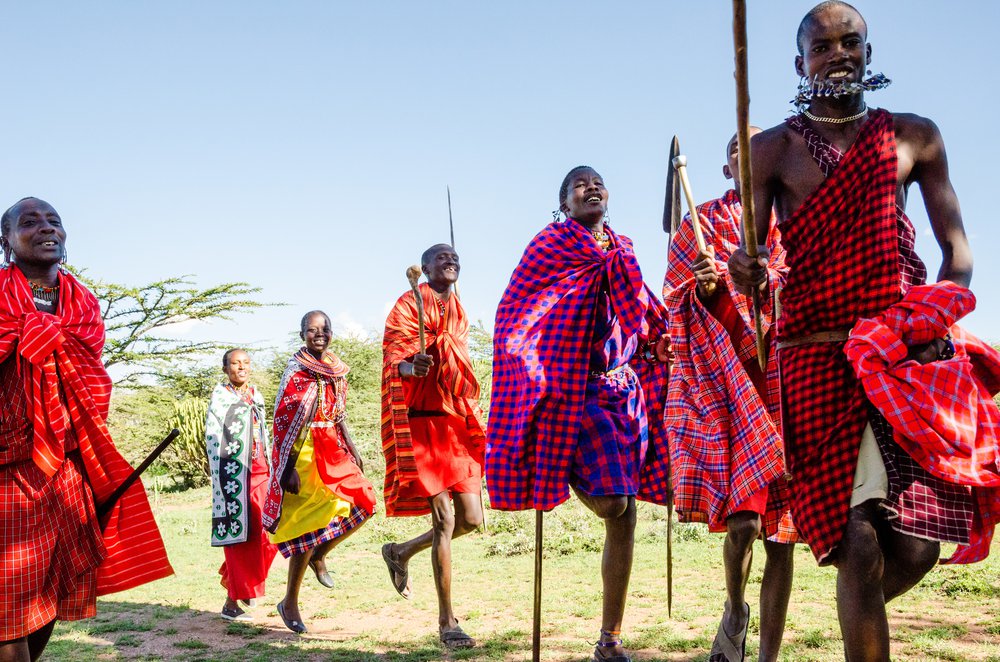
But Ms Harris was confronted by a fresh demand by Tanzanians that Washington had not prepared for. The issue of the indigenous Maasai right to self-determination.
As the two capitals negotiate to leverage their interests on a global scale, the indigenous Maasai have taken a stand that global interests will not trump their interests—as the indigenous occupants of northern Tanzania and Southern Kenya.
Ms Harris said Tanzania will receive $560 million in bilateral aid from the United States in the upcoming fiscal year. Expanding affordable broadband and working with Tanzania on projects related to democratic development, biodiversity, women’s empowerment, and health are just a few of the things Ms. Harris Washington would do to increase commercial ties between the two countries.
Tanzania has been unable to deal with the displacement of the Maasai community in Loliondo and the Ngorongoro Conservation Area (NCA), both in the north. The same trend happened in Kenya where the Maasai who are the indigenous people were robbed of their lands. Nairobi, Kenya’s capital city, and other important cities such as Nakuru, Eldoret, and Naivasha, originally belonged to the Maasai.
The Pastoralists Indigenous Non-Governmental Forum wrote a letter to Ms Harris about the demarcation of a new protected area in Loliondo that is permanently taking critical land from the Maasai people to protect foreign trophy hunting, and secondly, the involuntary relocation of Maasai people from the Ngorongoro Conservation Area (NCA), also in the north.
An estimated 70,000 people have been evicted from 14 villages within Loliondo and another 10,000 people have left Ngorongoro. 90,000 Maasai in Ngorongoro is without access to basic services such as healthcare.
Some 600,000 livestock have been killed by drought due to restricted access to water and grazing and ten thousand others have been auctioned by the Tanzania government.
Most researchers concur that there is no ecological, economic, or political justification for these actions, despite the claims of some government officials and conservation organizations to the contrary. National governmental organizations, not local governments, are to blame for this crisis. The letter asserts: “It is well known that the Maasai people of this area are among the most resilient and sustainably managed societies in all of Africa.”
There has been an ongoing struggle between the indigenous Maasai people of Tanzania and the Tanzanian Government since 1992. It revolves around repeated attempts by the Government to take Maasai village land and designate it as a game reserve for trophy hunting.
Since 1992, the Royal Family of Dubai has had exclusive rights to hunt in this region thanks to a lease with the Ortello Business Corporation. In addition to having many pastoralist ritual sites, the disputed land is an important grazing area during the dry season and a major source of water and salt licks for livestock.
The letter said that the Maasai having already given up our rightful claim to land in order to establish the Serengeti National Park in 1959, reasonably expected that the government would abide by the agreement to defend their customary land use rights.
Yet on each of three occasions, in 2009, 2017, and 2022, Maasai people have been forcibly evicted from land previously legally accessible to them for grazing cattle and building their rudimentary homes (bomas) and civic infrastructure, such as primary schools, clinics, and dispensaries.
On June 8, dozens of police vehicles from the anti-riot Field Force Unit (FFU) arrived in Wasso town in Loliondo, Ngorongoro district, to demarcate the area as a Game Reserve. The FFU and other forces have now set up camp in the Oloosek area of Ololosokwan and in Sanjan, Malambo.
In the following two days—June 9 and 10 – locals gathered in several locations, including Ololosokwan and Kirtalo, to protest against the police invasion. This provoked a high-handed reaction from the police and paramilitary forces who allegedly dispersed people at a traditional ceremony.
The Regional Commissioner of the Tanzanian government met with village chairmen to inform them of the government’s decision, despite the East African Court of Justice (EACJ) having ruled in favour of the Masaai community in 2018.
On May 25, 2022, the community submitted to the Prime Minister a report and request for dialogue after suggestions of new evictions from ancestral Maasai land, previously registered to pastoralist villages. On June 7, 2022, a paramilitary group of around 700 people, mostly police, park rangers, military, and other Government funded armed security forces arrived at Loliondo, instigating social unrest and public panic.
The Ngorongoro is a multiple land use Area covering 8,392 square kilometers, with 98,000 Maasai pastoralists. Both the community of NCA and Loliondo were evicted from the Serengeti by the British colonial government in 1959.
In the past five years, some government agencies and officials have suggested without evidence that the Maasai population should be moved out of Ngorongoro because of population growth. In 2022 the government began a strategy they call “voluntary” relocation.
The letter said that the government stopped providing funding to support essential services like health dispensaries and schools. Suspended operation of the Makao Mapya dispensary and removed doctors from Endulen, dramatically reducing essential public health services in what was the only hospital with the capacity to admit patients.
According to the letter, the Tanzanian government evicted 3450 people from their homes and closed four nursery schools, nine permanent water sources, including nine dams, and six health mobile clinics. Provided poisoned saltlicks to Maasai pastoralists resulting in the deaths of an estimated 10,365 cows, 9,541 goats, 16,574 sheep, and 394 donkeys.
According to Anuradha Mittal, the executive director of the Oakland Institute and author of Losing the Serengeti, the fact that the Maasai are once again facing eviction to please the UAE Royal Family shows the Tanzanian government continues to prioritize tourism revenues at the expense of the indigenous pastoralists.
“The Maasai, who are the indigenous community, are appealing for international support so that their land and rights are respected. The myth of ‘protected areas’ takes away not only their rights as people but their ability to live in their ancestral land,” said Mr Mittal.
As a Game Reserve, settlement and livestock grazing would be outlawed. The removal of residents is in violation of the 2018 East African Court of Justice (EACJ) injunction, which prohibited the Tanzanian government from evicting the villagers, seizing their livestock, destroying property, or engaging in harassment against Maasai communities living in Ololosokwan, Oloirien, Kirtalo, and Arash villages.
Another letter by scientists working in East African conservation landscapes to the Tanzanian government said that they were concerned about these recent developments occurring in Tanzania in the name of conservation.
The violations include the physical violence and other human rights violations against Maasai communities in Loliondo since June; the ongoing efforts to evict Maasai men, women, and children from Ngorongoro Conservation Area (NCA).
“We call on you, The Government of the United Republic of Tanzania, to stop and reverse this course, which does not help wildlife conservation efforts, undermines tourism, and is causing an international outcry. Importantly, we are categorically opposed to any conservation efforts that fuel violence in the name of conservation science,” the scientists say.
They say that the recent decision to evict Maasai from their homelands goes against your own policies that seek to promote local participation in conservation, with an emphasis on environmental sustainability and poverty alleviation (for instance the National Human-Wildlife Conflict Management Strategy (2020-2024).
In Tanzania, local communities live on legally registered village lands while they actively participate in conservation efforts. This approach to conservation with local communities is in accordance with several Sustainable Development Goals (SDG3 – Good Health and Well-being, 10 -Reduced Inequalities, 15 – Life on Land, and 16 – Peace, Justice, and Strong Institutions) and is promoted by the International Convention on Biodiversity Conservation. Tanzania has committed to following both sets of global guidelines.
Yet the government has continued to undertake many actions that impede pastoralism and most negatively impact women and youth. “
It says that the Tanzanian Government has implemented a policy resulting in the daily starvation of livestock from 28 villages. The government levies a fine equivalent to $45 for each cow. This significant penalty has led to hunger, especially for women and children, a sharp decline in the number of children attending school, significant rural-to-urban migration, and environmental destruction as communities turn to cutting trees to feed their livestock.
Civil society organization have been raising concerns that the Tanzanian government has continued to support existing military efforts to intimidate political and traditional leaders from speaking out against human rights violations.
Tanzania is a signatory to the United Nations Declaration for The Rights of Indigenous People (UNDRIP) which underpins the principle of free, prior, and informed consent. Tanzania signed the declaration on September 13, 2007, and officially endorsed it on September 17, 2007. The declaration recognizes and affirms the rights of indigenous peoples, including their right to self-determination, their rights to their traditional lands, territories, and resources, and their right to maintain and develop their own cultures, languages, and traditions.
Yet, the constitution of Tanzania was approved in 1977 and has been amended 15 times, largely related to the developments of the union between the Tanzania Mainland and Zanzibar.
The Constitution fails to adequately recognize, and thus fails to protect, the rights of indigenous groups and pastoralist Maasai groups in Ngorongoro, Tanzania. UNPO believes that with the present in place Constitution, Maasai are at risk and vulnerable because access to their traditional lands is not currently recognized under the Tanzanian constitution.