The African political arena is replete with riveting episodes of presidents falling out with their deputies, occasioning major political realignments in the subsequent political contests. One more such episode could be in the offing in Kenya.
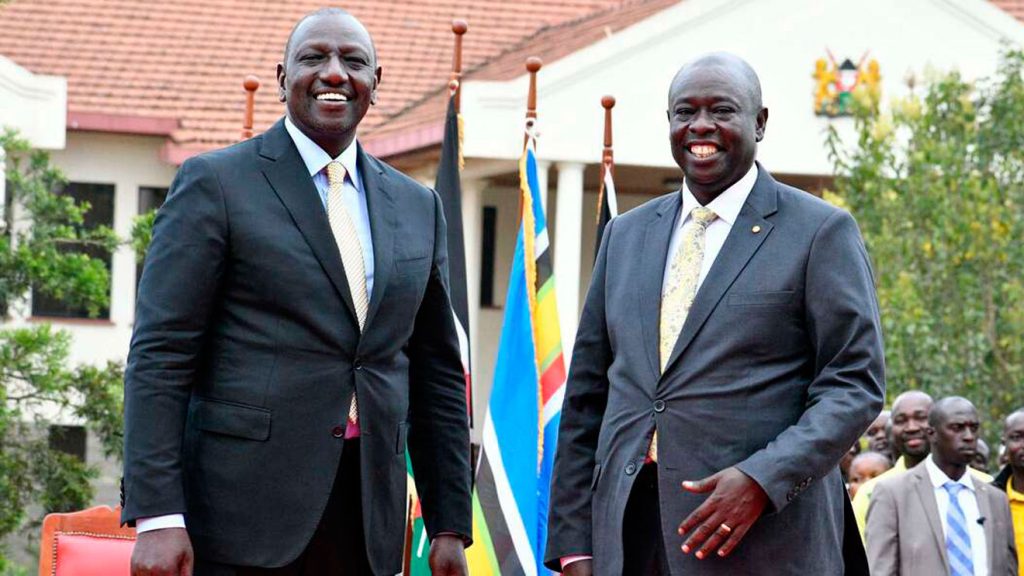
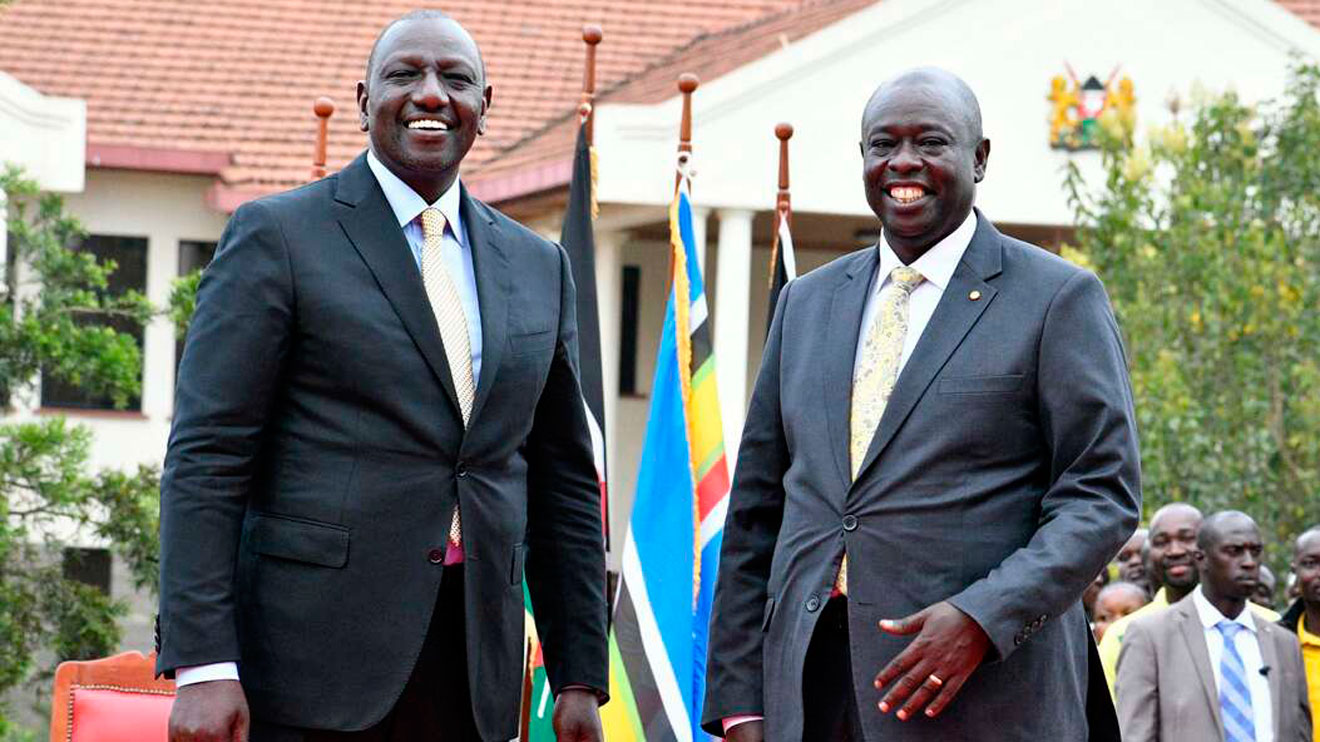
All indications are that the political marriage of convenience between President William Ruto and his deputy Rigathi Gachagua is on the rocks, at least temporarily.
The telltale signs show that a re-enactment of what transpired between Ruto and his then-boss President Uhuru Kenyatta is loading. When it all started, there were the usual denials of any bad blood between the two leaders, who successfully mobilised their respective Kikuyu and Kalenjin blocs to maintain a dualistic ethnic stranglehold on power.
Both Uhuru and Ruto were facing charges before the International Criminal Court (ICC) for their roles in Kenya’s 2007-8 post-election violence that claimed at least 1,200 lives. Their rallying call was that the ICC and anyone opposed to their leadership bid were enemies of their respective communities. It worked!
By the time Uhuru’s second and final term was coming to an end, he was not seeing eye-to-eye with his deputy. Indeed, Uhuru went ahead to campaign against Ruto in the 2022 presidential election, which the latter won and has since cashed on to pay the former president in kind. Ruto has, for instance, persistently blamed Uhuru for Kenya’s worrying international debt, thanks to reckless borrowing to mostly fund corruption. One would imagine he was never part of the Uhuru government.
The clearest of the indications of turmoil in Kenya’s current ruling coalition was Gachagua’s disappearance from the public space for a greater part of May. The DP missed, among others, a meeting in Nairobi attended by Uganda’s President Yoweri Museveni. When he finally resurfaced, he was unconvincing and the cat had been let out of the bag.
His ethnic backyard supporters had come out strongly warning of dire consequences against any attempts at frustrating “our son”. Gachagua himself could not just resist the itch. Speaking at the President’s Uasin Gishu home turf on May 26, he maintained that he and the president “love and respect each other”.
However, it was instructive that he at the same time asserted that he would not allow a section of the president’s allies to derail their relationship or meddle in the politics of his central Kenya stronghold.
Nairobi Governor Johnson Sakaja, the butt of ridicule by the Gachagua faction, especially for his alleged fake degree certificate, has seized the opportunity to get even. Confessing that he had endured two years of bullying by the second in command, Sakaja is savouring the DP’s woes, likening it to a man having a dose of his own medicine that he so liberally dispenses to his enemies, both real and imagined.
Whatever the case, the Ruto and Gachagua drama is not likely to end well.
Beyond Kenya, the unfolding drama rekindles the 1999 to 2007 frosty relationship between Nigerian President Olusegun Obasanjo and his deputy Atiku Abubakar.
The duo engaged in a running battle towards the end of their tenure, that culminated in Abubakar abandoning the ruling Peoples Democratic Party (PDP) in 2006 for the Action Congress of Nigeria (ACN), in preparation for the 2007 elections. The enmity lived on. In Obasanjo’s book, My Watch, he claims that “…the money Atiku stole when he was my vice is enough to feed 300 million people for 400 years”.
Then there was Ghanaian President Jerry Rawlings and his deputy Kow Nkensen Arkaah between 1993 to 1997. Arkaah became Vice President to Rawlings because his party, the National Convention Party and others, merged with the president’s National Democratic Congress.
Then, going towards the end of the first term of Rawlings’s rule after the return of democracy, rumours went around that Arkaah was flirting with some opposition parties. Rawlings, a military man with a fiery temper, was not amused. Claims of Arkaah’s illicit romantic liaisons, added to the political flame.
The culmination of the fallout was the alleged trading of blows at a cabinet meeting. According to President Rawlings‘ supporters, Arkaah was escorted out of the Cabinet room peacefully after an altercation. However, the then 68-year-old Arkaah, narrated that he was beaten and kicked by the President, a muscular 49-year-old.
The opposition made the most of the incident and Arkaah’s claims that for a man – even a chief – to beat an older colleague, was a cultural anathema in Ghana.
But why the culture of acrimony? With the entrenching of the DP position in the constitution, presidents in Africa now find their hands tied. Dispensing with their deputies when relationships head south is no longer tenable.
The predecessors, whose deputies held the positions at the president’s pleasure, were jettisoned at the slightest provocation, as was the case in Kenya before the promulgation of a new constitution in 2010.
President Jomo Kenyatta had three deputies in a 15-year high-handed reign. His successor Daniel Moi, gave the position to four in another high-handed rule that lasted 24 years.
Going forward therefore presidential candidates may want to consider much more than the voting bloc their prospective deputies may promise to deliver. A working chemistry between the two may just be the antidote with more effective efficacy.