

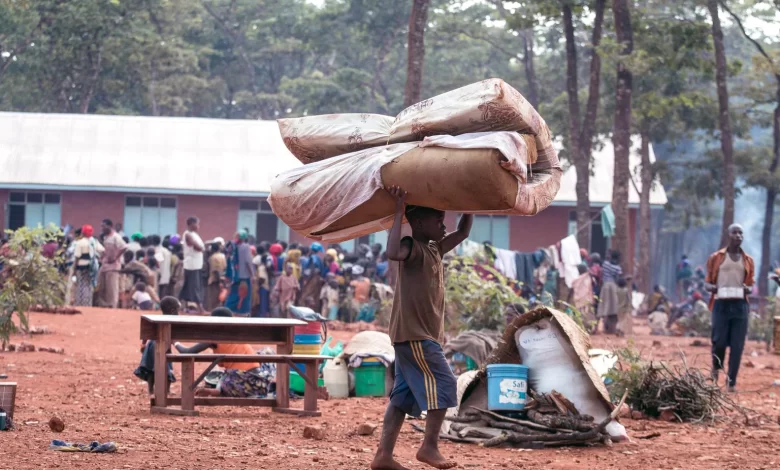
Tanzania has stated the process of repatriating Burundi refugees that are either unregistered or have been employed illegally.
This follows reports that there has been an influx of refugees from Burundi and neighbouring DRC who have crossed the borders illegally to the Nyarugusu refugee camp in Kigoma region.
As the speculation went around over the presence of illegal refugees in their camps, the prevailing situation has alerted state security agents who have resolved to launch a manhunt in search of the culprits.
Government report says that there are some who have been employed within private and government agencies and have launched a verification exercise to weed out illegal refugees. The exercise has the support of President Samia Suluhu.
The government says illegal immigrants pose a threat to the country’s security, given that some of them have acquired high ranking jobs through forgery.
Chief of Defense Forces General Jacob Mkunda revealed this at an annual conference of top military commanders that was attended by President Suluhu.
“The verification exercise is a sole means that would enable us to repatriate the ineligible individuals whose reasons for seeking asylum are inapplicable,” said the president.
The exercise will involve diplomatic consultations with neighboring member states of East African Community (EAC) on how the arrested culprits will be repatriated to their respective mother countries.
Reports by security agents in the country revealed that large numbers of refugees who entered the country through western regions from Burundi, Rwanda and DRC were not taken to designated camps, instead were directed to live in some 73 villages in Kigoma region.
Reports have further disclosed that some of the refugees’ children and their families have overstayed with indigenous people to the extent that some have been employed, while others have been appointed to various decision making positions in the government agencies by mistake.
For many years Tanzania has sheltered a number of refugees since 1995, and who have multiplied to more than 4 million refugees from three countries bordered in the western part of the country.
Tanzania is a signatory to the 1951 United Nations Convention on Refugees (UNCR), and therefore is obliged to host people from a troubled country while individual refugees’ status is being determined.
In November 2023, Tanzania and Burundi had agreed to accelerate efforts for voluntary repatriation of refugees to the neighboring country in line with the terms and conditions of the tripartite agreement protocols as aligned in International refugee law.
In the period Tanzania’s Home Affairs Minister Hamad Yusuf Masauni signed a joint agreement in Dar es Salaam for voluntary repatriation of about 166,000 Burundian refugees who have lived in Tanzania since 2017
About 155,000 refugees in Nduta and Nyaruguru designated camps located in Western Tanzania are yet to agree to be repatriated back to their mother country.
Over a decade ago, the UN refugee agency welcomed Tanzania’s decision to grant citizenship to 162,156 former Burundian refugees that marked the largest group in history to which naturalization has been offered to the first asylum seekers in the country.
Tanzanian authorities embarked on the naturalization process and granted citizenship, including some of the children of the Burundian refugees, who fled their country amid ethnic conflicts that broke out in the former Belgium colony in 1972.
Since then, the refugees have historically lived in three settlement areas of Tabora, Kigoma and Katavi region in western Tanzania and had become largely self-supporting and tax-paying members of society.
Some of them have engaged in subsistence farming and mingled with local indigenous people in these settlements which also produces tobacco and coffee for export. Their engagement has contributed to the economic development in these remote areas.
But due to their increased number, the naturalization exercise that was adopted by the government was halted primarily as some of them cheated on their status.
It was later discovered that large numbers of the asylum seekers mingled with the local people without being registered officially. As the naturalization programme encountered problems and attracted the attention of the authorities, some of the refugees who were looking forward to becoming Tanzanian citizens stopped investing in agricultural activities.
While some are uncertain of when they will be ordered to return to Burundi, some have continued with their normal activities and have even enrolled their children in local primary and secondary schools.
