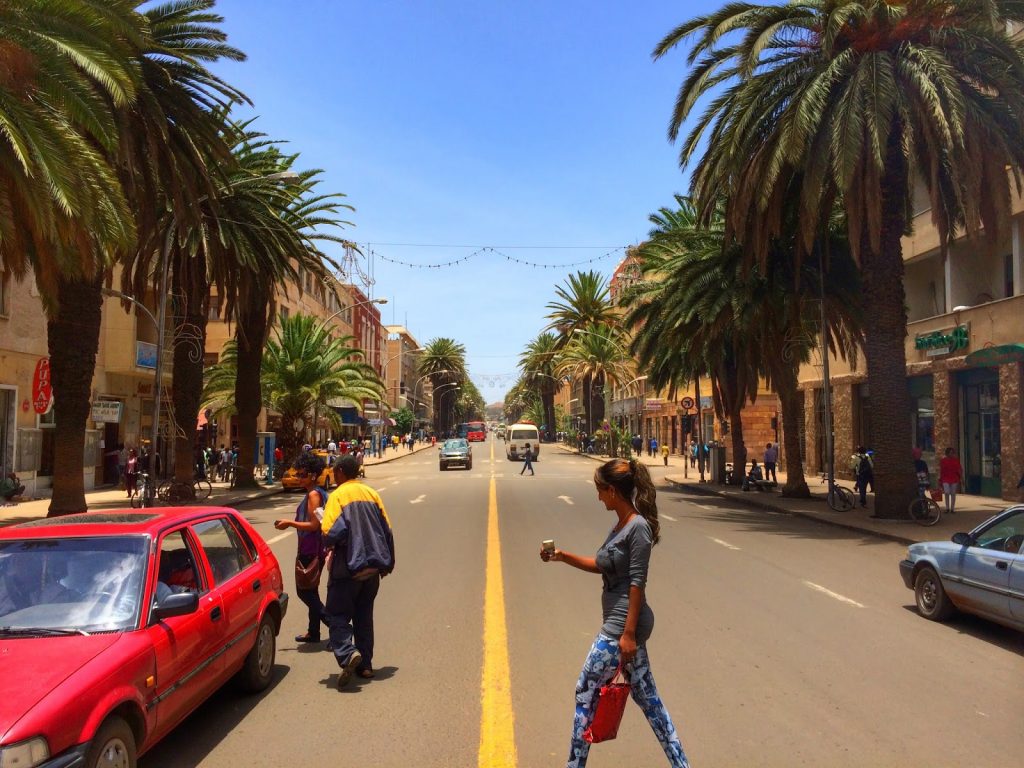
Eritrea having a pariah nation for about 11 years is now making peace with its neighbours. Eritrea withdrew from the Inter Governmental Authority on Development, ( IGAD) in 2007 after Ethiopia and United Nations accused it supplying Al Shabaab with weapons in Somali
President Isaias Afwerki denied this claiming that Ethiopia was revenging from 1988 and 2,000 and Ethiopia was hesitant to return to the Eritrean region of Badme.
Eritrea has made peace with its neighbors Ethiopia, Sudan and Djibouti Eritrea is a country located in the Horn of Africa, bordered by Sudan to the west, Ethiopia to the south, and Djibouti to the southeast. Its capital city is Asmara.
Eritrea has had a checkered history ever since the region because an Italian colony in the 1940s
Eritrea gained independence from Ethiopia in 1993 after a 30-year-long armed struggle. The country has a population of approximately 6 million people, with several ethnic groups, including the Tigrinya, Tigre, Saho, Bilen, and Afar.
Eritrea’s economy is mainly based on agriculture, with small-scale subsistence farming and livestock herding being the predominant
Eritrea, a country located in the Horn of Africa, was a member of Igad when the organization was founded in 1986, but it withdrew its membership in 2007.
In March 2021, it was announced that Eritrea had submitted an application to rejoin Igad, and the application was accepted by the organization’s leaders at a summit held in Djibouti in April 2021. Eritrea’s return to Igad is a positive development for the region, as it could help promote regional cooperation and stability.
Asgede Hagos says that Eritrean Americans across the United States are intensely debating ways to ensure their electoral voices will be heard in November and beyond on issues ranging from worries about recession to anxieties about foreign policy, especially U.S.-Eritrea relations.
He says this is unfortunate, Third World nations such as Eritrea normally do not figure in US elections as much as they should though they are often greatly impacted by them. This sad reality of neglect is particularly true of African nations and this is generally more noticeable during U.S. presidential elections when foreign policy debates go on as if the continent does not exist—a resource-rich continent considered the most central of the major regions of the world with a fast-growing population of 1.4 billion and the birthplace of humanity.
But, in what was extremely rare, if not totally unprecedented, an African issue involving Eritrea and the other former Italian colonies—Libya and Somalia—was vigorously debated for about three months leading up to the election of 1948, offering a more hopeful alternative path in the decolonization of this former Italian and British colony.
Eritrea has received threats from Washington that they will impose sanction Asmara if it continues to bomb Tigray Authority in Northern Ethiopia. But, in what was extremely rare, if not totally unprecedented, an African issue involving Eritrea and the other former Italian colonies—Libya and Somalia—was vigorously debated for about three months leading up to the election of 1948, offering a more hopeful alternative path in the decolonization of this former Italian and British colony.
With the next U.S. elections on the horizon, Eritrean Americans across the United States are intensely debating ways to ensure their electoral voices will be heard in November and beyond on issues ranging from worries about recession to anxieties about foreign policy, especially U.S.-Eritrea relations.
Figures in the US elections as much as they should though they are often greatly impacted by them However, unfortunately, Third World nations such as Eritrea normally do not. Mr Hogos says that of the three former Italian colonies, Eritrea would have been the principal beneficiary of the proposal because Libya and Italian Somaliland had not faced as much impediment as Eritrea in their quest for statehood.
In fact, one year later, the UN decided to give Libya its independence and place Italian Somaliland in the trusteeship system under Italian administration for the ten-year transition before it was granted its independence in 1960
Instead, the UN separated it from the group and decided to dispatch another commission of inquiry with a conflicting mission that was rigged to undermine the Eritrean people’s right to self-determination. The commission was instructed to determine the wishes of the Eritrean people and the needs of a neighboring country, Ethiopia, with regard to Eritrea–trying to reconcile two irreconcilable demands. The composition of the commission’s membership—Norway, Burma, South Africa, Pakistan, and Guatemala–may also have been determined to ensure the final outcome would advance Ethiopia’s interests.
The obstruction to prevent the emergence of an independent Eritrea was coming from several directions, bringing together the Ethiopian emperor and his hired foreign lobbyists, his American and British superpower patrons, and their global networks of supporters across the globe who used the then newly-born United Nations and its numerous agencies to legitimize their various designs on this Red Sea territory. But, for Eritrea, this trusteeship option may have provided an escape hatch from the multi-faceted schemes being hatched and implemented to block it from achieving statehood.
In theory, for Eritrea, as a former European colony, the option of being placed in the UN trusteeship system was available right from the start in 1945 when the U.S. pushed for a collective trusteeship for all three former Italian colonies to the last effort in the disposal process, five years later, when two of the five-nation UN commission on Eritrea–Guatemala and Pakistan—persistently advocated “for the independence of Eritrea as a unit
Shifting US policy shows the extent of the multi-layered obstruction at work to prevent the emergence of an independent Eritrea was at that time extremely rare, if not unprecedented, in the post-World War II decolonization process. Each member of the obstructionist forces had its own design on the Red Sea territory located in one of the most geostrategically important parts of the globe.
At the center of this political and diplomatic dilemma was the United States frantically building a new order for the post-1945 world, sometimes trampling over small nations such as Eritrea in the process. It emerged from World War II donning