

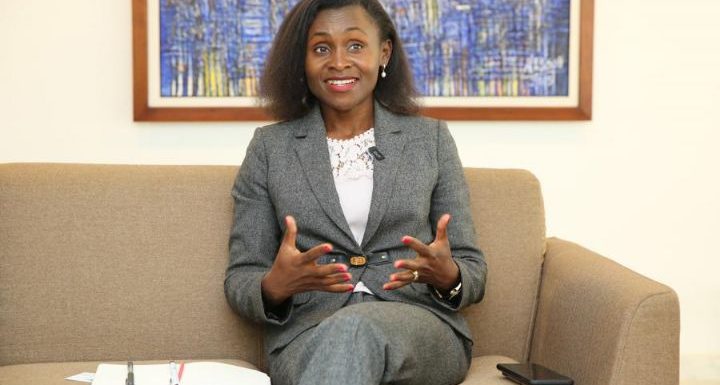
VICTORIA SABULA, Chief Executive Officer of the Africa Enterprise Challenge Fund (AECF) talks about the benefits and challenges of guiding and financing women-owned businesses that struggle to access commercial funding in high-risk economies.
Why and when was AECF created why did it decide to focus on women-owned enterprises?
AECF was created to address the need for increased economic development and poverty reduction in African countries. It was established to promote and support small and medium-sized enterprises (SMEs), that have innovative ideas and initiatives that can drive economic growth, create jobs, and improve the livelihoods of people in rural and marginalized communities across Africa.
AECF was officially launched in 2008 with funding from various donors, including the Australian Government, the Danish International Development Agency, the Dutch Ministry of Foreign Affairs, the Swedish International Development Cooperation Agency, and the UK Foreign, Commonwealth and Development Office.
AECF’s focus on women-owned enterprises is driven by the recognition that women play a crucial role in Africa’s economic development, particularly in the agriculture sector, which is the backbone of African economies. Women often face unique challenges and barriers in accessing finance, resources, and markets, but when women are economically empowered, they can generate income and improve living standards for households.
Is there an increase in entrepreneurship among African women since AECF came in, and if so, what are the contributing factors?
Yes, there has been considerable increase. Several factors contribute to the growth of entrepreneurship among African women. Over the past decade, there has been significant and regionally varying growth in the number of women-owned businesses across the continent.
Improved access to education and vocational training has equipped women with the skills needed for successful business management. Greater access to finance, including micro-loans and grants, empowers women to turn their business ideas into reality, with organizations like AECF playing a vital role in providing financial support, entrepreneurship training programmes and support networks
Many African governments recognize the importance of women’s economic participation and have implemented supportive policies and initiatives, including preferential procurement and reduced registration fees for women-led enterprises. Together with access to economic empowerment, the expanding role of technology and digital platforms creates new opportunities in sectors like e-commerce and tech startups.
How many women-owned enterprises has AECF helped to access credit in Africa?
Over the course of 15 years, AECF has supported 425 women-run businesses in 26 countries across Sub-Saharan Africa to improving access to credit. While the specific number and percentage of women-run businesses benefiting from AECF’s support may vary, the goal is to promote gender-inclusive entrepreneurship. Through its initiatives, AECF has significantly increased access to credit for women entrepreneurs, positively impacting millions of lives and contributing to the economic empowerment of women across the region. Over the years, AECF has raised a total of $ 392 million which it deploys to provide catalytic funding and support services to enterprises in these countries.
Can you give the categories of businesses led by women in eastern Africa and what are some of the challenges they face?
Eastern African countries like Kenya, Tanzania, Uganda, Somalia, Djibouti, Eritrea, and Ethiopia, have witnessed significant growth in women-led businesses across various categories. If I am to give a few examples in Tanzania, the Seed for Impact Programme (SIP) focuses on supporting smallholder farmers in accessing improved climate-resilient seeds, empowering women who play a crucial role in the country’s agricultural sector.
Similarly, the Finance for Inclusive Growth in Somalia (FIG-Somalia) program targets women and youth-owned enterprises, agricultural producers, and finance institutions, with a goal of benefiting 8,000 households and enhancing stability and resilience in the region.
In South Sudan, the Investing in Women in South Sudan (IIW-SS) program is dedicated to improving the livelihoods of female small-scale farmers. It specifically invests in women-focused businesses and women’s entrepreneur associations, operating in the groundnut, sesame, sorghum, shea nut, and honey value chains.
Despite these promising initiatives, women-led businesses in Eastern Africa face several challenges, including limited access to finance, discriminatory practices, and climate vulnerabilities, which hinder their growth and profitability.
There is also a lack of support for women in entering non-traditional sectors like the Blue Economy. Therefore, programmes like SIP and FIG-Somalia) play a vital role in addressing these challenges and promoting gender-inclusive entrepreneurship in the region.
What is the general outlook of policies in the region in terms of supporting women-owned businesses?
While some countries have made significant strides in creating a conducive environment for women entrepreneurs, others still grapple with policy gaps and gender disparities. In what we may call progressive African nations, policymakers have recognized the critical role that women-owned businesses play in economic development and have implemented policies to support them.
These policies may include gender-sensitive procurement practices, reduced registration fees, and tax incentives for women-led enterprises. Some governments have established dedicated funding mechanisms and financial support programmes tailored to women entrepreneurs, which can greatly facilitate their access to capital.
However, inadequate legal frameworks to protect women’s property and inheritance rights, and cultural norms that hinder women’s participation in economic activities, are some of the policy gaps. Moreover, while supportive policies may exist on paper, their effective implementation and enforcement can be inconsistent.
AECF recognizes the importance of addressing these policy challenges to empower women-owned businesses fully. In that case, AECF has been working with stakeholders to influence policy within the private sector and their operating environment. The best example is the Investing in Women in Nigeria (IIW-Nigeria) Programme where AECF collaborates with governments and stakeholders to advocate for policy changes that foster gender equality and create an enabling environment for women entrepreneurs.
What are the contributions of women-owned businesses to the economies of the East African region?
It is worth noting that nearly 40 percent of women in East Africa are entrepreneurs, one of the highest in the world. Women-owned businesses in East Africa create an estimated 40 percent of jobs, particularly in sectors like agriculture, retail, and small-scale manufacturing. Women entrepreneurs contribute an estimated 25 percent to the GDP of East African countries, and women entrepreneurs are more likely to reinvest their profits into their communities than male entrepreneurs.
Moreover, women entrepreneurs have demonstrated innovation and entrepreneurship, introducing new products, services, and business models that drive competitiveness and innovation within the regional business landscape.
What lessons have you drawn from championing women-owned businesses?
Our experience shows that women entrepreneurs face unique challenges and barriers that require tailored solutions. These challenges range from limited access to finance to gender-based discrimination.
Building networks for can lead to increased access to resources, mentorship, and advocacy for policy changes that benefit women-owned businesses. Advocating for gender-sensitive policies can help reduce regulatory barriers and incentives for women entrepreneurs.
AECF has recognized the importance of designing interventions that specifically address these gender-specific obstacles to ensure the success of women-owned businesses.
Through collaboration and partnerships with women’s rights organizations, governments, private sector entities, and other stakeholders, enables a supportive ecosystem for women entrepreneurs to thrive. AECF has learned that providing training, mentorship, and technical assistance can significantly enhance the skills and knowledge of women entrepreneurs, making them more resilient and competitive in their respective sectors.
BIO
Victoria Sabula
Employment
· 2019 to date: Chief Executive Officer, Africa Enterprise Challenge Fund (AECF)
· Prior to joining AECF, Victoria served as General Counsel and Corporation Secretary at AGRA, providing strategic oversight on legal advisory, compliance, risk management, and governance.
· Worked with KCB Group where she was in charge of structuring and negotiating corporate finance transactions.
· Victoria serves as a member of several boards and councils, including Campaign for Female Education (Camfed), Convergence Finance, and Science for Africa Foundation. She also sits as a member of the World Economic Forum’s Global Future Council on New Agenda for Fragility and Resilience.
Education: Victoria holds a Bachelor of Laws Degree from Moi University, a diploma in Human Resource Management from Kenya Institute of Management, and an MBA from Nazarene University, Kenya.
