
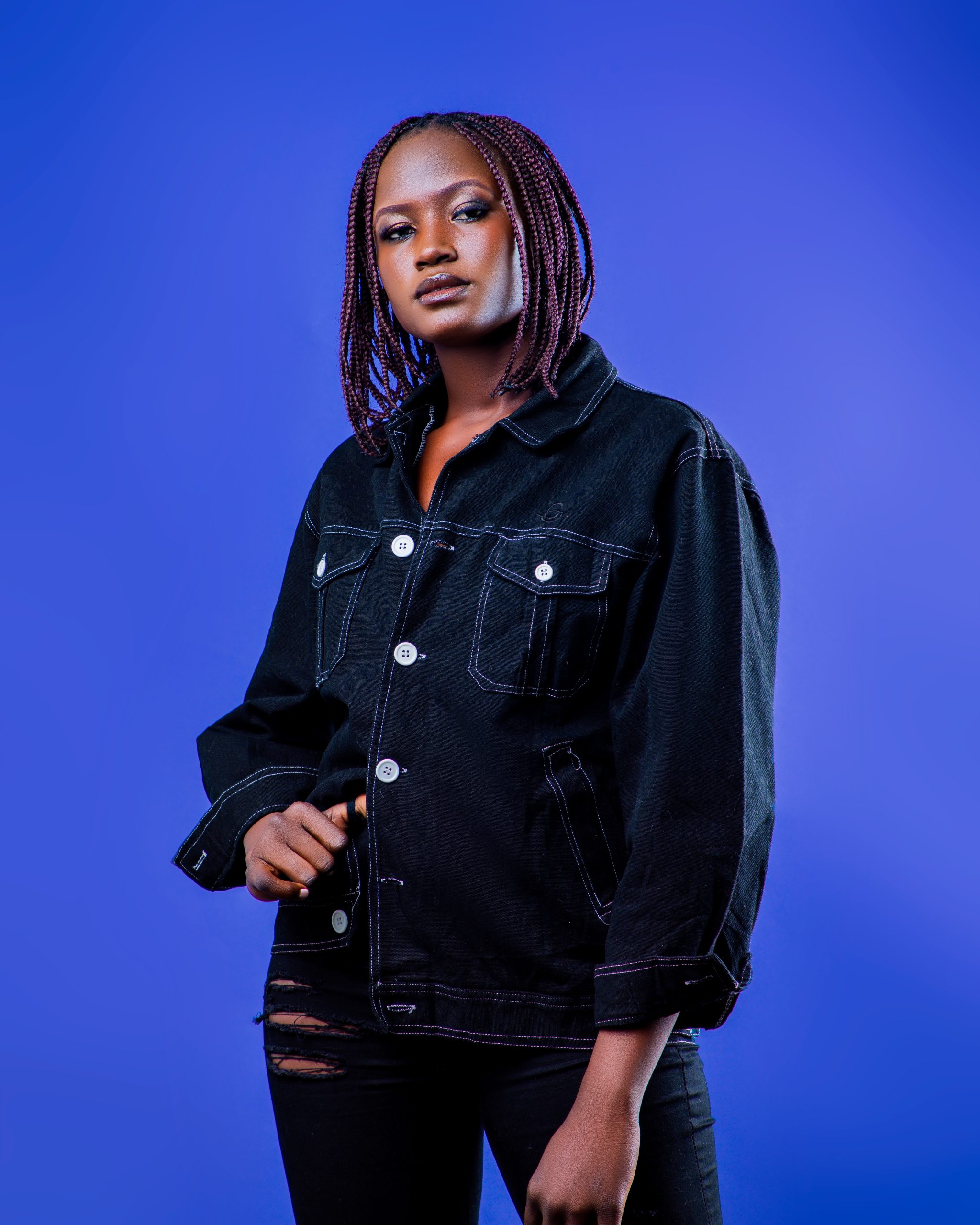
Born in a refugee camp in Uganda, abandoned by her father at the age of three and sold peanuts on the streets of Juba for survival, Shama Preace-24 has overcome many challenges to emerge as the first female rapper in South Sudan.
Sharma in mid-July produced a new single, crossover in collaboration with the South Sudan music giant, Emmanuel Jal. The video which is currently trending on Youtube, was inspired by the death of her mother, Joyce Kaku in 2021.
In an interview with The East African, the budding rap and hip-hop musician tells of how she composed the song as a form of mourning her dear mother who had left her with the responsibility of taking care of her siblings at the young age of 22.
The video that was shot at Makongeni, a working-class suburb in the east of Nairobi, is not only an expression of the pain of the struggles most South Sudanese go through in the face of civil war but a demonstration of resilience and hope.
“I wrote the song in the house while her corpse was in the tent outside awaiting burial. At that time, I was full of raw emotions but the song was later improved when Jal reached out to me and improved the lyrics,” she reflects.
Being a rapper, Shama who goes by the stage name Shammalee, contracted the services of Kenyan vioclaist Angel Atieno for blending. She raps: “I don’t know about the bad days, let me cross over because the struggles made me stronger. It is my time to sing and make my mama proud. I know you are watching me from up in the cloud shouting my name loudly”.
The song is a reflection of her personal loss of her mother who had been the pillar of her strength since her father abandoned them at the Mirei Refugee in Adjuman District in northern Uganda at the 3. The song advises people to work hard and cross over from their challenges. “Losing one thing does not mean losing everything,” she says.
Shammalee’s Crossover is a potent collaboration that demonstrates how music can communicate important ideas through engrossing vocals, intimate lyrics, and instrumentals. This track, which was written by Shammalee, Emmanuel Jal, and Angel Atieno, gives listeners a glimpse into the struggles and victories that have shaped them personally. It also serves as an inspiration for others.
“My mother, who had seven stillbirths before I was born, had given up on me because she thought I would not survive, just like her earlier children. So, when I fell seriously sick at the age of five and could not afford the hospital bill, it took my grandmother to rush me to the hospital and ensure that I survived,” she narrates.
Shama, who goes by the stage name Shammalee, was born in 1999 at the Ugandan refugee camp after her parents fled the civil war in Sudan. She started early education in Uganda but she and her mother had to relocate back home in 2007.
“My mother just told me without any warning that we had to go back. I could not understand because all along I thought Uganda was our home. I didn’t know that my family had ran away because of war.
But on arriving back home, Shama got is rough and was forced to sell peanuts in the streets for survival when her mother could not afford school fees. But then, going by the messages from her song, she got a lady sponsor called Keziah who took her to Yei where she studied until Primary 6. She then went back to Juba where she did her Primary 8 and until Senior 4 and completed in the 2017/2018 financial year.
Despite her tumultuous background and history, the overtly optimistic Shama says she will break into the world music scene in the next two years. She started singing in a church choir and Sunday School in 2013 when she was 14. All this time, she loved acting and in school, she had aspired to be a music producer.
Shama means Shida (a Swahili word for trouble), started singing at 20 and had previously produced two singles; Come Closer and Let You Go—both released in 2019.
She later worked as a Script Writer at Solidarity International which deals with the education and mentoring of young people. As she put it; “We held plays talking about the importance of staying in school—to avoid early pregnancy and forced marriages”.
She, however, faces the challenge of the underdeveloped music industry in South Sudan where there is a lack of recording equipment and studios. There is also the challenge of resistance from the community who perceive musicians as drug-taking misfits that have discarded societal norms.
But her dreams in both music and education might soon come true after her mentor, Jal, offered to take her to a Kenyan University to study her dream career in Movie Production.