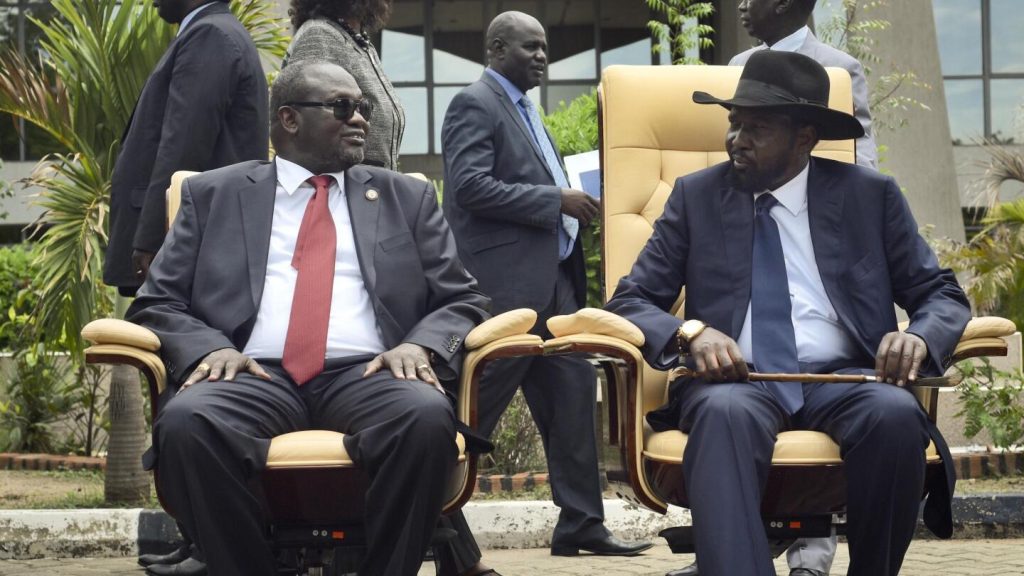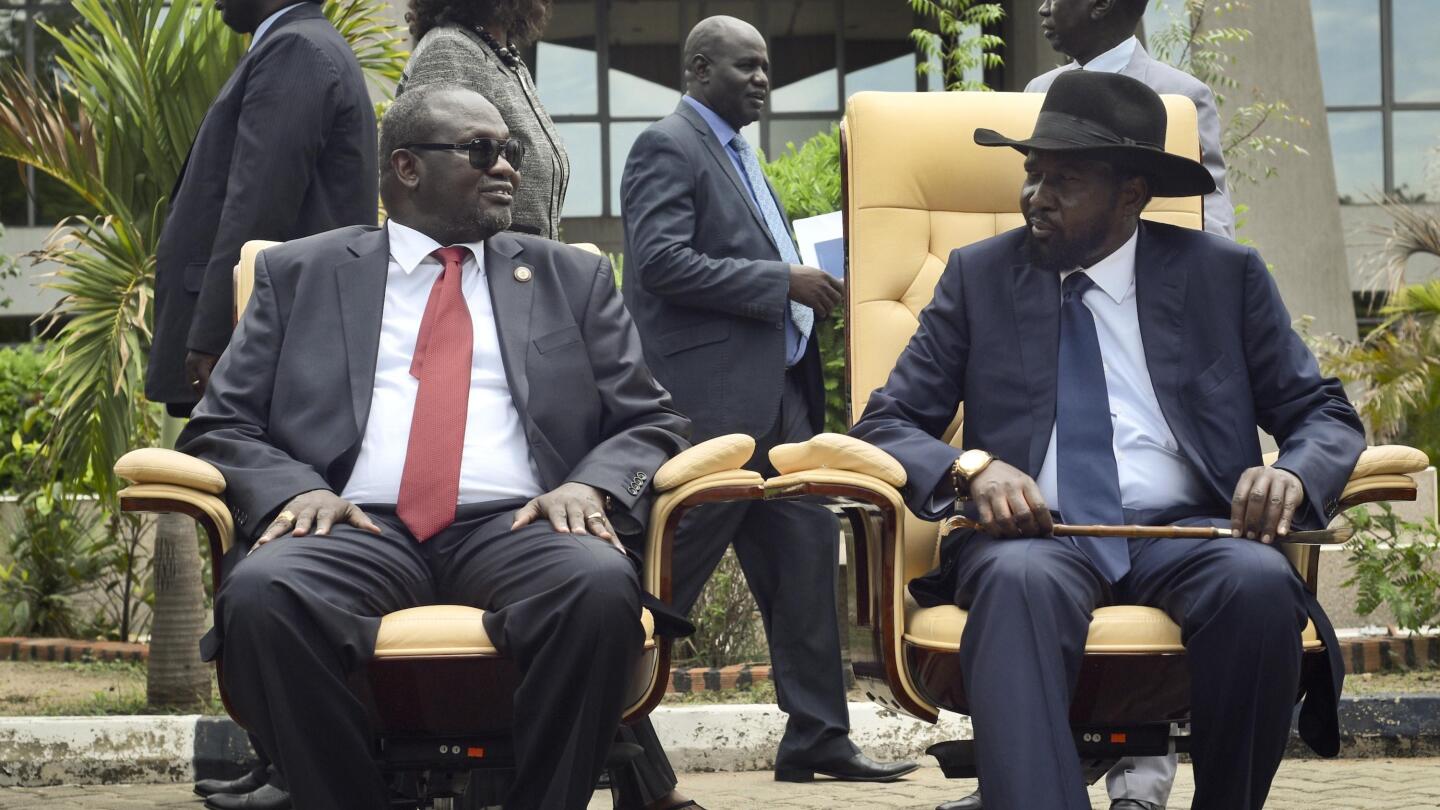
South Sudan has postponed the December 224 elections and once more extended the transition government for two years, raising questions whether the country ever hold elections.
The presidency led by President Salva Kiir on September 13 extended the life of the transitional government of national unity for 24 months, confirming what most observers have been saying that the country neither had the capacity to hold credible elections, nor the political will.
This puts South Sudan in the league of Eritrea that has not held presidential elections since independence in 1993. South Sudan got its independence in 2011 and for 13 years has been paying lip service to elections, taking refuge behind the civil war that broke out in 2013.
The postponement of the elections is likely to generate debate over legitimacy given that the mandate of the transitional government was supposed to end on September 22.
The decision came following a meeting of President Kiir’s cabinet and his vice-presidents and advisors. According to Cabinet Affairs minister, Dr Martin Elia Lomuro, the extension will give the government an opportunity to implement the remaining key provisions in the 2018 peace agreement.
“The extension is in response to the recommendations from the electoral institutions and the security sector. It is an opportunity to implement the pending issues in the peace deal’” he said.
The elections that were scheduled for December 22, 2024 have been pushed to December 2026 because key clauses of the 2018 peace agreement have not been met.
They include; the unification of armed forces and reforms in the security sector. Due to trust deficit, only 53,000 of the total 83,000 required by the 2018 peace agreement have been trained and integrated. But even those who have been absorbed in the army lack weapons and often go without salaries for months.
There are also the provisions that the country can only go to the elections after enacting a permanent constitution—which experts say could take three years.
The other prerequisite is the national census—which is supposed to determine the exact population of South Sudan and also allow the delineation of constituency boundaries.
Then there is the issue of the registration of political parties, and the return of over 2.5 million refugees in the neighbouring countries and the resettlement of the 1.5 million internally displaced people.
President Kiir and his close associates have been insisting throughout the year that the country was ready to hold elections in December 2024 because the South Sudanese were tired of extensions.
After gaining independence in July 2021, South Sudan was supposed to hold elections in 2015, but aborted because of civil war. Again the country was supposed to hold election in February 2023, but the leadership in August 2022 effected an a 24-month extension on grounds that the country was not ready.
Now, analysts are wondering whether the country will be able to implement these sensitive provisions in 2024 months that the country is suffering from deep trust-deficit.
According to the Deputy Minister for Information, Communication and Postal Service, Dr Jacob Maiju Korok, the country did not want to rush into an election without implementing the critical tasks, since some articles in the Revitalized Peace Agreement that were not implemented.
The extension is likely to raise objections from donors, especially Troika (US, UK and Norway)—that have been the key funders of the peace talks.
The Kiir administration have been maintaining that lack of funds has been the main reason why key provisions such as security sector reforms have not been implemented.
Yet, experts believe that certain provisions are too sensitive, like the pending issue of transitional justice. The 2018 peace agreement provides for the setting up of the national healing and national reconciliation mechanisms.
The biggest challenge has been the unwillingness by both sides to set up the Hybrid Court to try those who committed war crimes and crimes against humanity since the war begun in 2013.
To ensure the integrity of the electoral process and avoid fraudulent actions, South Sudan requires financial assistance for voter education campaigns, training for election officials, and monitoring efforts.
The crunch of the matter is that South Sudan requires $228 million for elections of which it can only afford 15 percent, but the donors are insisting that Juba must fully implement the 2018 agreement—key among them the security sector reforms.
Ironically, President Kiir in May accused Troika of pushing for the another extension of the transitional period on grounds that all the provisions of the 2018 agreement have not been implemented. Now it is Kiir’s turn to accept that the country is currently incapable of holding a free and credible elections.