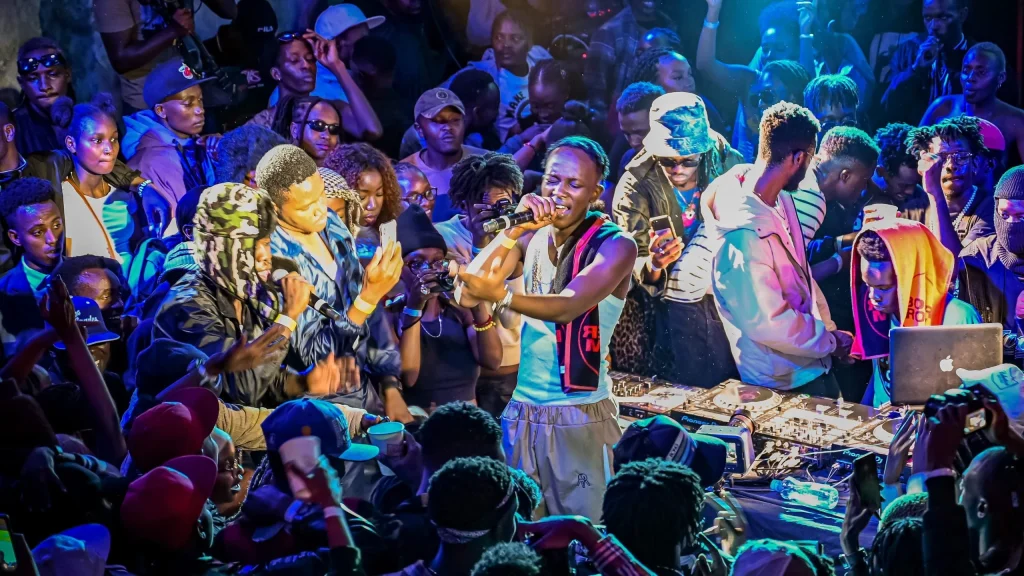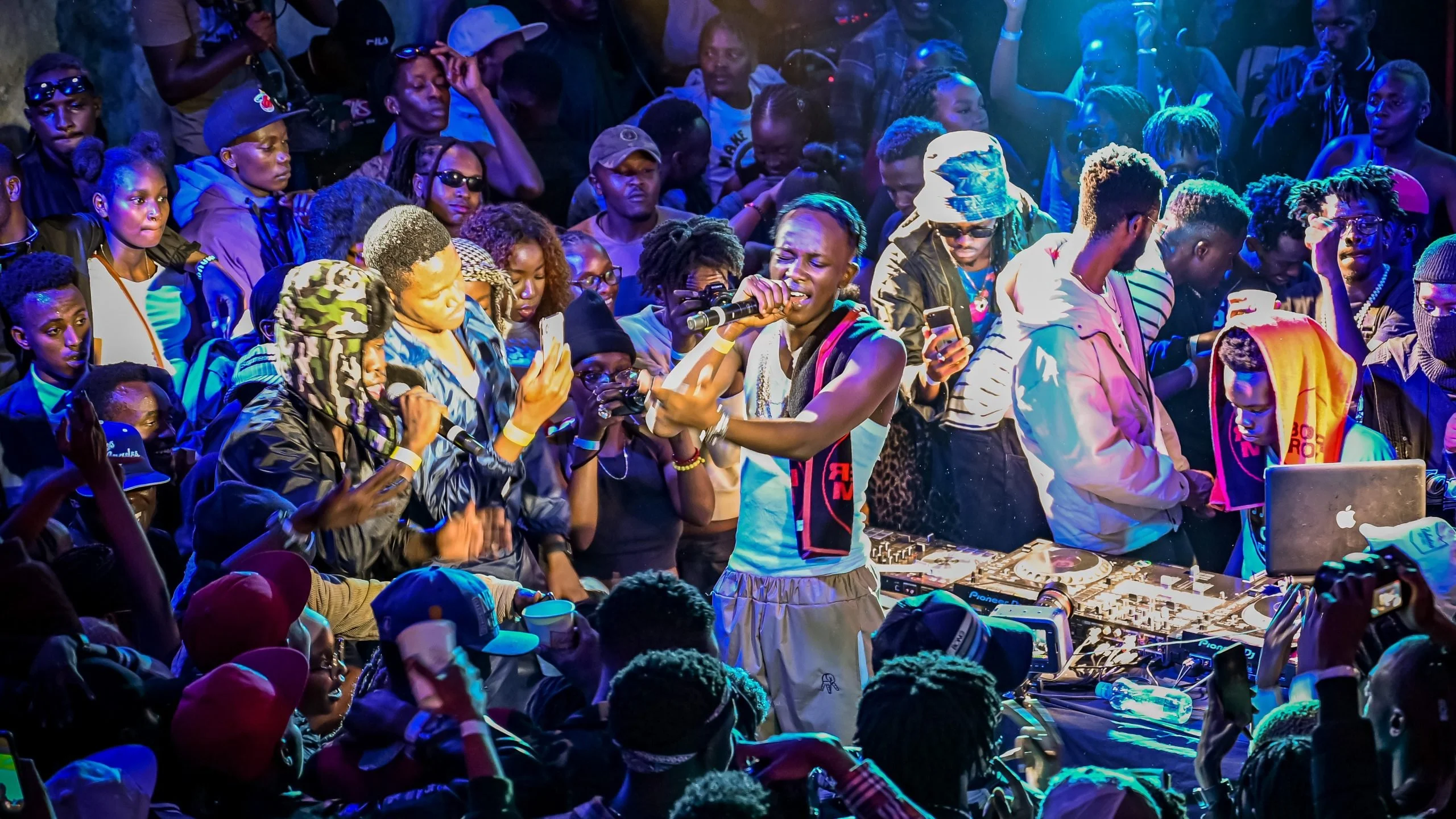
There is debate on why Kenyan hip-hop music is changing. New artists, technology, and new messages are changing the narrative.
The Gen Z protest music Anguka Nayo (Fall with it) has mobilisesd youth and given a political dimension to hip-hop.
Kenya’s hip-hop music has evolved significantly, marking a journey from Jimmy Gichu’s pioneering track Look, Think, Stay Alive in the mid-80s to the explosive impact of Kalamashaka’s Tafsiri Hii in 1997.
As a music industry player, I agree that things are being turned upside down. These milestones have sparked debates within the community, with questions lingering about which track truly steered Kenya’s hip-hop industry into the limelight.
Figures like entertainment writer George Orido, challenge the notion that Hardstone’s Uhiki was the catalyst for local hip-hop’s rise. For many dedicated “hip-hop heads,” however, Kalamashaka, affectionately known as K-Shaka, remains revered as the pioneering force.
Having been an underground hip-hop artist and a dedicated follower for many years, I’ve witnessed firsthand the evolution of Kenyan hip-hop, and one name that resonates profoundly is K-Shaka, originally known as 3D (Three from Dandora).
Johnny Vigeti, Oteraw, and Kama, K-Shaka didn’t just impact the local scene but made waves internationally, reshaping the landscape of Kenyan hip-hop forever.
One of their groundbreaking achievements was their collaborations with international hip-hop giants like Dead Prez, Coolio, and Lost Boyz, which showcased Kenya’s hip-hop prowess on a global scale, a feat that was unprecedented at the time considering their humble beginnings.
The trajectory of Kenyan hip-hop took various turns, notably around 2004, when subgenres like Kapuka emerged, spearheaded by artists such as Big Pin and Kleptomaniacs of Ogopa Deejays.
Simultaneously, the rise of Genge, led by artists like Jua Kali, Nonini and Jimwat of Calif Records added another layer of diversity to the genre.
However, as tastes evolved, Genge began to wane in popularity by the mid-2000s. Emerging from this transition, Gengetone burst onto the scene, injecting fresh life into Kenya’s urban music culture with the likes of Ethic Entertainment and Sailors.
While Millennials often look down on Gengetone, deeming it inferior to the original Genge music they grew up listening to, Gen Z resonates deeply with the genre.
They embrace its lively rhythms, bold lyrics, and unfiltered expression as a reflection of their own contemporary experiences and cultural identity.
Gengetone has become a soundtrack that captures the spirit and energy of today’s youth, showcasing a shift in musical preferences and cultural perceptions across different generations within the Kenyan music scene.
At its core, hip-hop is a vibrant and multifaceted cultural phenomenon that began as a style of music in the Bronx, New York City, during the late 1970s.
However, its influence extends far beyond mere musical expression, encompassing a dynamic movement that includes beatboxing, breakdancing, DJing, graffiti, and fashion.
Hip-hop quickly evolved into a global sensation by the turn of the 21st century. Artists from diverse regions—East Coast, West Coast, and the “Dirty South”—played pivotal roles in shaping hip-hop into a distinct music genre and a profound cultural force.
The chart-topping hits and innovative techniques borrowed from disco, soul, rock, and jazz transformed hip-hop into a powerful medium for social, political, and cultural commentary.
The roots of hip-hop lie in the creativity and resilience of marginalised communities, where artists used their voices to express struggles, aspirations, and realities often ignored by mainstream society.
By the 2000s, hip-hop had permeated global culture, transcending geographical boundaries and language barriers. In essence, hip-hop is more than just music—it’s a movement, a culture, and a testament to the transformative power of artistic expression.
It embodies the spirit of resilience, creativity, and community that continues to inspire and unite people around the globe.
Rapping, the distinctive vocal style that defines hip-hop music stands as a unique art form blending poetry, storytelling, and rhythmic speech.
Unlike traditional singing, which revolves around melody, rapping emphasizes rhythmic delivery and intricate rhyming patterns, creating a direct and often provocative means of expression.
The origins of rapping can be traced back to the rich traditions of African griots, revered storytellers who wielded rhythm and rhyme to preserve history and convey moral lessons through oral narratives.
This ancient practice, deeply rooted in West African cultures, laid a foundational framework for what would eventually evolve into modern-day rap music.
By the late 20th century, rapping had become the cornerstone of hip-hop culture, transcending its Bronx origins to captivate audiences worldwide.
Unlike other genres, few hip-hop artists incorporate physical instruments into their performances. The genre’s creativity thrives on weaving beats and melodies together in novel ways.
Hip-hop beats can range widely in style, from sparse and relaxed to harsh and dark, with countless variations in between. Yet, they are unified by a driving, steady beat and a typically minimalist approach to musical complexity.
This simplicity ensures the spotlight remains on the lyrics and the rapper. A hallmark of great rappers is their “flow” – the seamless integration of words and rhythms without stumbling. They treat their voice as an instrument, modulating it from coarse shouts to smooth flourishes as needed.
In Kenya, the music scene is a vibrant tapestry woven with diverse genres, each carving out its niche in the cultural landscape. At the heart of this musical mosaic lies hip hop, a genre that has sparked a spirited debate between purists and innovators.
Traditional underground hip-hop in Kenya is characterised by its raw authenticity and its role as a mouthpiece for social justice, economic disparities, and political discourse.
It carries a conscious message, resonating deeply with its listeners who seek music that reflects their realities and challenges societal norms.
On the other hand, mainstream Kenyan hip-hop often takes on a different hue. It blends Afro beats and dancehall rhythms, creating a sound that pulses through clubs and parties across the country.
Gengetone, a subgenre within this mainstream scene, has surged in popularity with its infectious beats and catchy hooks. It’s laced with humour and bravado, appealing to a younger audience looking to let loose and have fun.
However, tension simmers between the purists and proponents of Gengetone. Hip-hop aficionados argue that Gengetone and similar subgenres stray too far from the essence of authentic hip-hop, dismissing them as “trash music.” They maintain that true hip-hop should prioritize lyrical depth, social commentary, and artistic integrity.
So, whether you sway to the conscious beats of underground hip hop or find yourself swept up in the infectious energy of Gengetone, one thing is clear: Kenya’s musical landscape thrives on diversity, creativity, and the dynamic interplay between tradition and change.