

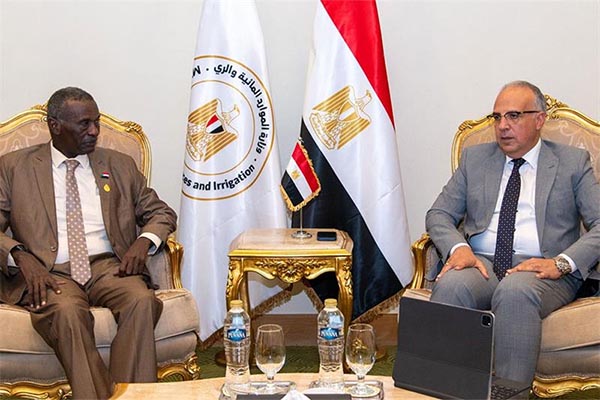
The Nile Basin Cooperative Framework Agreement (CFA) of 2010 officially came into force on October 13, amidst continued objections from Egypt and Sudan.
This means that colonial agreements of 1929 and 1959 that previously gave Egypt the veto power to receive 55.5 billion cubic meters annually, while Sudan was allocated 18.5 billion cubic meters per year, have now been rendered null and void.
The CFA’s coming into force starts the process of transition from the Nile Basin Initiate (NBI) to the Nile River Basin Commission (NRBC). The commission will be vested with the responsibility of managing and safeguarding the Nile’s resources for the benefit of all and will be the cornerstone of cooperative efforts among the 11 riparian countries
In 2010, Ethiopia, Uganda, Tanzania, Rwanda, and Kenya signed the CFA for the first time. Since then, the agreement has also been signed by South Sudan and Burundi. Two of the most powerful nations in the Nile Basin, Sudan and Egypt, have declined to sign, claiming issues with historical rights and water security.
What this means is that all riparian states will now be free to use the Nile waters for irrigation and the generation of electricity, a situation that is vehemently opposed by Egypt. The objective of the commission will be fourfold; to promote and facilitate the implementation of the principles, rights and obligations provided for the CFA; to serve as an institution framework for cooperation among the Nile Basin States in the use, development, protection, conservation and management of the Nile Basin and its waters.
Others are to facilitate closer cooperation among the states and peoples of the Nile River Basin in the social, economic and cultural fields; and to act as a forum for resolving disputes related to the Nile’s water usage.
The Nile River has been a source of tension, especially between Egypt and Ethiopia, as the latter began construction of the Grand Ethiopian Renaissance Dam (GERD) on the Blue Nile, a major tributary of the Nile River.
Ethiopia views the dam as essential for its economic development and insists it poses no threat to downstream water supplies. Egypt views the GERD as an existential threat to its water share from the Nile and demands a binding agreement on the dam’s filling and operation.
The CFA needed to be ratified by at least six of the 11 Nile Basin states to enter into force. These countries include Burundi, the Democratic Republic of Congo, Egypt, Ethiopia, Kenya, Rwanda, South Sudan, Sudan, Tanzania, and Uganda, as well as Eritrea (which has observer status).
Once a country’s national parliament approves and ratifies the CFA, the government must deposit the instruments of ratification with the African Union or a designated depository, making their ratification official.
According to a statement issued by NBI on October 13, 2024. “The CFA, the result of over a decade of negotiations, is a testament to our collective determination to harness the Nile River for the benefit of all, ensuring its equitable and sustainable use for generations to come”.
Egypt has been pushing for amendments to Article 14 (b) of the 2010 Treaty regarding the GERD. The article deals with the security of the use of the waters to all the Nile Basin states and guarantees historical rights to the use of Nile waters.
However, Article 14 (b) can only be negotiated under the framework of the Nile River Basin Commission, which is yet to be formed because only three — Rwanda, Tanzania and Ethiopia — out of the minimum six Nile Basin countries have ratified the Nile Basin Co-operative Framework Agreement, 2010.
