


Kenya, once the citadel of academic excellence in Africa, has suffered a severe diminish in stature in the recent past. The East African state has not only been recording a remarkable decline in education standards, but has also suffered the ignominy of the proliferation of fake academic certificates.
Furthermore, Kenya has been flagged by the BBC as the hub for the infamous “contract cheating”. In the latter, according to the BBC report on September 9, 2021, desperate Kenyans, especially the young, leveraged on their English proficiency and the country’s good education system, to write academic papers for the lazy or weak students from overseas for a fee. The charges vary depending on whether the assignment is a simple essay or, at the other end of the scale, an entire PhD thesis, said the report.
A peep into the future leaves no doubt about a further decline on Kenya’s education standards. In particular, the country 2024/25 Budget Policy Statement (BPS), currently under public scrutiny, leaves a lot to be desired.
The proposed allocation for the entire education sector is a measly, with some segments awarded zilch funding, spelling their imminent death. There is a nationwide trepidation about the National Assembly adopting the proposal. Yet, both the National Assembly and the Senate have demonstrated their lack of independence, often pandering to the whims of the Executive. Though the trend did not start with the current regime, it has probably risen to a new higher with President William Ruto’s desires invariably sailing through unchallenged, their unpopularity notwithstanding.
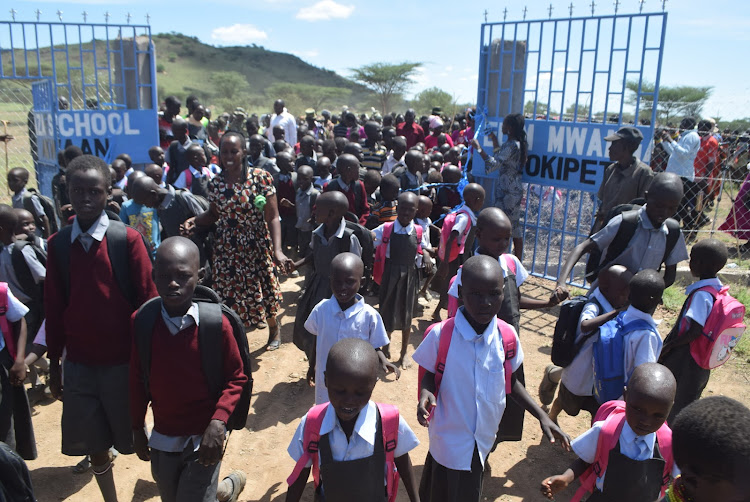
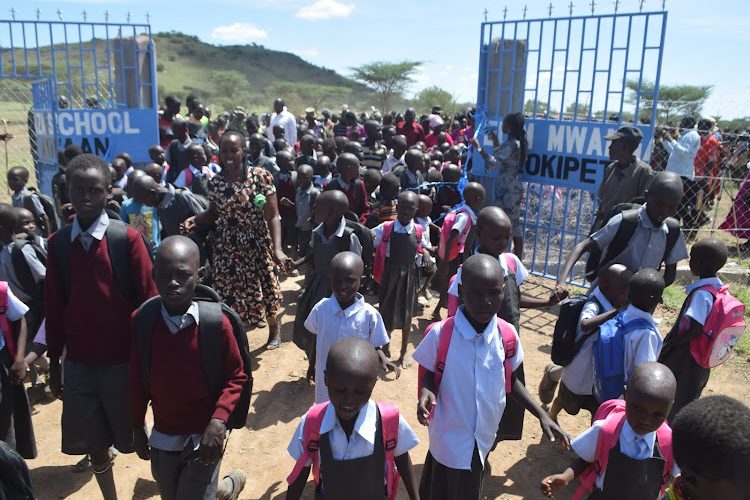
The 2024/25 spending estimates, for instance, have no allocation for the school feeding programme, a critical incentive at the lowest level. The implication is that millions of beneficiaries may not receive a meal in schools going forward. The programme has been particularly critical in 26 out of Kenya’s 47 counties, where learners are retained because of the availability of simple meals. It is instructive that the ruling Kenya Kwanza coalition administration, which allocated Sh4.9 billion ($36.9m) for the school feeding programme in the 2023/24 financial year, promised in its 2022 election manifesto to double the budgets and the number of its beneficiaries.
Deputy President Rigathi Gachagua reinforced the promise, when in his address to the UN Food Systems Summit in Italy, last year, asserted that Kenya has an effective school feeding programme that has helped to double enrolment.
A study by the African Population and Health Research Centre on school feeding programmes acknowledged the critical role the provision of meals plays. The study said the meals enhanced attendance and concentration on studies. Consequently, it recommended increased government funding for the programmes to enrich the menu and nutritional quality, the expansion of the initiative to low cost private schools and the establishment of school gardens and resource-efficient practices.
At a higher level, the government is on a collision course with the Junior Secondary School (JSS) teachers for failing to provide funds for the improvement of their terms of employment. The JSS teachers have been agitating for better employment terms, including by downing their tools, further crippling a programme that has stuttered since its launch two years ago. In addition to their measly Sh17,000 ($128) a month, and failure to be hired on permanent and pensionable terms, the JSS teachers have decried to untenable work load of sharing over 10 learning areas among an average of two per each public school. Teaching at that level requires subject specialisation and each teacher specialises in two subjects only in training.
Not even the education at the university level has been spared the haircut. The University of Nairobi, Moi University, the University of Eldoret and the University of Kabianga, have found themselves with zero allocation in the published budget estimates, yet the 2024/25 BPS had allocated them Sh1.725bn ($13m), Sh1.3bn ($9.7m) , Sh702.7 million ($5.3m), and Sh339.6 million ($2.5m) respectively. Across the entire university spectrum, the government has not allocated any funds for research, feasibility studies, project preparation and design.
Already, virtually all of Kenya’s 40 public universities are in financial crises, with 23 of them technically insolvent. The institutions of higher learning have Sh76bn ($574.5m) in accumulated pending bills, with some now unable to pay staff salaries. For instance, on May 13, the management of Kenyatta University notified all the staff of the institution’s inability to settle their salaries, owing to delayed April capitation from the government.
Many were struggling to comprehend the rationale of the budget, with questions about the government’s obsession with funding non-priority projects. The Kenyan taxpayers will, for instance, spend close to Sh1 billion ($7.5m) annually on the renovation of the presidential residences in various parts of the country, in a project that started in July 2015. Already, the refurbishment of State House in Nairobi is at 43 per cent, the one in the coastal town of Mombasa is at 30 percent, while the one in Nakuru (150km west of Nairobi), is at 31 percent, according to the documents presented before the National Assembly on Administration of National Security. According to the documents, the Deputy President Rigathi Gachagua wants Sh1.12 billion ($8.5m) to renovate his office. Some Sh660 million ($4.9m) will be used to renovate his official Karen residence, while Sh460.4 million ($3.5m) will do the same work at his Harambee House Annex. The DP also wants some Sh200 million ($1.5m) to buy new vehicles and Sh250 million ($1.8m) for the purchase of medals, honours and insignia.
It is encouraging that several voices have come up in opposition to the flawed budgeting. However, the fate of the Kenyans is essentially in the hands of their representatives in the National Assembly. By casting their ballots, they either will pass the Finance Bill in its entirety, reject it in toto or make amendments to it.