

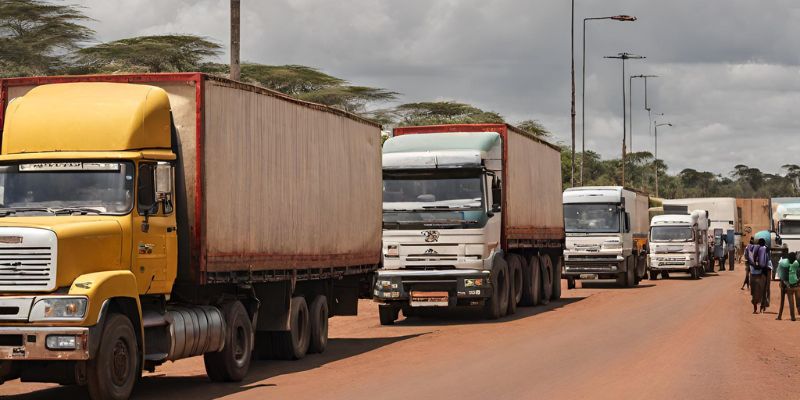
Tanzania truck owners who transport goods to the landlocked countries in the central and east African region are currently reeling from the rise in transport costs and bureaucracy in the borders.
The shipping lines recently increased cargo transport by 70 percent from $2 per container over a kilometre to $3 while transporting cargo from the port of Dar-es-Salaam.
This wide price range which is effective from April 2024, reflects factors like volume, timeframe as well and the distance for destination terminals to neighbouring landlocked countries such as Rwanda, Burundi, Uganda, DR-Congo, Zambia and Malawi which depend on Dar port.
Truck Owners’ Association (TATOA) are now concerned that they are likely to lose business on the central corridor following high cargo transit costs and other logistical issues introduced by shipping lines along central corridors.
Elias Lukumay, the TATOA chairman said that the move will hurt cross-border trade among members of the East African Community (EAC), who are already grappling with challenges of bureaucracy at One-Stop Border Posts (OSBPs).
With the newly introduced rates, it means that a transporter carrying a container to Kigali in Rwanda through a 1,475 km road pays $ 4,528.
The Chairman of the Tanzania Shipping Agents Association (TASAA), Daniel Malongo attributed the increase to the high rates imposed on container transportation from Europe and Asia to Africa through seaway which has increased from $ 7,000 to $ 10,000.
The rates have risen due to maritime insecurity in the routes from Europe and Asia to Africa due to the ongoing conflict in Gaza.
“Shippers from Europe have diverted their routes and instead are now rounding to South Africa to evade gangsters who hijack ships off the coast of Yemen while on transit towards the horn of Africa,” said Mr Malongo.
Other organisations such as the Shippers Council of Eastern Africa (SCEA) and Northern Corridor Transit and Transport Coordination Authority (NCTTCA), have also expressed concerns about high rates for transporters and disparities in road user levies among EAC partner states.
The central corridor is also facing another challenge of congestion which hampers the trading route linking the port of Dar-es-Salaam and landlocked countries in the region that are members of the EAC.
The OSBPs—that was meant to help reduce congestion and long waiting times while crossing the border—appear not to be working as cumbersome customs and immigration procedures are impeding the quick movement of goods and people due to congestion.
The challenges in the central corridor have prompted the EAC secretariat to set up a committee to look into these complaints and inspect border crossings that have been affected.
Simon Owaka, the Senior Public Relations Officer, Corporate Communications and Public Affairs at the EAC, said that inspection work which was commissioned in mid-April is currently evaluating work performances at various border posts within EAC member states.
These include; Limule, Elegu, South Sudan side, Mutukula in Uganda, Rusumo in Rwanda side, Kobero/Kabanga in Burundi side and Namanga on the Tanzanian side.
More than 25,000 lorries are involved in cargo transportation between the port of Dar-es-Salaam and the hinterland. They are owned by over 1,000 members of TATOA, who have employed more than 80,000 individuals directly and 200,000 indirectly.
TATOA members serve 95 percent of cargo transportation from the port of Dar-es-Salaam, leaving 5 percent which is transported through railway to upcountry regions and across the border to neighbouring countries.
A report released in December 2023 shows that Dar-es-Salaam port handled 2.3 million tons of export goods destined for landlocked countries within the EAC regional and other 3.1 million tons imported by countries of the Southern Africa Development Community (SADC) region.
