

By Charles Omondi
When Ghana led the way in evacuating its nationals from the xenophobia violence in South Africa in May, Pretoria accused Accra of making “public spectacles” out of the situation. The flights occurred in May and June 2026, amid rising xenophobic tensions and anti-immigrant marches.
With the anti-immigrant tensions seemingly unrelenting, several other sub-Saharan countries were now racing to fly their nationals from the marauding mobs in the rainbow nation. No country wants to take chances with the South Africans who want black immigrants out, accusing them of all manner of ills.
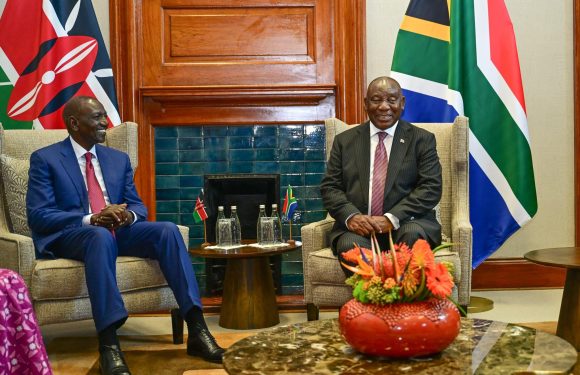
The Government of Kenya has facilitated the homecoming of hundreds of citizens, with the final evacuation flight scheduled to leave Johannesburg on July 9.
A special flight with 268 Nigerians on board recently landed in Lagos, with the Nigerian consulate registering over 1,000 citizens seeking immediate departure. Malawi too, wasorganising and executing chartered repatriation of its citizens back to safety.
Following the reported deaths of three Ugandan nationals, President Yoweri Museveni ordered an urgent repatriation of hundreds of Ugandans aboard special Uganda Airlines charter flights.
The Maputo government has organised mass repatriations for thousands of Mozambicans, who fled towns in the Western Cape and KwaZulu-Natal, with over 1,600 citizens returning home through government-assisted buses and deportation programmes via the Lebombo Port.
The immediate neighbour, Namibia, has approved urgent voluntary repatriation for its citizens in South Africa. The Namibian government was making arrangements to assist those returning home.
If nothing else, the flurry of repatriations is a firm confirmation of the rest of Africa resigning to the hostility of the South Africans. They do not want black immigrants in their country, and giving them their space is the best option!
Though deeply rooted in South Africa’s socio-economic fractures and historical isolation, xenophobia spiked significantly after the 1994 transition to majority rule, thanks to rising inequality, limited public resources, and the arrival of large numbers of African migrants seeking safety and economic opportunities.
The latest wave is driven by coordinated digital campaigns and vigilante groups such as “Operation Dudula” and the March and March Movement. Protesters have since April issued ultimatums; Abahambe (they must leave), demanding all undocumented foreigners leave the country, culminating in widespread violence. Some South Africans reckon they want all the black immigrants out, regardless of whether or not they are documented.
The South African Government, under President Cyril Ramaphosa, has, at best, responded meekly to the phenomenon that seems to continue making nonsense of the African Union (AU) policy on immigration, which is primarily guided by the Migration Policy Framework for Africa (MPFA) (2018–2030) and the Protocol on Free Movement of Persons.
These frameworks aim to promote continental integration, secure the rights of migrants, and establish seamless, visa-free travel and the right of residence for African citizens under the AU Agenda 2063.
Tellingly, AU has so far maintained a studious silence on the matter, yet it has long shifted from the Organisation of African Unity’s strict “non-interference” to a “non-indifference” policy. While Article 4(g) of the Constitutive Act prohibits interference, Article 4(h) grants the AU the right to intervene in cases of war crimes, genocide, and crimes against humanity.
With the ‘rejection’ of the rest of Africa, one is inclined to question how long the latter will be restrained from taking retaliatory measures. Like the rest of the countries, South Africa has vast interests beyond its borders. Its nationals are to be found in virtually every corner of the globe as immigrants, visitors and professionals. Several South African investments are to be found, especially in other African countries.
South Africa’s MTN Group, for instance, is Africa’s largest telecommunications provider, serving over 300 million mobile subscribers across 16 primary markets. Though headquartered in Johannesburg, MTN dominates Africa’s digital and financial technology sectors through voice, data, and its “MoMo” (Mobile Money) ecosystem.
South Africa has vast interests in DStv, Africa’s premier satellite pay-TV service, operated by the MultiChoice Group, which is owned by French media giant Canal+. It serves over 40 sub-Saharan African markets by broadcasting premium sports (SuperSport), original local entertainment (Africa Magic, M-Net), and international content through traditional decoders and digital apps.
South Africa’s Absa Group operates a pan-African banking network in 12 countries, with on-the-ground banking in 10 sub-Saharan markets and representative offices in Namibia and Nigeria.
The group manages its extensive footprint from its headquarters in Johannesburg.
As it were, there is little doubt that diplomatic tensions have soured between South Africa and the rest of the continent.
Though in a rather uncoordinated manner, both the state and the non-state actors were pronouncing themselves on the troubling trajectory. Uganda’s Chief of Defence Forces, Muhoozi Kainerugaba, has demanded that South African nationals leave Uganda by August. The military chief accuses President Ramaphosa of failing to protect African migrants from the xenophobic violence in South Africa.
Nigeria lawmakers have proposed suspending trade and aviation agreements, boycotting South African businesses operating in Nigeria, and pursuing legal compensation under international law.
Following the reported deaths of at least five Mozambican citizens in the violent, anti-immigrant protests across South Africa, angry Mozambican mobs barricaded the N4 near the Ressano Garcia border post, stoning South African trucks in retaliation. In an attempt to mitigate the situation, the Mozambican government issued warnings and engaged in diplomatic interventions with South Africa.
When all is said and done, there can be little doubt that the South Africa versus the rest of Africa duel cannot be wished away.