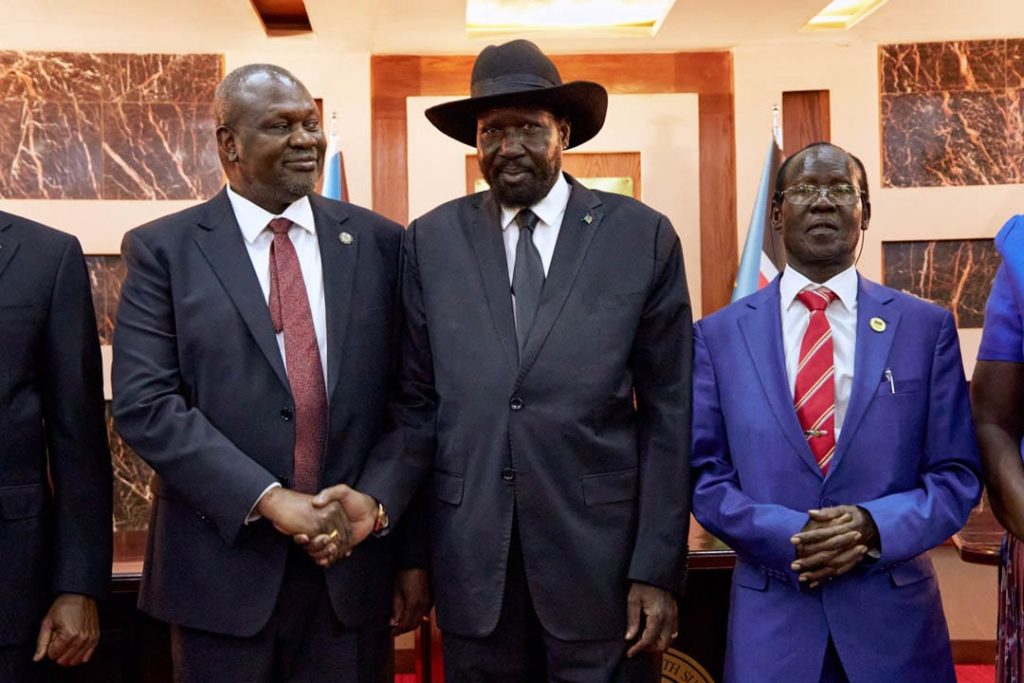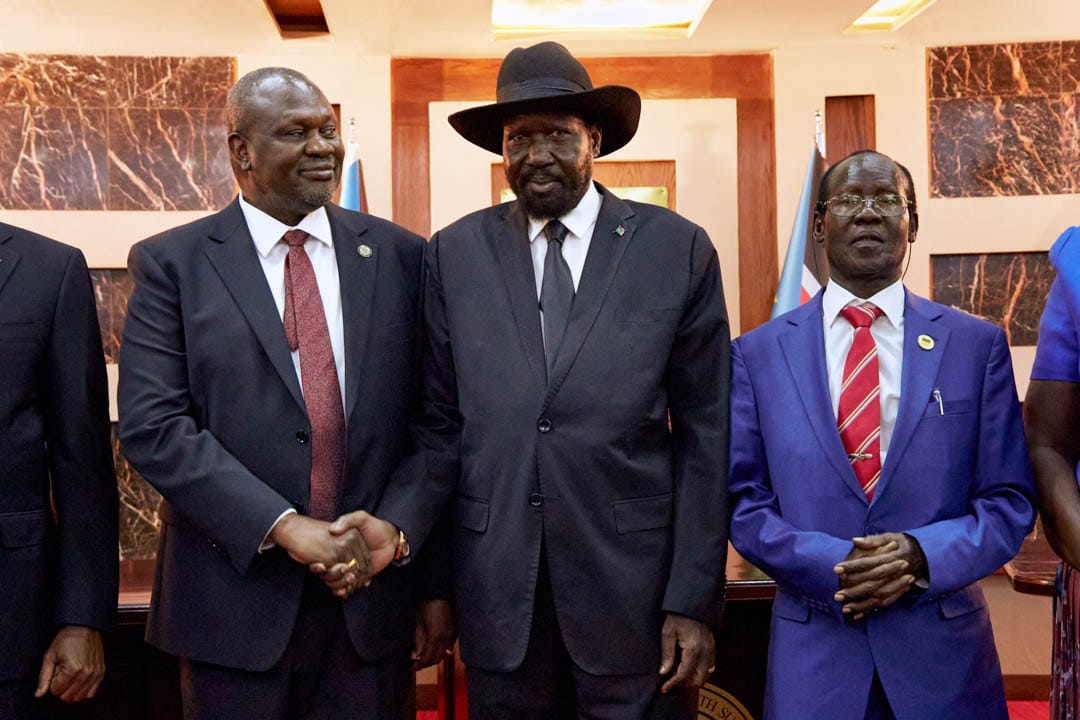
The adjustments to the 2018 peace agreement do not sit well with most stakeholders.
The decision by the South Sudan Transitional government to strike out key provisions of the 2018 peace agreement has added to the hurdles facing the elections set for December 22.
The parliament, citing a lack of ample time, has struck out the provisions that required the country to hold a national census and enact a permanent constitution before the elections, as per the agreement officially known as the Revitalised Agreement on the Resolution of the Conflict in the Republic of South Sudan (R-ARCSS).
The resolution passed on June 30 struck out the two provisions, which, according to MPs supportive of President Salva Kiir, presented legal obstacles to the country’s ability to hold elections on time and that they will be addressed after the elections.
However, in response to pressure from the international community to maintain the legal basis of the 2018 peace settlement, Parliament preserved clauses that give it primacy over conflicting national laws, including the transitional constitution.
The opposition led by Dr Riek Machar’s Sudan People’s Liberation Movement-in-Opposition (SPLM-IO), argued that parliament failed to follow procedures set out in the peace agreement and the transitional constitution, which include consensus and consultations with key signatories to the 2018 peace agreement.
The caretaker chairperson of the parliament’s Information Committee, Oliver Mori Benjamin, said that the amendments would allow the National Elections Commission (NEC) to accelerate election preparations.
The life of the transitional government has been extended twice since 2018, with the government citing non-implementation of key provisions such as a national census, a permanent constitution, and security arrangements that include the unification of forces.
President Kiir has maintained that the people of South Sudan are tired of extensions and yearn for the opportunity to choose their leaders for the first time since the country gained independence in 2011.
The Reconstituted Joint Monitoring and Evaluation Commission (RJMEC), strongly warned against any changes that would weaken the deal, because the 2018 agreement is the primary legal framework for holding elections.
Edmond Yakani, the Executive Director of the Community Empowerment for Progress Organisation (CEPO), said that the decision of the parliament to amend the 2018 is contrary to Article 8.4 of the R-ARCSS that requires consensus.
“All these amendments only resolve legal issues which is one of the many challenges for creating a conducive environment for the conduct of the elections proposed for December 2026,” said Mr Yakani.
Akol Miyen Kuol, a South Sudanese author and Political Commentator, said that the amendments are a clear violation of the September 2018 peace agreement.
“Decisions on key issues such as those on census and permanent constitution must be made collectively by the parties to the revitalised peace deal. South Sudan’s political and ethnic composition is very complex and sensitive; hence, any decision dealing with any peace deal or the fate of the country and its people must be taken based on consensus and not unilaterally,” said Mr Kuol.
NEC had cautioned that preparations might be hampered by a lack of funds, inconsistent laws, and delays in putting the 2018 peace agreement’s main clauses into effect. The biggest challenge is the increasing insecurity, as principal signatories to the peace agreement suffer from a trust deficit that has made it difficult for the unification of forces—a key prerequisite for holding elections.
The credibility of the pending elections will also be affected by the detention of Dr Machar, a former first vice president who is facing charges of treason.
Dr Machar’s trial has led to a virtual breakdown of political power-sharing, where SPLM-IO ministers were sidelined, the Joint decision-making committees stopped functioning, and Kiir’s inner circle concentrated power in the presidency.
Dr Machar’s supporters argue that his detention and subsequent trials is a calculated move to bar him from participating in elections, just like it happened in Tanzania and Uganda, where main opposition leaders were put in jail to stop them from participating in the elections.
South Sudan donors led by Troika–US,UK and Norway–have also joined the fray. In a statement by the US Ambassador Michael J. Adler at the RJMEC briefing on July 3, Troika said that it is farcical to say that interparty dialogue is occurring when Dr Machar, the head of the second-largest party to the 2018 peace agreement, is under house arrest and on trial. Troika maintained that while the implementation of the 2018 agreement is imperfect, the agreement remains the basis for the legitimacy of the transitional government.
“Any changes must be made through dialogue involving all parties to the agreement. As we have noted, dialogue cannot be said to be authentically taking place without inclusion of all parties to the agreement, including Riek Machar,” the statement said.