

here has been an increase in the mobile payment systems in Africa which boosting cross-border trade and a major step in actualizing the African Continental Free Trade Area (AfCFTA).
The volume of payments and the total value of payments processed has grown rapidly since 2018, by 47 percent. Instant payment systems (IPS) hit 32 billion transactions valued at approximately $1.2 trillion in 2022.
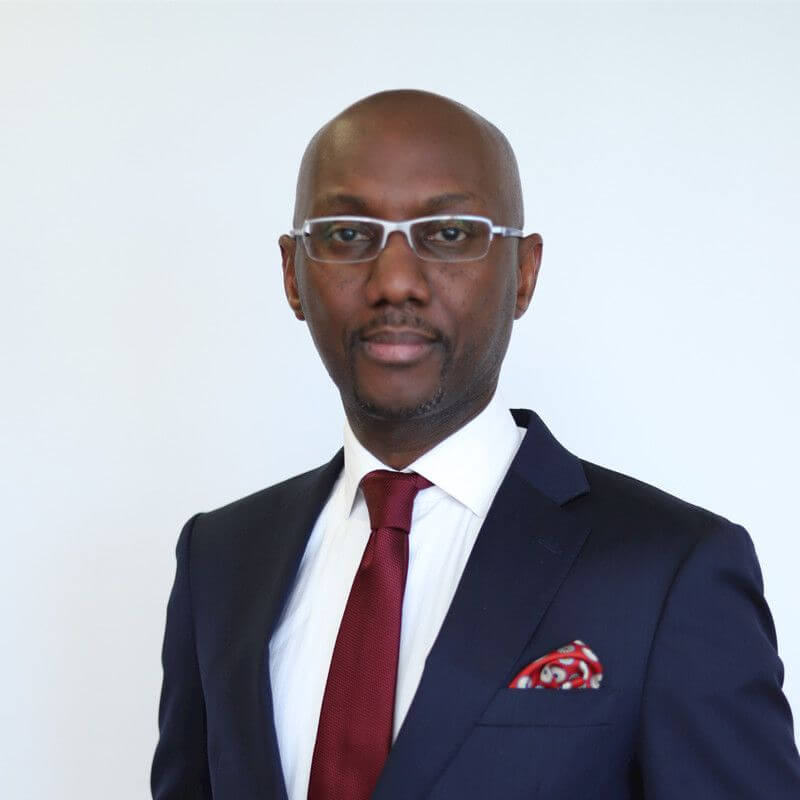
DR ROBERT OCHOLA, The CEO of AfricaNenda—an organisation that promotes IPS—talks about the state of mobile payment systems in Africa and its challenges following the recent launch of their Inclusive Instant Payment Systems (SIIPS) in Africa report 2023, By FRED OLUOCH
There are different interpretations of financial inclusivity between access to digital money and access to credit facilities. Which is which?
It is a case of both. Over 400 million Africa adults are still financially excluded, even though Africa has one of the biggest mobile penetrations in the world.
Take the example of Kenya that has one of the highest growths in mobile money in Africa, yet there are there are people today who still keep money under their mattresses or in boxes in their houses because they don’t have any bank account, mobile wallet or microfinance.
This is because they don’t have bank accounts or mobile wallets and they are completely locked out of the financial system. Despite growth in digital payments to unlock cross-border payments, we still have a long way to go. We must overcome huge data gaps to support instant payments in Africa.
Currently there are 27 African countries which still don’t have IPSs – that is half of the continent, indicating that there is still a very long way to go from a digital economy that leaves no one behind. The primary focus is to build a momentum for an inclusive and interoperable approach to digital payments across Africa.
If you look at the EAC region, how does it compare with the rest of Africa in terms of financial inclusion?
The EAC needs to be broken down because the economic bloc is now very big. But first let me give a broad picture of global Africa. You have countries like Kenya that have a high level financial inclusion index which last year stood at 83 percent, down to countries like South Sudan that had very minimal numbers of 20 percent.
So, you can see Africa plays along that spectrum. Fewer countries in the continent have reached from 60 to 65 percent. Countries like Zambia and Malawi have been able to achieve higher levels, yet big countries like Egypt and Nigeria have low levels of financial inclusion at 40 percent.
Within East Africa, Uganda has moved up the financial index matrix, while Tanzania is yet but the use of mobile money is picking up. Ethiopia is not yet because they have just launched their digital solutions.
What are some of the initiatives in East Africa by both private and public players that can encourage financial inclusion?
The biggest issue in East Africa is to bring down the cost, first for person-to-person and also merchant acquisition. In East Africa, just like the rest of the continent, people are sending money from bank to wallet and from wallet to another wallet.
But a lot of people are cashing out with many who want to keep their money and use it within the financial ecosystem. So, if you want to buy simple things like tomatoes or a packet of milk you should be able to access the digital system.
So once East African countries bring financial inclusion into play, then people would want to upscale in which you have more people taking medical insurance and more credit so that you build what we call financial health. This would allow the citizens of East Africa to access credit.
In that case, who are the main driver here, is it the private sector or governments?
That is the question most people have been asking. From what we have learned across different markets in Africa, the first thing is to have an enabling environment which is provided by the government. Once you align the policy and the financial regimes, you can then spur inclusivity from the private sector.
For example, counties in East Africa have built big financial systems and are moving to open finance which enables smaller players to offer overlay services to players outside the region, in what we call customer-centric targeting. That is what I believe is the next level of financial inclusion that East Africa should focus on.
Should East African countries focus on legislation that addresses the issue of high taxation—because the focus here is lower costs to promote financial inclusivity?
We have seen different things paying out. In some markets in the region,
We have seen tax on mobile money or financial transactions going up, which leads to reduction in usage.
I think it is incumbent upon the policy makers to understand their markets. While tax is important, at the same time it ends up working against their objective to achieve financial inclusion. If policy makers are not careful, they might end up having financial inclusion become a cash cow. Policy makers need to be clear on when and what to tax so that they don’t disturb the market.
What needs to be done about money laundering and fraud linked to increased cybercrimes in the region that is a challenge to the mobile money market?
I believe there are a couple of remedial measures that are done through policy. There are various bodies to deal with fraud and cybercrimes. These bodies must ensure that they raise awareness and put in place regulations like enhancing customer due diligence. Various countries in the region have laws against money laundering. These laws are being applied through financial services to ensure that any player that is licenced adheres to certain regulations. Whether they are working in favour of the public is a different question.
Xxxxxxxxxxxxxxx
BIO
Education: Dr Robert Ochola is an alumnus of Imperial College London, Warwick Business School and the University of Cape Town.
Career
Current: Chief Executive Officer, AfricaNenda
Dr Ochola is an expert in strategy and innovation within the African banking and mobile telecommunications industry.
· He pioneered the development of a new Pan-African Payments and Settlement Systems (PAPSS) for driving cross-border trade.
· He has overseen the successful roll-out of solutions for ultra-low-cost mobile devices across Africa and the Middle East.
· Prior to joining AfricaNenda, Dr Ochola served as the Director of Strategy and Innovation at Afreximbank
· Served as Head of Strategy with Safaricom.
· Served as the Director of Strategy, Research and Innovation at the KCB Bank Group.
