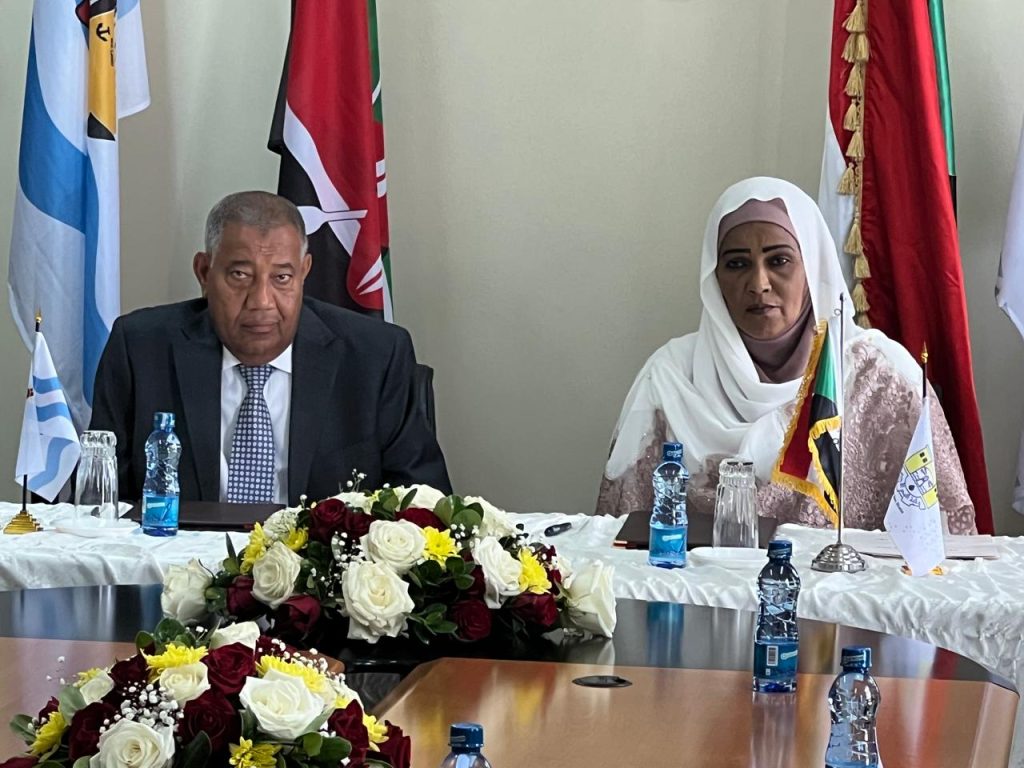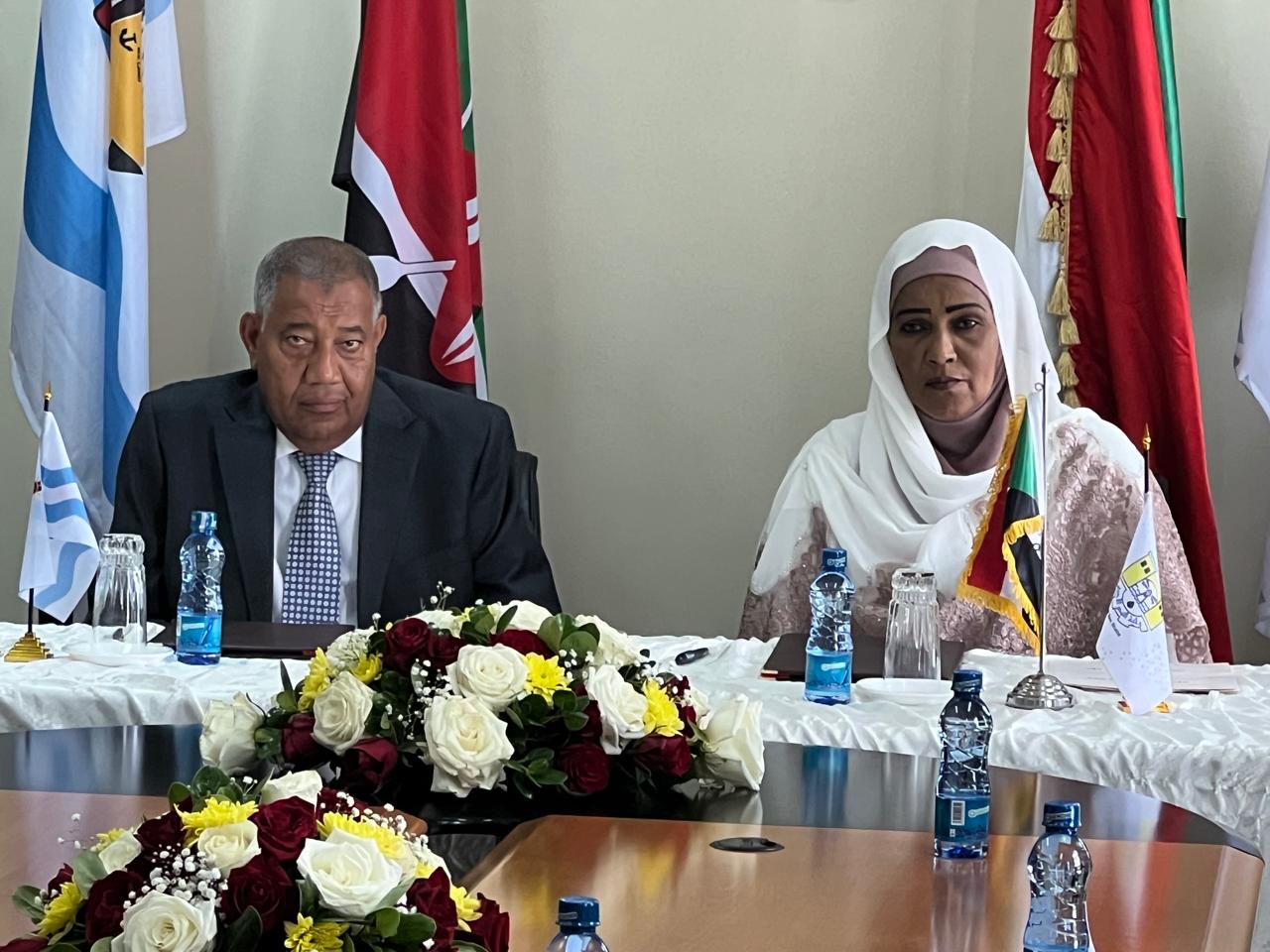
On September 25th, 2024, a historic Memorandum of Understanding (MoU) was signed between the Red Sea State of Sudan and Lamu County of Kenya.
This MoU, signed at the Sudan Embassy in Nairobi by Samia Ali Ahmed Oshik, Secretary General, Council of Environment, Tourism, and Investment, Red Sea State, and Ali Timamy, the Governor of Lamu County, marks a new chapter in the partnership between the two nations.
The agreement was witnessed by Kamal Gubara, Sudan’s Ambassador to Kenya, and Ambassador. Ali Abbas, County Secretary of Lamu County.
This twinning of Port Sudan and Lamu Port highlights a deep historical relationship between Sudan and Kenya and sets the stage for a collaborative future across multiple sectors, including environment, culture, education, fisheries, health, and tourism.
Lamu, one of Kenya’s oldest towns, with a history dating back over 600 years, has long been a key player in the region’s trade networks. Similarly, Port Sudan, a vital trade gateway in Sudan to the rest of the world, has been a focal point for commerce along the Red Sea.
These ancient trading centres connected African merchants with Middle Eastern traders, creating a fusion of goods, traditions, and ideas. Over time, this exchange built strong cultural bonds between the two regions.
The new MoU is a deliberate effort to modernize and revive these historical links. By declaring Port Sudan and Lamu as twin cities, both governments are embarking on a journey to deepen cooperation and promote shared economic and cultural interests.
This agreement reflects a mutual vision of fostering growth through collaboration while acknowledging the vital role that their historical ties play in shaping the future. Port Sudan acts as the main export point for South Sudan oil.
The partnership between Port Sudan and Lamu spans several crucial sectors. With both regions facing similar challenges, particularly concerning their coastal ecosystems, the MoU outlines strategies for addressing environmental issues like marine pollution and coastal erosion.
Coastal cities are on the front lines of climate change, and joint climate action initiatives are expected to play a key role in preserving marine resources. By sharing best practices and resources, Lamu and Port Sudan could become regional leaders in marine conservation and sustainable coastal development.
Moreover, the agreement places a strong emphasis on education and youth exchange programs. Through these initiatives, students from both regions will gain exposure to each other’s cultural and educational systems, laying the groundwork for long-term cooperation.
The exchange of ideas, knowledge, and training will enhance the skills of young people in both cities, building a foundation of shared understanding that can drive future growth.
Fishing is a cornerstone of both Lamu’s and Port Sudan’s economies—which is part of Kenya’s agenda to promote Blue Economy. This MoU recognizes the importance of the fishing industry and underscores the need for collaboration in promoting sustainable fishing practices.
Sharing expertise on marine resource management can help both regions protect their fish stocks, ensuring long-term food security.
Additionally, this partnership promotes the “blue economy”—a concept focused on harnessing the economic potential of the world’s oceans while promoting environmental sustainability.
By adopting sustainable practices, Port Sudan and Lamu can better manage their fisheries, creating a ripple effect that will benefit their economies and the wider region.
This could also lead to new opportunities in areas like aquaculture, boosting employment and driving economic development in coastal communities.
Access to healthcare remains a challenge for many coastal communities, particularly in remote areas. Through the MoU, both governments aim to address these issues by sharing healthcare expertise and resources.
Coastal populations often face specific health challenges, such as waterborne diseases and limited access to medical facilities. By pooling resources and knowledge, Port Sudan and Lamu can improve healthcare services and outcomes for their residents.
This could also involve setting up joint medical initiatives or programs to address communicable diseases that affect both regions.
Tourism is another key area of focus in the MoU, with both regions eager to tap into their rich cultural heritage to attract international visitors. The agreement paves the way for joint festivals, exhibitions, and seminars that will showcase the unique traditions, histories, and landscapes of both Port Sudan and Lamu.
Lamu, a UNESCO World Heritage site, is known for its Swahili culture, historical architecture, and vibrant festivals, while Port Sudan boasts access to the Red Sea’s stunning coral reefs and marine biodiversity.
Together, these regions can offer tourists an unparalleled cultural experience, promoting eco-tourism and cultural tourism. This partnership will not only increase tourism revenues but also foster a deeper appreciation of the shared history between Sudan and Kenya.
An integral aspect of this MoU is the exchange of delegations, ideas, and experiences. Through exhibitions, festivals, and conferences, the people of both regions will have the opportunity to explore each other’s cultures, strengthening diplomatic ties and cultural diplomacy.
By facilitating these exchanges, the partnership aims to foster understanding and cooperation that will benefit both nations socially and economically.
Sudan’s Ambassador Mr Gubara, during the MoU signing emphasised the importance of peace and stability in Sudan. He highlighted the positive developments in several Sudanese cities, including Khartoum, where peace initiatives are yielding tangible results.
Mr Gubara expressed optimism that peace and security would soon be restored throughout the country, creating a favourable environment for collaboration with Kenya and other neighbours.
The MoU’s focus on youth programs, cultural diplomacy, and human resource development offers a powerful tool for both countries to achieve long-term stability and prosperity.
By investing in their youth and promoting cultural exchange, Lamu and Port Sudan are setting the stage for a future marked by peace, understanding, and shared success.
The MoU, which came into force upon signing, is set to last for an initial period of five years, with automatic renewals for subsequent five-year periods unless one of the parties chooses to terminate it.
This long-term commitment signifies the importance both Sudan and Kenya place on this partnership and their shared vision of building a future rooted in cooperation, mutual understanding, and economic growth.
The twinning of Port Sudan and Lamu Port revives an ancient connection between two historic trading hubs. This partnership is not only a reflection of the rich cultural ties between Sudan and Kenya but also a forward-looking initiative aimed at fostering sustainable development, economic growth, and cultural exchange.
By collaborating in fields like education, fisheries, health, and tourism, Lamu and Port Sudan are setting an example for regional cooperation that will benefit both nations and their people.
This agreement underscores the potential of historical relationships to shape modern collaborations, ensuring that both Sudan and Kenya move forward together toward a prosperous future.
While Kenya has 47 counties, Sudan comprises 18 regions. They include; Khartoum; North Kordofan; Northern; Kassala; Blue Nile; North Darfur; South Darfur; South Kordofan; Gezira; White Nile; River Nile;Red Sea; Gedarif; Sennar; West Darfur; Central Darfur; East Darfur; and West Kordofan (merged with South Kordofan in 2005),