

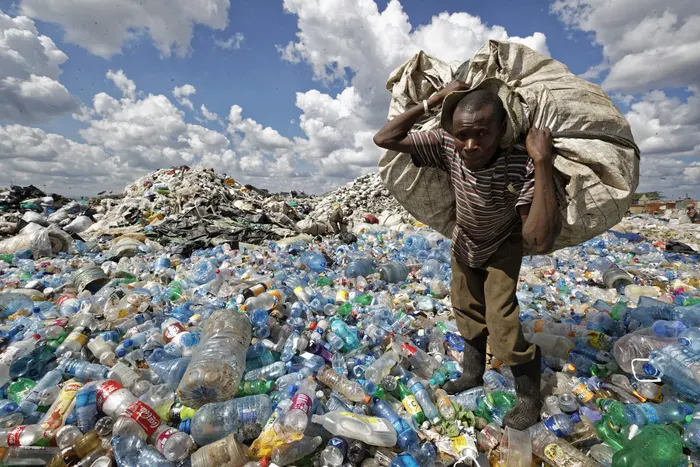
In yet another attempt at managing the non-biodegradable waste menace, the Kenya Government has banned using plastic bags to collect and dispose of garbage.
Through the National Environment Management Authority (NEMA), the government stated that plastic bags would not be allowed in the market, for 90 days from April 8, 2024, when the notice was issued.
Nema’s announcement came as world leaders were due to meet in Ottawa, Canada, from April 23 – 29, 2024 for the fourth round of the Intergovernmental Negotiating Committee (INC4) to draft a binding plastics treaty.
In 2017, Kenya imposed a ban on single-use plastic bags — the kind that grocery stores and other vendors offered customers upon every purchase. The decision made international headlines as one of the world’s most comprehensive plastic bag bans.
It encompassed the production, sale, or use of plastic bags, with hefty fines and potential prison time for violations. The law, however, exempted the bags used to package food and other products.
The early months of the ban saw significant improvements in Kenya’s environment. A reduction in plastic litter on the streets and waterways was noticeable; expert reports indicated that wildlife faced fewer threats from plastic ingestion.
Particularly encouraging was that the tonnes of plastic packaging bags that left the doors of supermarkets daily came to a stop.Arising thereof was the innovative thinking, that birthed eco-friendly alternatives, such as reusable bags made from cloth and biodegradable materials.
To help foster a sense of responsibility among citizens, public awareness campaigns were launched countrywide.
However, Kenya faced numerous challenges in fully realising the benefits of the ban. In particular, a black market emerged, that offered cheap plastic bags that made the costlier eco-friendly alternatives less attractive, especially to the poor masses.
This challenge was blamed mostly on the ease with which the plastic materials could be sourced from neighbouring countries, especially Uganda, Tanzania and Somalia.
However, the government too seemed to have run out of steam on punishing the plastic bag offenders, gradually normalising the return of the menace. Today, single-use packages are rampant and neither the sellers nor the buyers seem to fear any sanctions.
Nema has often acknowledged the return of the plastic bags menace and warned the manufacturers, the importers and the users against violating the law. The regulator singles out, and rightly so, the small-scale traders as the most notorious violators, but falls short of impactful remedial measures.
Hopefully, the latest ban will act as a reminder of the earlier one, but as the environmental NGO Greenpeace Africa, has proposed, the government must demonstrate a greater ambition in moving towards a zero-waste and plastic-free future.
Greenpeace Africa insists that the biodegradable alternatives were a temporary step and advocates a stronger emphasis on investing in reusable collection systems.
There is no doubt that a more impactful ban on plastic pollution is possible. In 2008, Rwanda became one of the first countries in the world to ban single-use plastic bags and bottles.
Going beyond an isolated law, the Rwandan anti-plastic legislation is anchored in deep commitment. It entails citizen engagement to maintain cleanliness, reduce pollution and deliver plastic alternatives to make the vision a reality. The resoluteness with which the ban has been effected lives on and the results are there for all to see.
The Rwandan initiative even inspired UNDP to organise its first Global Plastics Community of Practice conference, with a focus on behaviour change, in October 2023 in Kigali.
The conference brought together more than 50 practitioners from more than 30 countries, to experience Rwanda’s waste management, provide ideas and thoughts on how the UN agency can support countries to tackle plastic pollution, and exchange experiences and lessons learned. Kenya could borrow a leaf from Rwanda, going forward.
