

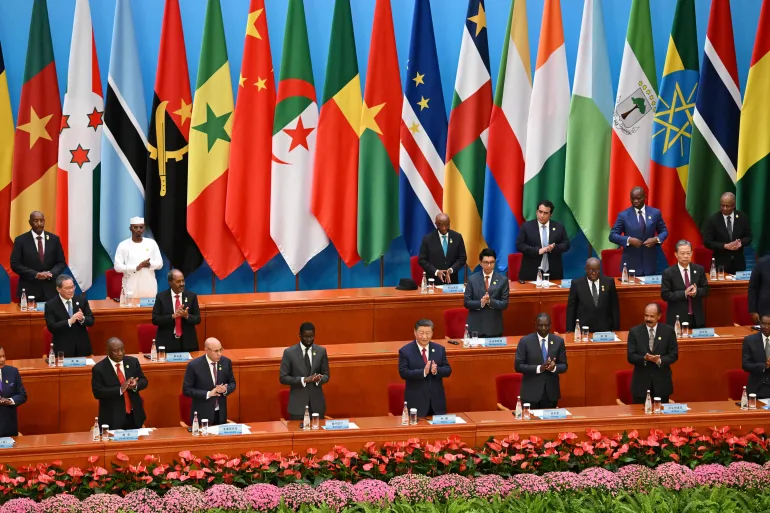
At the recent 21st China Lecture, held on October 21, 2024, global leaders, renowned scholars, and policymakers convened to dive into discussions on the theme “Chinese Modernization and High-Quality Development of Belt and Road Cooperation between China and Africa.”
An event organised by the Africa Policy Institute in partnership with the Chinese Academy of Social Sciences (CASS) and the Chinese Embassy shed light on how the Belt and Road Initiative (BRI) could transform Africa’s development needs.
Professor Peter Kagwanja, who heads the Africa Policy Institute, along with experts across different fields, led the session, which delved into the potential for modernization, skills development, and sustainable progress through China-Africa collaboration under the BRI framework.
Initiated in 2013, the BRI is one of the largest global economic and infrastructure efforts. It aims to connect continents through critical investments in transportation, trade, and energy sectors.
Africa has seen accelerated infrastructure developments and expanded trade routes through its partnership with China. The lecture served as a forum to celebrate these joint accomplishments and identify remaining obstacles.
A representative from Kenya’s Ministry of Foreign and Diaspora Affairs spoke about the need to address Africa’s unique developmental priorities within the BRI framework, underscoring the necessity of shared vision and commitment to meaningful outcomes.
One prominent achievement under the BRI is Africa’s infrastructure growth, a crucial element in enhancing regional trade and economic cohesion.
Kenya’s Mombasa-Nairobi Standard Gauge Railway (SGR), completed in 2017, serves as an example of how modern transportation infrastructure can boost economic growth.
By linking Kenya’s largest port with its capital, the SGR has made it faster and easier to move goods, stimulating trade across East Africa.
Likewise, the Addis Ababa-Djibouti Railway, connecting Ethiopia to the Red Sea, has bolstered Ethiopia’s access to global markets, underscoring the value of strategic infrastructure in enabling economic integration.
Ambassador Erastus Mwencha, former Deputy Chairperson of the African Union Commission and currently Chairman of Equity Bank, reflected on the broader impact of these projects.
According to Mwencha, Africa’s path to modernization demands strong infrastructure, technology transfer, and skill-building—areas in which the BRI has already provided considerable support.
Such investments lay the groundwork for Africa to forge a connected and prosperous future, one that aligns with global trade dynamics. The BRI’s impact in Africa is not limited to physical infrastructure but also extends into the renewable energy sector.
Along the Nile River, hydroelectric projects are paving the way for Africa’s shift towards green energy, helping the continent meet its energy demands while pursuing sustainability objectives.
Zhang Xiaojing, Director-General of the Institute of Finance and Banking at CASS, emphasized that China’s development approach, which integrates economic growth with environmental sustainability, aligns with Africa’s own aspirations for long-term progress.
The commitment to sustainable energy within the BRI exemplifies a shared vision for environmentally responsible development.
Another essential component of the BRI is knowledge transfer and capacity-building, which equips African professionals with vital technical skills to sustain and manage large-scale projects.
Programmes like the Kenya-China Technical and Vocational Education and Training (TVET) partnership are tailored to equip Kenyan youth with technical expertise, supporting Kenya’s development agenda.
The Ministry of Foreign and Diaspora Affairs representative highlighted the importance of skills development, emphasizing that engaging with China under the BRI must empower Africa’s youth through knowledge-sharing and practical experience.
Through the BRI, African countries can build a technically skilled workforce capable of leading in sectors such as renewable energy, healthcare, and information technology.
This investment in human capital fosters a self-sustaining, skilled labour force capable of driving the continent’s progress forward. With African professionals gaining hands-on experience, the knowledge transfer aspect of the BRI is preparing the region to meet future development demands.
As the BRI expands its reach, it becomes essential to establish robust legal frameworks that safeguard the interests of both China and African nations.
Zhu Weidong, a Senior Research Fellow at the China-Africa Institute, emphasized the necessity of well-defined legal structures to maintain stability and security in BRI projects.
Clear legal agreements not only mitigate conflicts but also foster transparency and accountability. Zhu urged China and African nations to collaboratively shape these legal frameworks, which would underpin long-lasting partnerships built on trust and mutual benefit.
Implementing such legal safeguards ensures that both host countries and investors have the security to make enduring commitments.
By creating a stable legal environment, the BRI becomes more appealing to African nations looking to establish reliable development partnerships.
As BRI initiatives advance across Africa, the safety and security of infrastructure projects are paramount.
Professor Patrick Maluki, Chair of the Department of Diplomacy and International Studies at the University of Nairobi discussed the need for security protocols to protect physical infrastructure, transit routes, and digital systems.
Maluki highlighted the growing threat to critical infrastructure and the importance of cybersecurity in preserving BRI assets. He suggested that China and Africa can bolster their security collaboration through training programs, cutting-edge technology deployment, and cybersecurity measures.
Security is also vital for maintaining political stability in regions where large-scale infrastructure projects are underway. Ensuring secure environments around BRI projects creates a foundation for long-term growth and development.
Governance reform emerged as another focal point for collaboration between China and Africa.
Meng Jin, Assistant Research Fellow at the China-Africa Institute, shared insights into China’s experiences with governance modernization, anti-corruption, and bureaucratic efficiency, which could offer valuable lessons for African nations.
He proposed that regular exchanges between African and Chinese officials could facilitate knowledge-sharing on effective governance practices, fostering stronger institutions across Africa.
Strengthening governance is essential for African countries to manage their resources effectively, deliver services to their citizens, and ensure transparency in public affairs.
By building institutional capacity, Africa can better align BRI projects with national priorities, creating a foundation for sustainable, long-term growth.
Throughout the discussions, environmental sustainability emerged as a key theme. As China and Africa deepen their partnership, prioritizing environmentally responsible projects within the BRI is essential.
The keynote speaker from Kenya’s Ministry of Foreign and Diaspora Affairs highlighted how sustainable, high-quality infrastructure projects address urgent issues such as climate change while supporting local development.
BRI investments in renewable energy, such as solar and hydroelectric power, address Africa’s energy demands while contributing to global sustainability efforts.
Community engagement remains crucial in this process, ensuring that projects respect local values, conserve natural resources, and foster community welfare.
With a focus on green development, China-Africa cooperation through the BRI can guide Africa toward a balanced model of growth that is inclusive and sustainable.
Aligning the BRI with the African Union’s Agenda 2063 framework provides a pathway for African countries to drive their development objectives while benefiting from China’s expertise and investment.
As the China-Africa partnership evolves, the BRI offers a collaborative foundation that respects Africa’s sovereignty and promotes inclusive prosperity.
Looking forward, the shared goals between China and Africa span a wide range, from infrastructure and trade to knowledge transfer, governance, and environmental stewardship.
The 21st China Lecture underscored the BRI’s transformative role in fostering modernization and development across Africa.
The initiative has already accelerated Africa’s economic growth and skills development, positioning the continent to emerge as a vital player in global markets.
However, continued success will require a steadfast commitment to transparency, community involvement, and respect for Africa’s development priorities.
With a joint focus on empowering local communities, environmental responsibility, and fostering shared prosperity, China-Africa cooperation under the BRI sets an example of a globally connected future that is resilient and sustainable.
