

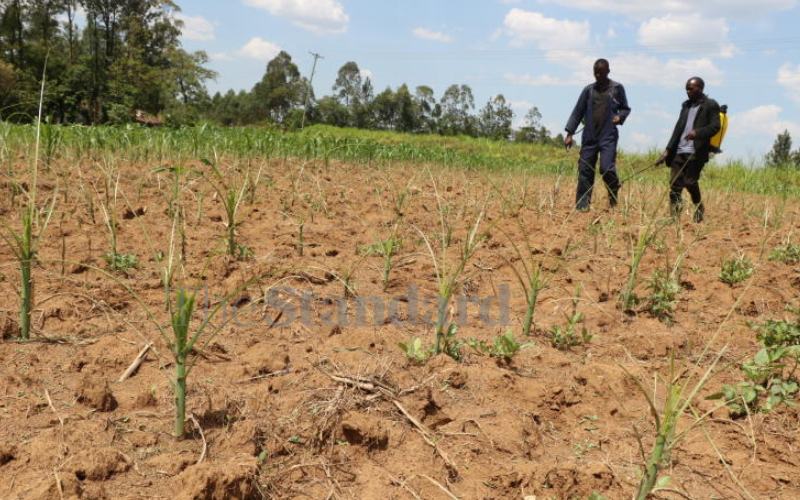
For instance, between 2019 and 2021, farmers in the Eastern African region $8.5 billion in damages and losses to Locust Outbreaks in the region, according to the World Bank. In Kenya alone, the economic impact was around $500 million.
Maize, a major staple food in the region is particularly vulnerable, especially to desert locusts and armyworms that have caused significant losses to farmers estimated at between $2.5 billion to $6.2 billion since 2019.
These recurrent trends forced the Inter-Governmental Authority on Development (Igad) member states to come up with regional mitigation measures that will involve greater cooperation and policy assimilation.
The five-day high-level transboundary pest control in the Horn of Africa was held in Naivasha, Kenya from July 22 to 26 for Djibouti, Ethiopia, and Somalia, established a framework to mitigate the impact of transboundary pests threatening the region’s agricultural sector and food security.
The meeting was organised by the Igad Climate Prediction and Applications Centre (ICPAC) with the support of the World Bank.
Entitled; Enhancing Regional Cooperation to Combat Transboundary Pests, the framework emphasizes the critical role of collaborative transboundary initiatives in enhancing food security within the Igad region, amidst shifting climatic conditions that make transboundary pest management unpredictable.
The agricultural landscape in the Horn of Africa grapples with significant challenges posed by transboundary pests, including desert locusts, quelea birds, and armyworms, all of which pose a severe threat to the region’s already fragile food security and agricultural productivity.
By promoting cooperation, the initiative lays the foundation for effective cross-border pest management, creating a platform that transcends national boundaries.
Alterations in temperature, precipitation patterns, and other climatic factors significantly impact the dynamics of pest populations, their distribution, and the frequency and intensity of outbreaks.
According to Mwesigwa Moses Rwaheru, the Director Desert Locust Control Organization for Eastern Africa (DLCO-EA), the region remains at high risk of Desert Locust and other migratory pest infestations and invasions due to climate change. This calls for increased vigilance in preparedness and surveillance by Member Countries to inform early warning actions.
“Climate change continues to impact migratory pest breeding and spread within the region, thus calling for immediate and sustained action by both the member countries and the regional bodies such as DLCO-EA, and Igad to improve the capacity of member countries’ early warning systems and preparedness to address the migratory pest challenges,” said Mr Rwaheru.
The Mandate of DLCO-EA— established in 1962 by the convention of East African countries—includes; aerial survey and control of migratory pests; applied research on migratory pests, pesticide use and safety; pest information forecasting and information sharing, and capacity building of member countries.
Climate change disrupts migration patterns of transboundary pests, affecting the timing and routes of their movements. This shift challenges the efficacy of regional pest management strategies designed based on historical migration patterns and predictability.
In addition, changes in ecosystems and the availability of natural enemies of pests upset the balance of predator-prey relationships, allowing pest populations to surge without effective natural checks.
The unpredictability of climate change makes traditional pest forecasting models less reliable, complicating the ability of countries in the region to prepare and respond effectively to emerging pest threats.
According to the Somalia State Minister of Agriculture, Asad Abdirazak, armyworms, and Red Palm Weevils) are common serious threats to our Agri-food Systems, livelihoods, and the environment and directly impact on national food security of all Igad member states.
“Somalia as a frontline state, fully recognises the need for stronger collaboration and coordination to limit the ability of transboundary pests to breed and spread to the region causing serious economic damage by destroying crops, pastures, forests and vegetation,” said Mr Abdirazak.
The World Bank is financing the Emergency Locust Response Project (ELRP), which underscores the paramount importance of regional collaboration and unified action in addressing the impact of transboundary pests.
The ELRP, a crucial initiative, has effectively coordinated pest management efforts among affected countries, particularly during the heightened risk posed by desert locusts amid the current El Niño phenomenon.
“Tackling transboundary pests such as desert locust outbreaks, not only within the region but globally, requires a comprehensive approach that encompasses vigilant monitoring, early warning systems, and effective intervention strategies. Collaborative efforts are instrumental in addressing these challenges,” said the Ethiopia Director of Plant Protection Belayneh Nigussie.
