

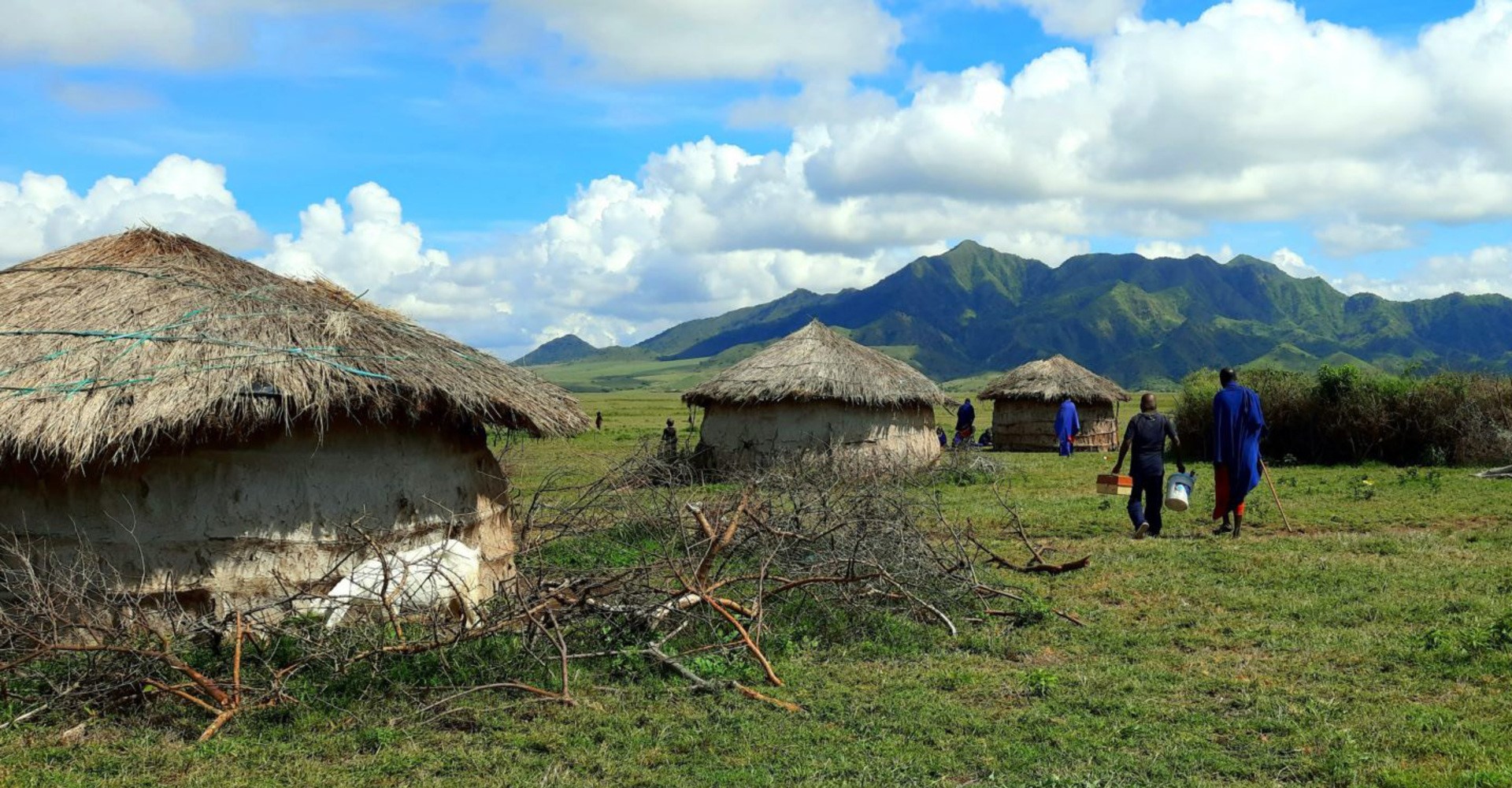
After 15 years of intermittent evictions of the Maasai community from their ancestral land in Loliondo Conservancy in northern Tanzania, new research reveals that foreign business entities have been complicit in the evictions.
A report released by Amnesty International on August 7 points fingers at the Ortello Business Corporation (OBC), a trophy hunting company linked to the United Arab Emirates(UAE) royal family, having participated in forcibly evicting Maasai Indigenous communities since 2009.
Entitled: Business as usual in a bloodied land? The role of business in forced evictions in Loliondo, Tanzania, says that OBC officials often accompany Tanzanian security forces and allow the authorities to set up camps on Ortello property during all forced evictions.
According to Tigere Chagutah, Amnesty International’s Regional Director for East and Southern Africa, the Tanzanian authorities have since 2009 carried out arbitrary arrests, detentions and forcible eviction of the Maasai in Loliondo and leasing their land to private companies for trophy hunting.
Mr Chagutah said that it is disturbing that Tanzanian authorities have carried out these evictions under the pretext of ‘conservation’, while in reality, they have allowed OBC to do improper or illegal trophy hunting activities, in clear violation of Tanzania’s Wildlife Conservation laws.
“The Tanzanian authorities must conduct a prompt, impartial, independent, effective and transparent investigation into corporate complicity in the forced evictions of Maasai communities in Loliondo,” he said.
The Tanzanian government has always maintained that according to the country’s laws, there are no indigenous lands that all land belongs to the government and that citizens are just trustees. THE Tanzanian authorities, according to the report, have refused to recognize the Maasai as indigenous people and Loliondo as their ancestral land.
Thus, Evictions occurred in 2009, 2017 and 2022. In 2018, the East African Court of Justice ruled in favour of the Maasai. Still, in June 2022, Tanzanian authorities evicted 70,000 Maasai communities to make room for trophy hunting and elite tourism. It involved the clearing of 1,500 sq km of human population.
Amnesty International conducted research into forced evictions of the Maasai Indigenous People of Loliondo between June 2022 and May 2024, with a particular focus on the role of businesses operating in the traditional lands owned and used by the Maasai.
Three tourism companies – &BEYOND, OBC and TAASA Lodge have operations in the area, with OBC having three camps within Pololeti Game Reserve – Chali One, Lima One and Lima Two.
The report says that Amnesty International had written to &BEYOND, OBC and TAASA Lodge to inform them of the relevant allegations and findings contained in the report. Only &BEYOND and TAASA Lodge responded.
According to &BEYOND in their response, the land in question, albeit in dispute, is no longer under the control of the Ololosokwan Village Council, but the Ngorongoro Conservation Area Authority (the Lessors), but declined to disclose the terms of the lease agreement with Lessors.
According to the report, the company also acknowledged that there is ongoing litigation over the land in question and claimed that as a lessee, they do not influence the Lessors. The company said they can only await the outcome of the court’s ruling before they determine their position in the land question.
On the other hand, TAASA Lodge said they were never consulted on any of the planned actions around the time of the evictions, and remain committed to their staff and communities, as they are to follow the rule of law.
There has been an ongoing struggle between the indigenous Maasai people of Tanzania and the government since 1992. It revolves around repeated attempts by the government to take Maasai village land and designate it as a game reserve for trophy hunting.
The Tanzania Wildlife Management Authority (TAWA) allows the hunting of buffalo, bushpig, bushbuck, crocodile, eland, elephant, greater kudu, hartebeest, hippo, hyena, impala, klipspringer, leopard, lion, reedbuck, roan, sable antelope, serval cat, steenbok, suni, vervet monkey, warthog, wild cat, wildebeest and zebra.
In April 2024, Amnesty International carried out interviews in Arusha on a fact-finding mission.
Among the interviewees included one current employee and four former employees of the private companies in Loliondo, all residents of Loliondo, and one lawyer, who were all privy to internal operations of the companies and sometimes involved in conversations on and implementation of the companies’ plans.
However, Amnesty International says that despite many reports and court cases implicating OBC in contributing to human rights violations, the company has never publicly responded to the claims.
Similarly, the Tanzanian government has not made public any ongoing investigations or efforts to bring about accountability, including in cases that contravene the Wildlife Conservation (Tourist Hunting) Regulations and go against wildlife conservation.
“It is troubling that OBC’s role in the evictions likely contributed to the harm caused by Tanzania’s security forces to the communities. The company appears to not only have been aware that state security forces were involved in the forced evictions but to have actively facilitated the forced evictions,” said Mr Chagutah.
On 10 June 2022, Tanzanian security forces resorted to the use of excessive force, including using live ammunition and tear gas, to stifle peaceful protests by Maasai residents of Ololosokwan village in Loliondo.
The demonstrators had gathered to resist a demarcation exercise by the security forces, who were trying to displace them from their ancestral lands in the name of so-called “conservation”.
More than 40 people were wounded, others were left homeless, and many were forced to flee the country. Those who sought shelter in Kenya with their relatives and friends were living without means of earning a livelihood.
This was after Tanzania’s Ministry of Natural Resources and Tourism announced on June 3, 2022, that it was demarcating 1,500km2 out of 4,000km2 of Maasai village land, part of the Maasai ancestral territory in Loliondo division, for conservation.
The report says that the Ngorongoro District Council allocated the Loliondo division of Tanzania’s northern Ngorongoro district as a hunting concession to tourism businesses without first consulting the Maasai People or even providing them with alternative land, leaving the pastoral Maasais’ very survival in jeopardy.
It recommends that businesses operating in Loliondo must commit to respecting in their operations the rights of the Maasai Indigenous People, and to providing appropriate remedies if they cause or contribute to acts that harm the community.
“The state must reverse its land acquisition decision in Loliondo and ensure that no land acquisition or evictions proceed unless the Maasai People give their free, prior, and informed consent through a process of genuine consultations,” the report says.

