

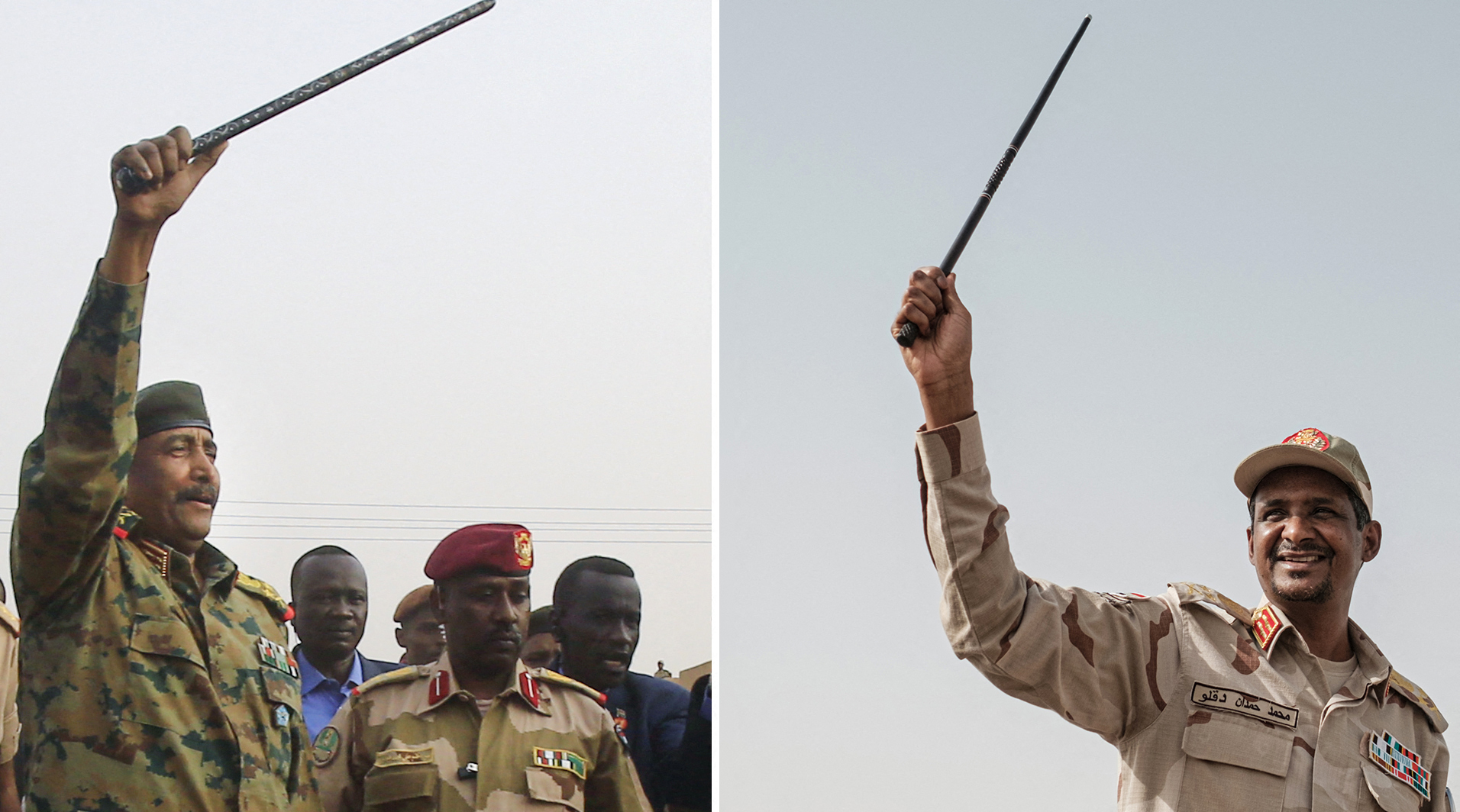
Sudan is grappling with a deepening crisis, marked by foreign interference, militia violence, and intense geopolitical tensions.
The crisis, driven largely by foreign players aiming to control Sudan’s rich resources, especially gold, has placed Sudan’s sovereignty at risk and threatens broader regional stability.
In recent statements, the Sudanese government has directly addressed allegations of foreign involvement and reasserted its commitment to defending the nation’s sovereignty, appealing for regional unity and international accountability.
Sudan’s troubles are complicated by accusations that the United Arab Emirates (UAE) and Chad are fueling instability within Sudan by funding and arming militias, particularly the Rapid Support Militia (RSM).
These militia groups have been accused of destabilizing Sudan to facilitate resource extraction, mainly for the benefit of foreign entities.
Sudanese officials have pointed to Chad as allegedly enabling the UAE’s access to Sudanese borders, effectively easing the path for militia operations.
Western nations are suspected of aligning with this strategy, using Chad as an intermediary to support the UAE’s ambitions.
The Sudanese Armed Forces have publicly condemned these foreign influences, positioning themselves as protectors of national sovereignty.
Within Sudan, this opposition has received popular support, with many citizens rallying around the military’s stance. Sudan is calling for the international community to acknowledge the detrimental impacts of foreign interference and to respect Sudanese sovereignty.
Adding complexity to the situation, former Sudanese Prime Minister Abdalla Hamdok has been named as a potential sponsor of these militias.
After his ouster in 2021, Hamdok now resides in the UAE, raising concerns about his influence on Sudanese affairs from abroad.
Once regarded as a reformist voice for democracy, Hamdok’s alleged connections to external powers now attempting to destabilize Sudan have sparked intense public criticism.
His ties to the UAE, which stands accused of supporting militias for economic gain, have fueled suspicions of his complicity in actions that work against Sudan’s interests.
Sudanese-UAE tensions escalated recently after the UAE accused the Sudanese Armed Forces of bombing the residence of the Emirati ambassador in Sudan.
Sudan quickly refuted this claim, providing satellite imagery showing the untouched residence.
According to Sudanese officials, the property is owned not by the ambassador but by a Sudanese citizen who recently chose not to renew his lease with the Emirati embassy. Tragically, this individual was later killed in militia violence near the property.
In their official statements, Sudanese officials highlighted that all foreign embassies, including the UAE’s, had been relocated to Port Sudan to ensure their security in light of the ongoing conflict.
The country affirmed its commitment to diplomatic protections under international conventions and emphasized that it has raised its concerns with the United Nations.
Sudan claims to have found UAE-sourced weapons in the possession of militias operating in the Jebel Munaya region, and this evidence has reportedly been submitted to the UN.
Critics argue that the UAE’s governance model, marked by centralized control and a lack of democratic values, drives its foreign policy approach in Sudan and beyond.
Many believe that the UAE prioritizes control and resource extraction over fostering genuine cooperation or development.
This authoritarian approach has raised fears that the UAE’s involvement in Sudan is less about partnership and more about exploiting Sudan’s resources for its gain.
Sudanese leaders have called upon the international community to take a firm stand against such foreign interference, warning that the UAE’s tactics could have destabilizing repercussions across the region.
Sudan insists that silence from global powers could embolden militias and their backers to commit more violence, unpunished and unchallenged.
Sudan has expressed a desire to strengthen economic ties with Kenya, seeing it as a valuable trade partner. Ambassador Gubara of Sudan has emphasized that trade with Kenya could be far more lucrative than trade with the UAE.
Initially, Kenyan President William Ruto showed interest in supporting Sudan’s fight against alleged Emirati meddling, leveraging his connections with Emirati leadership.
However, Sudanese officials have noted with disappointment that Ruto’s support has yet to materialize into meaningful action, leading to questions about his motives and potential ties to Emirati interests.
There are also reports of Emirati leaders, allegedly involved in Sudanese militia financing, making frequent visits to Kenya and meeting with prominent officials, including the governor of Kenya’s Central Bank.
The frequency of these visits and the high-level meetings have raised suspicion within Sudan, deepening fears that Emirati involvement in Kenya may be influencing Kenya’s stance on Sudan’s crisis.
Amidst the escalating violence, Sudan has been working to facilitate humanitarian relief, encouraging the international community to deliver aid through Port Sudan, a geographically efficient route to reach conflict-hit areas such as Darfur.
Sudan’s government argues that using Port Sudan could streamline aid efforts, given that it is closer to Darfur than other potential routes, such as those from Douala, Cameroon.
However, aid efforts have been consistently hampered by militia violence, especially in regions like Eastern Al-Jazirah and Al-Butana, where ethnic tensions have led to deadly attacks on civilian populations.
The Janjaweed militia, reportedly backed by the UAE and its allies, has been accused of perpetrating violent acts that the Sudanese government categorizes as genocidal.
Hundreds of civilians have lost their lives, while thousands more have been forced to flee their homes. Sudanese leaders have issued an urgent call for international intervention to hold the militia leaders and their sponsors accountable.
They insist that only decisive action from the global community can prevent further violence and protect Sudan’s vulnerable populations. In response to the crisis, Ambassador Gubara has urged African nations to unite in the face of foreign manipulation and exploitation.
He contends that, despite political differences, African countries must empower their citizens to collaborate, fostering resilience and regional solidarity. This message resonates with a growing movement in Africa, which advocates for self-determination and resource control.
Gubara’s call for unity is seen as a broader appeal to protect African resources from external interests that threaten the welfare of local communities.
This approach seeks to prioritize Africa’s development and well-being over the ambitions of foreign powers that often view the continent’s resources as assets to be extracted.
The crisis in Sudan highlights the urgent need for vigilance against foreign interference and exploitation. Sudan’s government has made clear its commitment to defending its sovereignty and protecting its people, even as it faces numerous external and internal challenges.
Through its appeal to the international community and its emphasis on regional cooperation, Sudan aims to secure peace and stability.
By working with neighbouring countries like Kenya and rallying African nations around shared interests, Sudan hopes to shield itself from destabilizing forces and ensure that its resources benefit its people.
Sudanese officials remain determined to counter foreign exploitation while engaging constructively with allies who genuinely support Sudan’s stability.
In the face of growing pressures, Sudan’s leadership stands resolute, urging African nations and global partners to prioritize the continent’s welfare over the interests of external actors.

