

When Kenya promulgated a new constitution in 2010, there was widespread celebration that the country had the best constitution in Africa, if not the world.
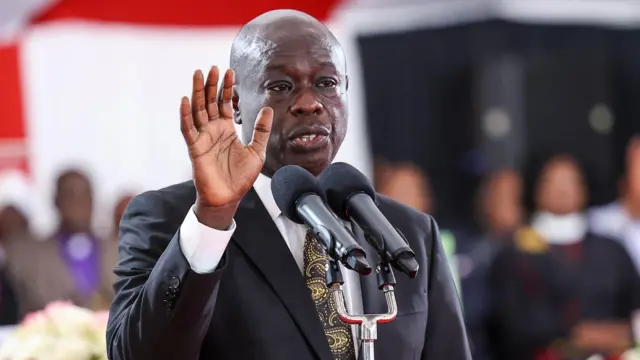
But it has not been seriously tested like now when the Senate on October 17 the Senate confirmed the earlier impeachment of the Deputy President, Ragathi Gachagua by the National Assembly on October 8.
It is only the Kenyan constitution—not the US or UK—that provides bail for murder suspects and terrorists. Now, the country is facing a situation where it has to test Article 150, which deals with the impeachment of the Deputy President.
Despite Gachagua being impeached by the Senate—after failing to appear in person to answer the allegations on account of sudden illness—the lawyers of the former DP have said they will go to the Supreme Court for interpretation.
Article 150 (2) states that the Deputy President may be removed from office through; impeachment if there are serious grounds such as gross misconduct, physical or mental incapacity to perform duties, or violation of the Constitution.
If the office of the Deputy President becomes vacant, the President must nominate a new Deputy President within 14 days. The nominee must be approved by the National Assembly before assuming office.
Article 150 is one of the provisions of the 2010 constitution that have not been put into practice for the last 14 years.
Gachagua defended himself effectively in parliament, but it appeared that his boss—President William Ruto—had decided that he had to go. He was not willing to resign and has decided to exhaust all political and legal mechanisms.
The impeachment has raised political temperatures in Kenya which is still recovering from popular demonstrations by the generation Zoomers, commonly known as Gen-Z in June and July—that saw the youth invade parliament and chase away MPs on grounds of ineptitude, corruption and youth unemployment.
The previously simmering differences between President Ruto and his deputy came to a head when Gen-Z staged popular street demonstrations to get rid of the Kenya Kwanza government over corruption, none-delivery and widespread unemployment
Kibwezi West MP Mwengi Mutuse’s impeachment motion tabled on October 1 has 11 counts. They include; insubordination; corruptly and unlawfully acquiring assets using taxpayers’ money; disobeying the deputy president’s oath of office by singling out certain members of the judiciary for criticism; and openly opposing the president’s policy positions and Cabinet directives, which amounts to insubordination.
The Gachagua impeachment has generated issues ranging from disruption of the harmony within the ruling United Democratic Alliance (UDA), the diversion from the challenges facing Kenyans to the possible beginning of serious ethnic divisions in the country.
President Ruto is not sitting pretty, because he is being accused of betraying his deputy who contributed substantial votes in their August 2022 victory.
Gachagua had defended himself saying that whatever he is being accused of are the same things his boss did while he was the deputy of former president, Uhuru Kenyatta.
“I will fight to the end,” he told a press conference on the eve of the impeachment proceedings on October 8. Declaring his innocence, Gachagua provided a thorough refutation of the accusations, which included encouraging “ethnic balkanisation” and accumulating a sizable, unexplained real estate portfolio.
But Ruto has to deal with the perception that he is taking advantage of the 2010 constitution—which he opposed—and which was not used against him when he rebelled against former president Uhuru Kenyatta for five years as deputy president.
Currently, Ruto has to deal with the widespread perception that he is taking Kenya back to the days of the late Daniel arap Moi of the one-man show. He has hesitated to reconstitute the electoral body—the Independent Electoral and Boundaries Commission (IEBC) that has a role in gazetting the new deputy president.
After disposing of his deputy, Ruto faces tough times in the next three years before the next elections in 2027, where his opponents are accusing him of increasingly taking the country back to the dark days of dictatorship.
He has emasculated parliament, the Senate, the judiciary and the Cabinet—where members cannot explain key policies that they preside over. Ruto faces the test of picking a new deputy that would be accepted across the board, with many Kenyans preferring a woman.
Kenyans are watching whether the Kenyan constitution will be capable of withstanding political manipulation that has seen the country suffer for 61 years since independence in 1963, at the whims of individuals in power.
