

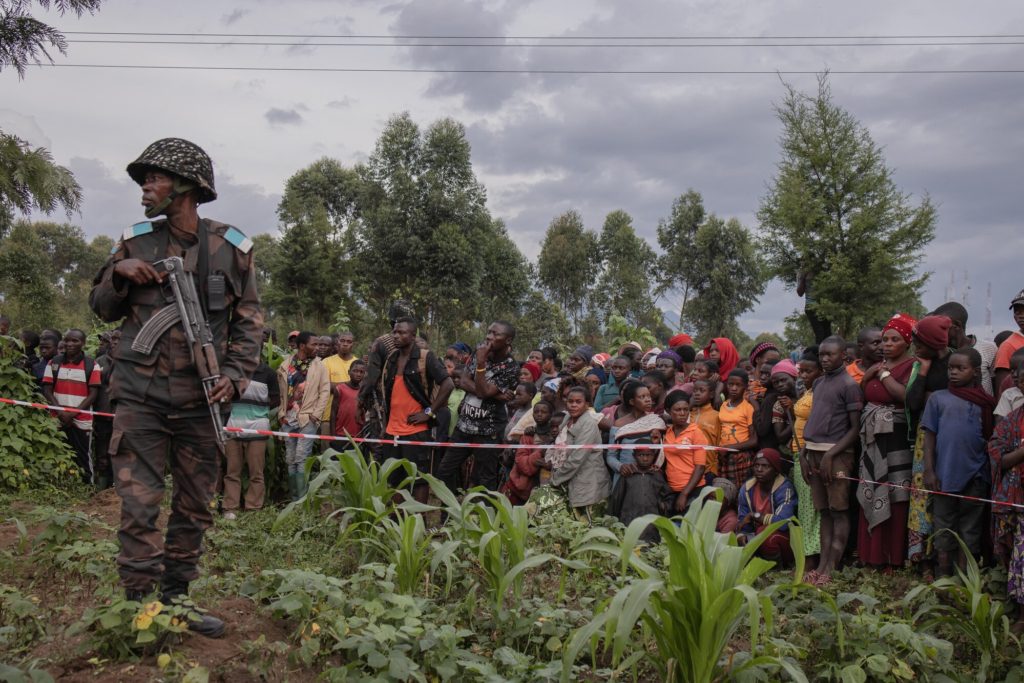
The recent capture of the City of Goma in the eastern Democratic Republic of Congo (DRC) by M-23 rebels is threatening to suck in various countries, similar to the Great War of Africa between 1998 and 2003.
The recent exchange of barbs between President Paul Kagame of Rwanda—who is universally accused of supporting M-23—and South African President Cyril Ramaphosa has the potential to escalate the conflict—in which DRC will act as the theatre of proxy wars.
It started when M-23, with a heavy presence of Rwandan forces, captured Goma and killed 13 South African soldiers that are part of the Southern African Regional Community Mission (SAMIDR).
President Ramaphosa sharply denounced the M23 rebel onslaught in the eastern DRC, which Pretoria says is supported by Kigali and targeted a South African force. Subsequently, several South African government officials have been calling for retribution against Rwanda.
“If Rwandan Forces are going to fire, we will take it as a declaration of war, and we will have to defend our people,” said President Ramaphosa
However, President Kagame responded more robustly, telling presidents of the East African Community (EAC) trade bloc online meeting that his country is ready for any eventuality. The meeting called by the current EAC chairperson, William Ruto of Kenya was boycotted by DRC president, Felix Tshisekedi on grounds that Kenya is biased.
“If South Africa prefers confrontation, Rwanda will deal with the matter to that extent any day. Of course, we will see what threats they are talking about,” said President Kagame, in a manner that implies Rwanda’s invincibility.
President Kagame accused President Ramaphosa of pretending to play a peacemaker role while South African forces were in DRC fighting alongside the Democratic Forces for the Liberation of Rwanda, commonly known under the French the name Forces Démocratiques de Libération du Rwanda (FDLR).
The Rwanda government has always accused FDLR with its presence in DRC, of having planned the 1994 genocide in which over 800,000 people died.
President Kagame attacked South Africa’s military presence in the DRC for dislodging a legal peacekeeping operation headed by the East African Community (EAC) and denied allegations that the Rwanda Defence Force (RDF) is a militia.
“If South Africa wants to contribute to peaceful solutions, that is well and good, but South Africa is in no position to take on the role of a peacemaker or mediator. And if South Africa prefers confrontation, Rwanda will deal with the matter in that context any day,” said President Kagame.
The new beef between the two presidents rekindles the fluid diplomatic relations between Rwanda and South Africa.
Tensions between the two nations, whose diplomatic ties have been shaky for years, particularly in light of the regular killings of Rwandese dissidents in South Africa by Kigali security forces, have further increased with this most recent encounter.
In particular, the death of former Rwandan intelligence head Patrick Karegeya in Johannesburg in 2013 caused diplomatic repercussions and is the source of tensions between Kigali and Pretoria.
The danger of the conflict expanding lies in the fact that both Rwanda and South Africa have allies who are likely to join the war on their behalf.
The situation puts the EAC in a quagmire given that both Rwanda and DRC are members of the economic bloc. The attack on the Kenyan and Rwanda embassies in Kinshasa—among others—is an indication that EAC is already divided.
This will force EAC member states to take sides with either Rwanda or DRC. Uganda and Rwanda have always been present in DRC, allegedly to “safeguard” the interests of the Tutsi minority, but analysts say is mainly driven by the international conglomerate to loot the minerals of Congo.
The Rwandan presence in DRC—which President Tshisekedi considers a declaration of war—rekindles the inter-African war that began in 1998 after President Kagame and President Yoweri Museveni of Rwanda differed with the late Laurent Desire Kabila over the spoils of victory.
In the Second Congo War—also referred to as Africa’s World War or the Great War of Africa— Rwanda and Uganda invaded the Democratic Republic of Congo (DRC) in 1998 to create a buffer zone for Hutu groups, but which analysts say was an attempt to oust Laurent-Désiré Kabila for refusing to reward the two countries who helped him oust Mobutu Sese Seko.
Eventually, the conflict expanded, drawing in nine African nations and approximately 25 armed groups, making it one of the largest wars in African history.
They included Uganda, Rwanda, Angola, Namibia, Zimbabwe and Burundi—while other countries, such as Belgium, the United States, the United Kingdom, South Africa, and France, played key roles in the background. Despite the signing of a peace deal in 2002 and the formal end of the war on July 18, 2003, with the formation of the Transitional Government of the DRC.
However, violence continued in many areas, especially in the east, due to the presence of the FDLR and the Lord’s Resistance Army (LRA), Uganda’s rebel group. Currently, Rwanda is still determined to dismantle FDLR in DRC, the same way Uganda is also in the country pursuing the rebel Allied Democratic Forces (ADF)
