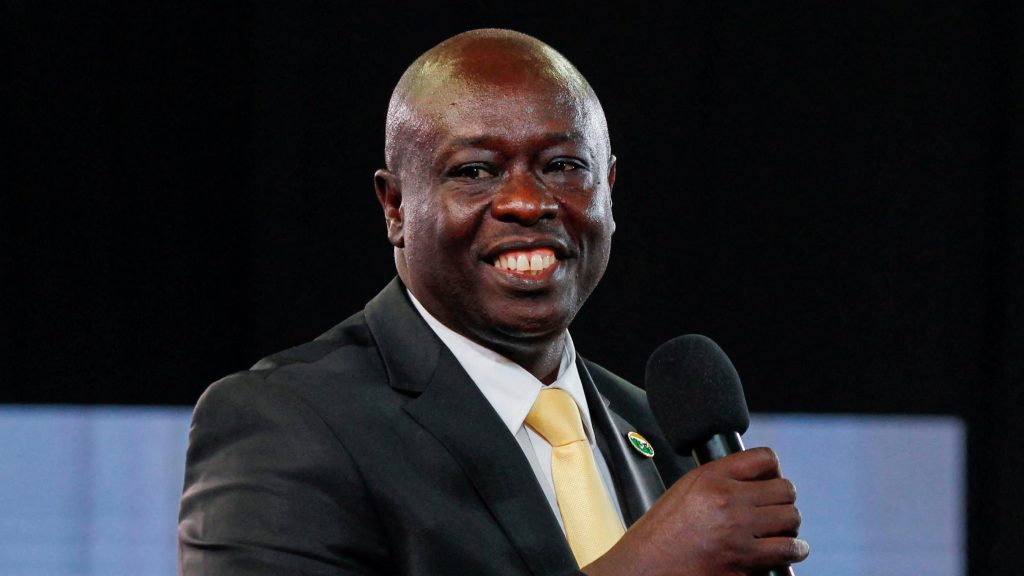
Kenyans will have to contend with more waiting before knowing whether or not former Deputy President (DP) Rigathi Gachagua will be a presidential candidate next year.
A three-judge bench on June 8 upheld the 2024 impeachment of Gachagua, which effectively kills his prospects for holding a public office. In the over 10-hour ruling, the court reaffirmed the Senate decision, but awarded Gachagua $390,000 (KSh50 million) for having been denied a chance to appear before the House after he fell sick.
However, all is not lost for Gachagua, whose lawyers immediately appealed the ruling, and have vowed to fight all the way to the Supreme Court, if need be. According to the Kenyan Constitution, the fate of the former DP can only be decided upon the exhaustion of all the legal mechanisms available in the country.
One of Gachagua lawyers described the ruling as a judicial nonsense, that must never go unchallenged.
Gachagua served as DP from September 13, 2022 until his impeachment in October 2024. A former career civil servant, Gachagua debuted the political scene as MP for Mathira in central Kenya, from 2017 to 2022 on the Jubilee Party ticket. The combative legislator then worked his way to be William Ruto’s running mate in the presidential election. It was highly believed that the more popular choice was Prof Kithure, Kindiki, who, incidentally replace Gachagua upon his ouster.
Of particular interest is the immense implication of either or no Gachagua candidacy in Kenya’s next presidential contest. A former strong ally and now among the fiercest critics of the President, Gachagua has packaged himself as the tribal chief (kingpin) of Kenya’s most populous Kikuyu. He holds that the Ruto presidency was delivered by the votes of the Kikuyus and their Mount Kenya cousins, the Meru and the Embu, collectively known as the Gema. Consequently, he believes his Mt Kenya region would determine whether Ruto gets a second term.
In a country where the presidential election is often a function of ethnic demographics, Gachagua has effectively leveraged the Mt Kenya region’s numerical advantage to push his political agenda both in and outside the government. The intricately related ethnic calculus and corruption, invariably give the ‘kingpin’ of the tribe with the highest numbers an outright head start. It is against such a background that the presidency has for the over 60 years of Kenya’s independence, been exchanged between the Kikuyus and the Kalenjins.
The incumbent, Ruto, is a Kalenjin who inherited the seat from a Kikuyu, Uhuru Kenyatta. Kenyatta inherited the seat from his fellow Kikuyu, Mwai Kibaki, who was handed the baton by Daniel arap Moi, a Kalenjin. Moi rose to the helm, following the demise of Kenya’s founding father Jomo Kenyatta, the father of Uhuru.
Like is the case with virtually the rest of Africa, a presidency comes with numerous advantages to the community the holder comes from. The ruler communities often get a disproportionate share of state appointments, infrastructure development, scholarships and bursaries, and of course the theft of public resources.
Kenya will next year hold a General Election, to vote for six categories of leaders to preside over their governance for the next five years.
Gachagua today wishes to be nominated the joint opposition candidate, reckoning that he commands the numbers that make the difference. Others eyeing the seat are former Vice-President Kalonzo Musyoka, and former cabinet secretaries Fred Matiang’i and Eugene Wamalwa. Also targeting the opposition presidential ticket, but in a formation different from Gachagua’s, are Senator Edwin Sifuna, former Chief Justice and the President of the Court of Appeal David Maraga and Jimmi Wanjigi, also a former Ruto ally. A united opposition, though a long short, could prove a big challenge to the incumbent.
For the Gachagua rivals in the opposition, the upholding the impeachment could be a blessing in disguise, locking him out of the race for the coveted seat. The scenario would force him to throw his weight behind someone else, with Ruto as the common enemy.
In 2022, Ruto rode to the presidency with the promise of changing the fortunes of the downtrodden masses under the bottom-up economic model. With increased taxation, burgeoning national debt, state profligacy, runaway corruption, and often deadly crackdown against dissent, many believe the Ruto reign has been a betrayal, calling for a punishment at the ballot. However, tribalism and corruption will still be the overriding considerations in the General Election.