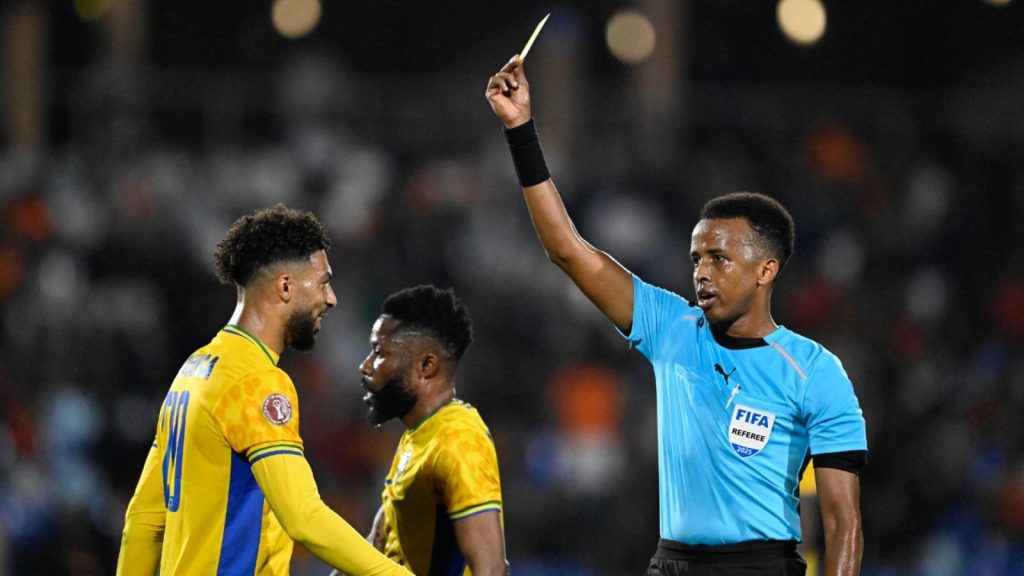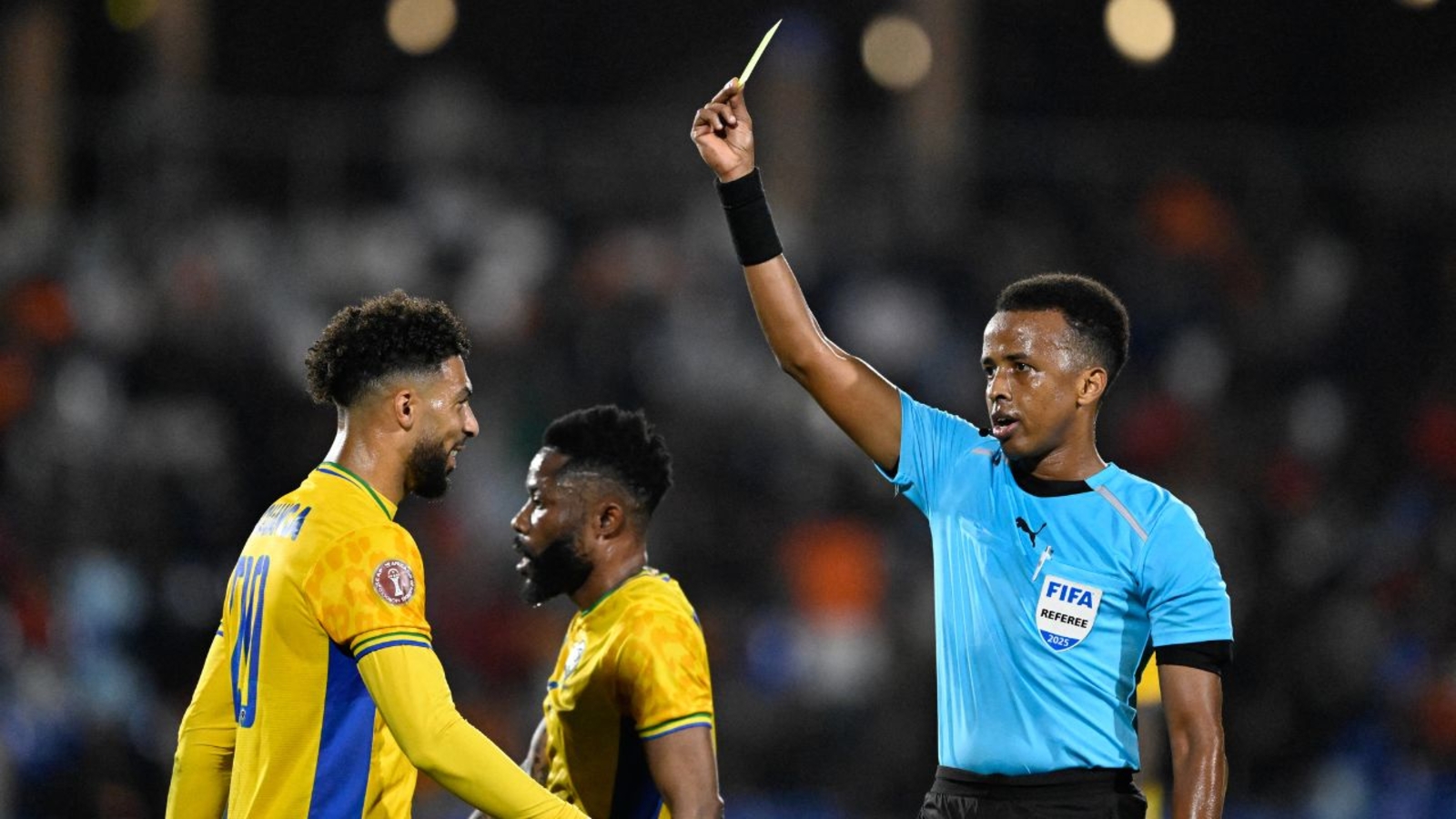
The US denying Africa’s top-ranked referee Omar Abdulkadir Artan a visa to enable him officiate at the 2026 World Cup, is a stain on the global fiesta that will be hard to erase.
After a stellar performance at the last Africa Cup of Nations tournament in Morocco early this year, Artan was all set for yet another career milestone. He was named African Referee of the Year for 2025, and was set to become the first Somali official to work at the World Cup tournament. Unsurprisingly, his exclusion has drawn widespread condemnation, with many describing it as discrimination.
Vetted and cleared by Fifa, and armed with his diplomatic passport, Artan set off for the journey to the USA, a co-host of this year’s tournament together with Mexico and Canada. However, to his and many people’s horror, Artan was turned away at the Miami International Airport after allegedly being ‘determined to be inadmissible due to vetting concerns’.
The Department of Homeland Security (DHS) confirmed to Al Jazeera on June 8 that Artan was not allowed into the US after arriving in South Florida. Fifa confirmed that he “will be unable to train and officiate at the Fifa World Cup 2026 after he was denied entry into the United States”.
“I am very, very disappointed,” the New York Times quoted Artan.
“I am just simply a referee who’s trying to live his dream – the biggest dream of my life, to come to the World Cup.”
The spirit of the World Cup is universal camaraderie, aptly captured in the Fifa official motto: “For the Game. For the World.” This guiding principle was introduced to highlight the organisation’s mission to both promote the sport globally and use it as a tool for positive social impact.
It is against the above background that many have found it hard to fathom the Donald Trump administration, deploying all manner of hurdles to undermine, especially the participation of Africans, in the tournament.
Under current US immigration and travel restrictions, citizens from Iran and Haiti are under a full entry ban, while Côte d’Ivoire and Senegal are facing partial restrictions. While qualified team players, coaches, and vital support staff generally receive travel carveouts to compete, citizens and fans from these nations are barred from traveling to the US for the World Cup. There has also been the issue of the pricing of the tickets to the various matches. Many have been deemed to be above average, and by design, to look out certain target fans.
It is instructive that it was for the reasons of greater inclusivity that the World Cup was expanded to a 48-team competition, with Africa being granted 10 slots for the first time. Tiny Cape Verde are making their debut alongside Morocco, Algeria, Tunisia, Egypt, South Africa, the Democratic Republic of Congo, Senegal, Ghana and Cote d’Ivoire.
Worth noting is also the fact the Africa has made impressive progress in the tournament since it was first represented by Egypt in 1934 in Italy. In the last tournament in Qatar, Morocco went all the way to the semi-finals, indicating Africa lifting the trophy could as well be within the horizon. Africa’s increased participation in the World Cup must therefore be seen as earned, thus well-deserved.
Though Somalia is on President Donald Trump’s travel ban list, extending the grudge with the African state to the World Cup must pass for a new low. Trump has often disparaged Somalia and its people. Late last year, Trump sparked outrage when he called Somali immigrants in the US “garbage”.
Artan, who has since arrived back in Mogadishu was measured and diplomatic. He described what had happened to him as fate, remaining optimistic that he would have another chance, considering his youthful age. At only 34, the Somali referee could be eligible to partake of several other World Cup tournaments.
Thousands gathered in Mogadishu to welcome home Artan.