

By Charles Omondi
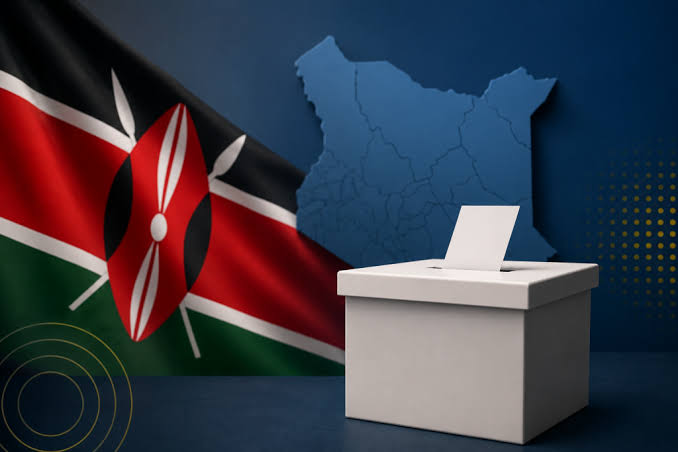
With barely one year to go, pundits are wondering whether the developments in Kenya bode well for the holding of a free, fair and credible General Election, devoid of violence.
There have been numerous ominous indicators that seem to have been affirmed by recent findings by the Kofi Annan Foundation. According to the think-tank’s Electoral Vulnerability Index, Kenya stands at an 84.1 per cent probability of electoral violence during the 2027 General Election. The report notes that Kenya has never gone through a single election cycle without violence.
The findings place the East African Community’s (EAC) largest economy among 10 countries identified as priorities by the European Union during this election cycle. Others are Somalia, Burundi, Nigeria and the Democratic Republic of the Congo (DRC) in Africa.
A particular concern has been the now persistent use of goons to attack rivals or disrupt gatherings, particularly those perceived not to be pro-government.
The invariably unemployed youth were being hired for as little as KSh500–1,000 ($4-$10) to violently disrupt opposition rallies, attack civil society gatherings, and intimidate political rivals, with police often accused of slow or no response.
During anti-government protests last year, AFP reported seeing first-hand hundreds of goons appearing to work directly alongside police to attack demonstrators, later looting and vandalising businesses in central Nairobi.
On April 8, over 10 goons attacked Vihiga Senator Godfrey Osotsi in a hotel in the lakeside town of Kisumu, in the full glare of CCTV cameras.
On June 12, 2026, roughly 200 suspected hired goons on motorcycles stormed a post-budget civil society meeting at the All-Saints Cathedral in Nairobi. The gang disrupted the proceedings by teargassing the hall, firing live bullets, and violently robbing attendees of mobile phones and valuables.
Early this month, a rally by the Linda Mwananchi movement in Kisumu was violently attacked by armed men, leaving one person dead and several wounded. A similar attack, though only resulting in injuries, disrupted an opposition church service in Nyahururu, in central Kenya, where campaigns for a by-election were ongoing.
Politicians, who are believed to be sponsoring “goonism” deny the accusations, but analysts say it is deeply entrenched on all sides.
Though Interior Cabinet Secretary Kipchumba Murkomen often vows to crack down on the gangs, their attacks keep recurring.
The worst election violence hit Kenya in 2007/8 over a disputed presidential poll outcome pitting the incumbent, Mwai Kibaki, and opposition chief Raila Odinga. The violence claimed at least 1,200 lives and displaced an estimated 600 people.
The country eventually opted for power sharing between Kibaki and Odinga and instituted a commission of inquiry led by retired South African judge Johann Krigler. The Independent Review Commission (IREC), established in March 2008, famously concluded that the election was so fundamentally flawed that it was impossible to determine the true winner. The commission made numerous recommendations on the holding of a credible election in future, many of which have since failed to be implemented.
The Annan report identified three key institutions as critical to preventing a repeat of past electoral violence: the Independent Electoral and Boundaries Commission (IEBC), the National Police Service and the Judiciary.
It said the transparency with which the IEBC procures voting technology would determine whether Kenyans trust the results it announced. The police’s handling of protests and protection of human rights would also influence how peaceful the elections will be.
The Judiciary, the report noted, was also identified as a key stabilising institution, particularly the Supreme Court, which resolved the disputed 2022 presidential election. However, the report cautioned that this avenue would only remain effective if all parties preserved evidence and accepted the court’s rulings, even when they disagreed with the outcome.
Kenya has a new (IEBC) electoral commission, whose impartiality many have been less enthusiastic about. Doubts have been raised particularly about the neutrality of the commission chairman, Erastus Edung’ Ethoken. Ethoken served as the attorney for Turkana County from 2018 to 2024, under first Governor, Josphat Koli Nanok.
Nanok currently serves as the Deputy Chief of Staff in the State House, fueling the perception he and President William Ruto may have influenced Ethekon’s ascendance to the helm of the electoral agency. If indeed Ethekon got the IEBC on the influence of State House, it would be foolhardy for anyone to imagine him failing to repay in kind.
Kenya’s next General Election is scheduled for August 10, 2027. The presidential contest will pit the incumbent against the yet-to-be-known opposition candidates. Whoever the opposition candidates will be, the presidential contest is poised to be a do-or-die battle for Ruto, who is determined not to be Kenya’s first one-term president.
