

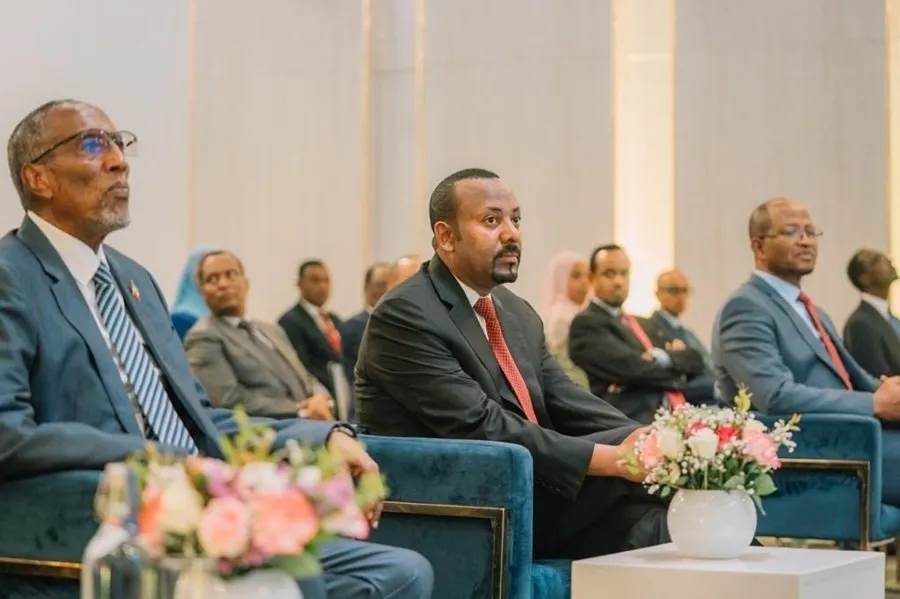
Just when Prime Minister Abiy Ahmed thought that he had finally nailed Ethiopia’s landlockedness crisis, things seemed to have gone wrong.
The backlash arising from Addis Ababa granting recognition to breakaway Somaliland in return for access to sea must, in most probabilities, surely be anything but what the leaders of the two countries had imagined.
Leading the onslaught is unsurprisingly Somalia, which maintains that Somaliland is part of its territory, thus all its affairs, both internal and external, can only legitimately be transacted by the central government in Mogadishu.
Tension remains high between the Horn of Africa neighbouring states and recently, at least nine Ethiopians were reportedly killed in a night attack by unknown gunmen at the Beled-Hawo border town.
Six other Ethiopians were wounded in the attack, reports by Somalia media said. According to the reports, the victims were originally from Ethiopia’s largest Oromia region, the home base of PM Abiy.
Though the reason for the attack was unclear, many believed it had much to do with the people of Somalia’s detest for the January 1, 2024 Memorandum of Understanding (MoU) between Ethiopia and Somaliland.
The MoU saw Ethiopia grant the breakaway state recognition, with the latter allowing Addis to set up a naval base on the Red Sea. The details of cooperation were scheduled to be concluded within a month, but this failed to materialise.
The Africa Union and its sub-regional body, the Inter-Governmental Authority on Drought (Igad), were equally unsettled by the controversial MoU.
The UN Security Council was also seized of Somalia’s complaint and was in consultations for the next move.
Somalia’s friends have rallied behind Mogadishu. Indeed, there was also faith-based support by the Islamic fraternity that would not fathom the dismembering of their member state.
Ethiopia, rendered landlocked courtesy of Eritrea’s secession in 1992, has been desperate for access to the sea. It has experimented with several options including a railway connection deal with Djibouti.
The Standard Gauge Railway, inaugurated by former Ethiopian Prime Minister Hailemariam Desalegn, links Addis Ababa with Djibouti and its Port of Doraleh. More than 95 percent of Ethiopia’s trade passes through Djibouti, accounting for 70 percent of the activity at the Port of Djibouti.
Somaliland, on the other hand, seceded from Somalia in 1991, following the collapse of President Muhammed Siad Barre’s government.
No UN member has so far recognised Somaliland, despite its concerted campaigns, especially on the pitch that it was more stable and peaceful than the Al-Shabaab devastated Somalia.
Virtually all indications now are that Abiy and Somaliland President Muse Bihi Abdi, may have to hold their horses, at least in the foreseeable future. Addis Ababa insiders believe that despite putting on a brave face, Ethiopia was considering toning down its rhetoric and slowing down the implementation of the MoU.
With its near–unnumerable internal conflicts, the last thing Addis would want on its menu is an external trouble pitting it against an array of parties.
Though Ethiopia snubbed an Igad Summit in Uganda aimed at discussing the controversial move, it on January 28, requested the regional bloc another chance to explain its position on the controversial MoU.
Ethiopia’s ruling Prosperity Party has reportedly had extensive consultations on the MoU, and has indicated readiness to embrace wise counsel, both internal and external. Abiy, in an address to Parliament recently said he did not think Mogadishu wanted a conflict with Ethiopia, adding that his country had a similar stance.
The PM attributed the row over Ethiopia’s sea access to the countries that “want to use Somalia as a proxy”. It would thus not be over-ambitious to conclude that Abiy’s administration will not be implementing the MoU, pending the outstanding issues.
