

The regional economic bloc resumed national consultations on the drafting of the Constitution for the EAC Political Confederation on June 15 in Rwanda, which involves public participation on the issue of the envisaged ultimate Political Federation.
However, there are doubts whether the EAC political federation idea will hold this time, since the Partner States have been toying with the idea of fast-tracking the process since 2004.
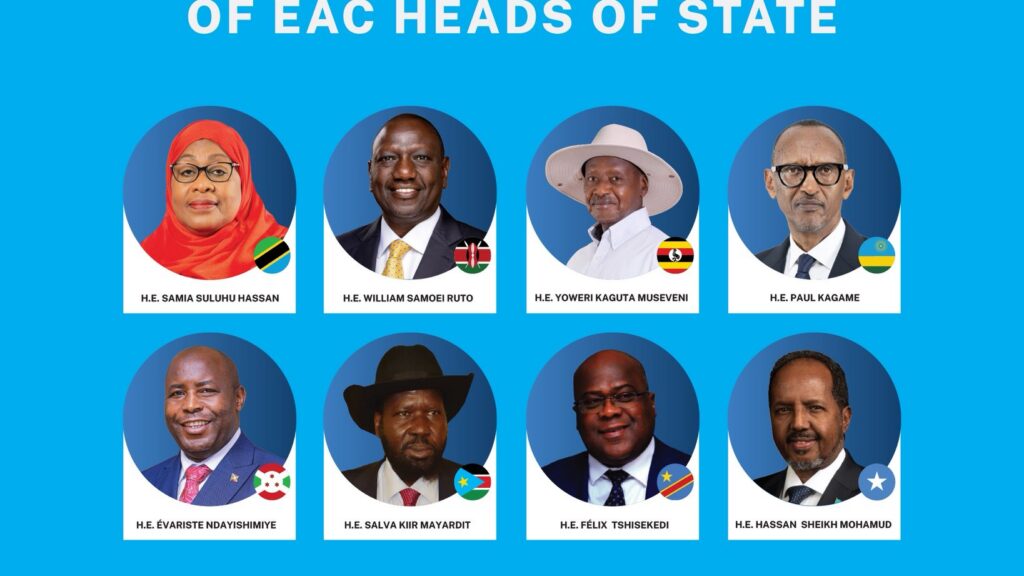
What is clear is that the eight EAC Partner States are now more inward-looking than they were 12 years ago, as national sovereignty takes centre stage. One might not blame the latest entrants like South Sudan, DRC and Somalia, but the dynamics brought about by changing geopolitics and the new scramble for influence in the region by Western and Eastern powers.
The consultations were first launched in Kigali, followed by stakeholder engagements in Rubavu, Huye and Nyagatare, before concluding on June 27, 2026.
The exercise forms part of the EAC’s ongoing efforts to involve citizens and stakeholders in shaping the future governance framework of the Community and advancing the region’s political integration agenda.
The exercise will bring together a wide range of stakeholders, including government leaders, parliamentarians, members of the judiciary, civil society organisations, academia, the business community, youth, women, persons with disabilities, religious leaders, media practitioners and political parties to provide views on the proposed Constitution for the EAC Political Confederation.
The Partner states opted for a Political Confederation—a loose coalition where member states remain sovereign and independent—after it became obvious that it was difficult to achieve Political Federation, which involves sovereignty is shared between the federal government and constituent states—under rotational presidency.
The consultations will be conducted by Constitutional Experts nominated by EAC Partner States and coordinated by the EAC Secretariat in collaboration with the Government of Rwanda.
EAC Deputy Secretary General responsible for Infrastructure, Productive, Social and Political Sectors, Andrea Aguer Ariik Malueth, said the process seeks to ensure that the Constitution reflects the aspirations and expectations of the people of East Africa.
“The national consultations are designed to create awareness on the Constitution-making process, provide an opportunity for citizens to contribute their views, and ensure that the proposed Constitution is people-centred and owned by the people of East Africa,” said Mr Malueth.
Political Federation is the fourth and final pillar of EAC integration, preceded by the Customs Union, the Common Market, and the Monetary Union.
However, the pillars of the Common Market and the Monetary Union have, over the years, been impeded by the Non-Tariff Barriers (NTBs) driven by the desire of Partner States to cling to national sovereignty.
The Confederation is intended to strengthen coordination among Partner States in key areas, including political affairs, peace and security, foreign policy coordination, and regional governance, while laying the groundwork for a future Political Federation.
A Team of Experts, appointed by the Summit in February 2018 and chaired by Justice Benjamin Odoki, retired Chief Justice of Uganda, and deputised by Senator Amos Wako, former Attorney General of Kenya, is guiding the constitution-making process.
The EAC formally began fast-tracking the Political Federation in August 2004. At a Special Summit of EAC Heads of State held in Nairobi in August 2004, the leaders concluded that the integration process was moving too slowly and resolved to accelerate the path toward the ultimate goal of a political federation.
They established the Committee to Fast-Track the East African Political Federation, commonly known as the Wako Committee, chaired by Kenya’s former Attorney General, Amos Wako.
Key milestones
• August 2004 – EAC leaders adopt the fast-track initiative and establish the Wako Committee.
• November 2004 – The Wako Committee submits its report on accelerating federation.
• 2006 – The EAC creates the office of Deputy Secretary-General for Political Federation to coordinate the process.
• 2017 – EAC Heads of State adopt a Political Confederation as a transitional step toward a full federation.
• 2024 – EAC leaders reaffirm their commitment to accelerate the federation agenda during the 24th EAC Summit in Arusha.
