

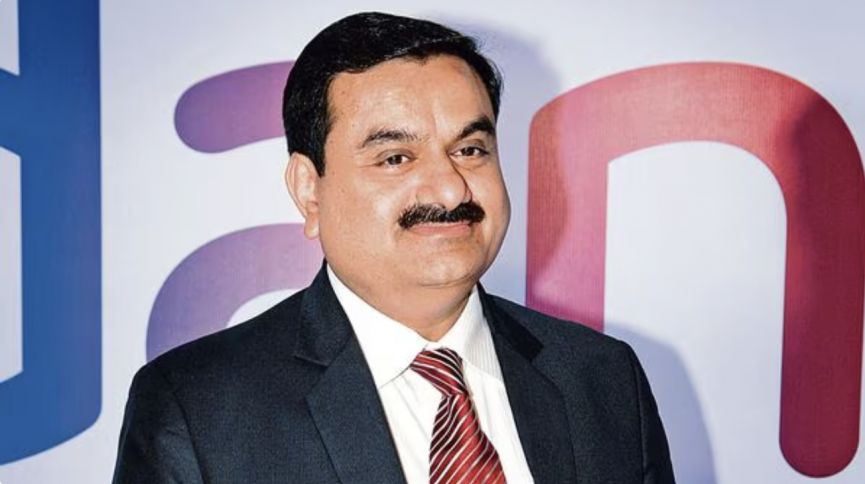
Kenya has again found itself at the centre of a major international investment as India’s Adani Group secures a significant $736 million contract to build and manage power transmission lines and substations across the country for 30 years.
This Public-Private Partnership (PPP) with the Kenya Electricity Transmission Company (KETRACO) promises to address the country’s persistent energy challenges.
Yet, the ease with which this deal was approved raises critical questions. Adani’s rapid entry into Kenya and its growing presence across various sectors seem to signal more than just an investment in infrastructure.
Is Kenya becoming a strategic outpost for the Adani conglomerate’s broader ambitions, and what is the real price of these deals for the nation?
The deal was officially signed on October 11, 2024, following four months of negotiations between KETRACO and Adani Energy Solutions Limited.
It outlines significant responsibilities for Adani Energy Solutions Limited (AESL), including the construction of four major power transmission lines and two substations.
The Adani Group’s KETRACO deal is a first in the Kenyan energy sector. The project’s sheer scale key installations are planned in areas like Gilgil, Thika, Konza, Rongai, Kisumu, and Lessos, all regions where reliable electricity is desperately needed.
The initiative comes at a time when Kenya’s government, struggling with debt and budgetary constraints, is turning to PPPs to fund large-scale infrastructure projects without increasing its financial burdens.
However, the rapid approval of this deal raises concerns, particularly given the Adani Group’s controversial business practices in other countries.
The sudden interest in a conglomerate of Adani’s scale in Kenya raises questions about their long-term goals. Is Adani’s primary motivation simply to address Kenya’s energy challenges, or does their involvement hint at deeper strategic interests?
The KETRACO-Adani deal outlines specific terms to ensure the project’s success, but some of these terms may give pause to those wary of Adani’s intentions.
According to the agreement, AESL must complete the project within 24 months from the effective date, or KETRACO has the right to enforce performance securities or terminate the agreement.
This provides Kenya with safeguards, but it remains to be seen whether these terms will be strictly enforced or if delays—common in large-scale infrastructure projects—will be tolerated.
Furthermore, AESL is required to pay a success fee of one percent of the total project cost, amounting to $8 million, to the Kenyan government.
While this may seem like a significant amount, it raises the question of whether this payment is sufficient compensation for the risks Kenya is taking in outsourcing such a critical sector to a foreign entity with a less-than-perfect reputation in other countries.
To protect KETRACO from financial burdens if the project does not proceed as planned, the agreement allows for termination without liability, except for limited costs related to wayleaves, licenses, and permits.
This seems like a positive move, but it remains unclear how much control KETRACO will have once the project is underway.
At the end of the 30-year concession period, AESL will offer a hand-back bank guarantee to cover the condition of the assets when they are transferred back to KETRACO.
While these guarantees are intended to ensure that the project stays on track, they also give Adani a substantial degree of leverage, particularly if the Kenyan government faces political or economic pressures to extend deadlines or relax terms.
The project will be funded through a mix of 70 percent debt and 30 percent equity, with a weighted average cost of capital (WACC) estimated at 10.4 percent or lower.
The cost of debt is estimated at 11.5 percent, and the cost of equity at 16 percent, meaning that Kenya could be saddled with higher long-term costs if Adani fails to deliver on its promises.
Adani’s growing presence in Kenya is not limited to energy infrastructure. Their partnership with Safaricom in digitizing Kenya’s healthcare system indicates a broader strategic interest in key sectors of the economy.
By aligning with Kenya’s largest telecommunications provider, Adani is positioning itself as a major player in the country’s digital transformation.
The Safaricom partnership, along with the KETRACO deal, suggests that Adani is not simply focused on infrastructure but may also be seeking to entrench itself in various sectors of Kenya’s economy.
Given the conglomerate’s track record in other countries, this should raise alarm bells for policymakers and the public alike. Is Kenya becoming too reliant on a single foreign conglomerate for its development needs?
Despite the KETRACO-Adani deal being hailed as a solution to Kenya’s energy woes, concerns over transparency have already surfaced.
A city-based law firm, IC Law LLP, has challenged the deal, questioning the lack of public disclosure on other bidders and the financial health of Adani Energy Solutions.
This echoes similar concerns raised during Adani’s failed bid for the Jomo Kenyatta International Airport (JKIA) concession, where transparency and public participation were key sticking points. The government’s support for the project is also clearly defined in the form of a Letter of Support, a customary step in public-private partnerships (PPP).
However, the level of public consultation and engagement around this deal remains unclear. Given the scale and significance of the project, the government must ensure full transparency in its dealings with Adani. Kenya has a history of opaque infrastructure deals, and the risk of corruption or mismanagement should not be ignored.
The KETRACO-Adani deal’s swift approval stands in stark contrast to Adani’s failed attempt to secure a similar concession for the expansion and operation of JKIA.
Both deals involve long-term management of critical infrastructure, but the difference in outcomes highlights the complexities of Kenya’s PPP landscape. Why was the energy deal approved while the airport project stalled?
While the KETRACO-Adani deal is being promoted as a game-changer for Kenya’s energy infrastructure, it is essential to approach it with caution.
Adani’s sudden interest in Kenya, combined with its expanding influence in other sectors like healthcare, raises important questions about the conglomerate’s long-term goals.
Is Adani merely addressing Kenya’s infrastructure needs, or is the conglomerate positioning itself to wield significant economic and political influence in the country?
