

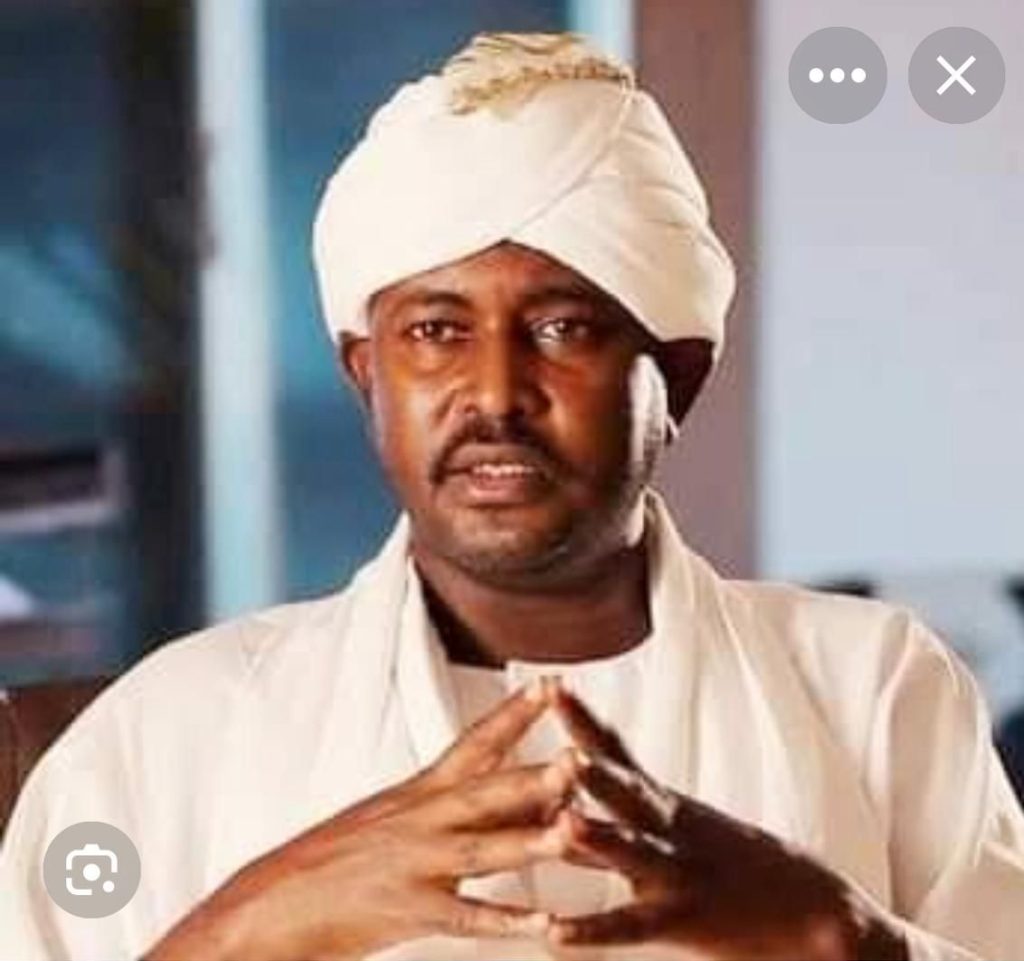
By Al-Sadiq Al-Raziqi
Ever since the war in Sudan began in April 2023, there have been questions about how the Rapid Support Forces (RSF) led by, Muhammad Hamdan Dagalo “Hemedti” came about and which are the forces behind it?
This article explains the birth, origin, and stages of development of the RSF militia and its relationship with the Islamists, individuals, groups, and organizations that are former diehard supporters of the former ruling National Congress Party (NCP).
The Islamists did not deny their fatherhood of RSF until April 2019 when the militia engaged in activities that links it to the then ruling NCP and the era of former president Omar Hassan al-Bashir.
A close analysis of RFS shows that it is a mere reincarnation of Islamists and NCP elements. Yet, since the outbreak of the war on April 15, 2023, the RSF has been ironically maintaining that its goal is to eliminate the “Islamic Movement” and the so-called remnants of the former regime.
This propaganda was built on a big lie and misinformation to obscure the facts that RSF is joined at the hip with the Islamists. Gen Dagalo (“Hemedti) and some of his brothers, uncles, and closest cousins, were recruited as low-ranking combat elements as non-commissioned soldiers in the period from 2003-2007 in the “Border Guard” forces.
These were semi-regular forces created by the Salvation era following the outbreak of the rebellion of the “Sudan Liberation and Justice” movements in 2003 in the Darfur region.
Sheikh Musa Hilal, the leader of the Mahamid, “from the Rizeigat tribe,” was the commander of this force that fought alongside the army against the rebels at the time, most of whom were from Arab tribes. At that time, “Hemedti” was not prominent, being a non-commissioned officer subordinate to Musa Hilal.
However, “Hemedti” differed with Sheikh Hilal at the end of 2006, following his attempts to forge an alliance with the Justice and Equality Movement (JEM) rebels at a meeting in the Chadian capital, N’Djamena, in the presence of the late Chadian President Idriss Deby.
However, the Sudanese government quickly worked to contain him again and return him to work with the army, assigning him limited tasks in the areas of South Darfur. Then the government of President Al-Bashir allocated him a government position in the state of South Darfur by appointing him as a certified advisor.
When the “Border Guard” forces, led by Sheikh Hilal, was dissolved in 2009. “Hemedti” started doing business together with former director of the Security and Intelligence Service, Salah Gosh, which involved exporting livestock to Egypt.
But “Hemedti” was resurrected by president al-Bashir in 2013 to form new forces similar to the “Border Guard” forces, following increased rebel attacks in Darfur and South Kordofan, and were slowly advancing towards North Kordofan and the White Nile. That is when RSF was born.
It comprised 5,000 members of the Arab tribes in Darfur—that included some members of the former Janjaweed. The government allocated them more than 60 combat vehicles.
Hemedti, his brother, and a number of family members were granted ministerial seats, including his uncle, Jomaa Dagalo, who was allocated a parliamentary seat. He worked to strengthen the RSF relations with the Islamists at various levels, and benefit from trained and qualified staff to build the financial empire and increase political influence.
The RSF leader was given the rank of brigadier general as second commander, and his older brother, Abdul Al-Rahim held the rank of lieutenant colonel, yet both of them in the “Border Guard” forces were at the rank of “non-commissioned officer,” first sergeant and sergeant.
By the end of April 2019, Hemedti in conjunction with the military leaders, including Islamic cadres, participated in the coup against Al-Bashir. In the early stages, Hemedti was anxious about a possible backlash from al-Bashir loyalists and sought to increase the assistance of Islamic political cadres and leaders.
The new forces began operating and coordinating their operations with the army in Darfur and South Kordofan, and many violations occurred, including the problem of the city of El Obeid, the capital of North Kordofan state, when the governor at the time, Maulana Ahmed Harun, expelled RSF from his state.
In the meantime, the RSF numbers increased from 20,000 soldiers during the Bashir era, to nearly 40,000 by December 2019, which had all the signs of a threat to the national army.
This is because Hemedti rushed to expand the RSF cadres by absorbing officers of the Armed Forces and the Intelligence Service who were dismissed from service. The number of army officers absorbed in the wake of the April 15, 2023 war reached more than 480 officers of various ranks.
During the four years that preceded the war, the number of troops exceeded 200,000. Hemedti had a political staff working in the RSF (advisers and senior officials), most of whom were former governors, commissioners, and former state ministers, most of whom were from the states of Darfur. He had countless cadres of parliamentarians and state legislators from elements of the Bashir regime.
Hemedti gathered around him the people of special advice from the “Islamists”, to manage with him all the special files and political aspects and work to attract civil society organizations, civil and social leaders, and tribal and clan leaders, and you will find them in his private offices and negotiating delegations, and those who move the military and political work after the war.
Among the most prominent political Islamists who support RSF are Taha Othman al-Hussein, former director at al-Bashir’s office, and Hassabo Muhammad Abd al-Rahman, first deputy to President al-Bashir, along with thirty-odd former constitutional leaders
Other included governors, ministers, state and accredited ministers, parliamentarians, members of legislative councils, prominent secretaries and deputy secretaries at the levels of the Islamic movement and its organizational and security offices, in the states of Darfur and Kordofan, and youth and student cadres, including heads of unions at universities and national popular organisations.
Perhaps the most prominent leaders who joined the RSF after their rebellion were the tribal leaders, especially the Islamists among them. The warden of the Rizeigat tribe, Mahmoud Musa Madibo, has been a member of the National Islamic Front since the 1980s.
Muhammad Yaqoub, the warden of the Tarjum, is a veteran of the Muslim Brotherhood in Darfur. Major General Muhammad al-Bashir Musa, the warden of the Salamat tribe, and Emir Masar Abd. Al-Rahman is one of the notables of the Rizeigat tribe. These are all former supporters of NCP, which Hemedti purported to have ousted.
Al-Raziqi is a Sudanese writer and journalist, and president of the East African Journalists Association(EAJA)
