

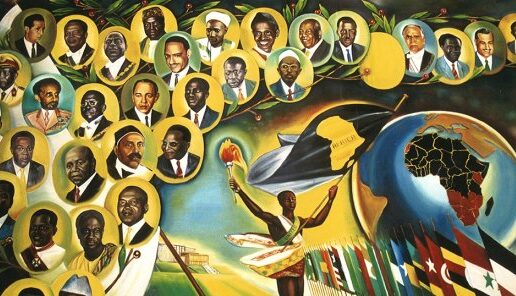
What does the return of Xenophobia in South Africa portend for the new desire to embrace Pan-Africanism inspired by the Sahel countries?
When South Africa took Israel to the International Court of Justice (ICJ) in December 2023 over genocide against the Palestinians in Gaza, the rest of the Global South unanimously supported Pretoria as the voice of the oppressed.
South Africa’s moral authority as a country that endured Apartheid cruelty for decades and would not wish to see the same applied to any other human being was humbling.
But the rise of Xenophobia in South Africa in the last two years—targeting fellow black Africans—has left Israel and the US smiling. With the rise of Xenophobia in South Africa, Pan-Africanism might have fallen flat on its face.
For a continent that is struggling to implement the African Continental Free Trade Area (AfCFTA) and visa-free travel, the xenophobia in South Africa could trigger other countries to do the same
Others have described it as Afrophobia—since those from other continents like Europe, Asia and the Americas are not targeted—with Nigerians, Zimbabweans, Ghanaians, Somalis and DRC nationals bearing the brunt.
Other Africans are struggling to understand how a country that stuck its neck out for Palestinians despite being thousands of miles away would allow the humiliation, abuse, and even killing of vulnerable African immigrants inside its own borders.
South Africa lectures the world about human rights while failing to protect vulnerable minorities inside its own borders. This contradiction is politically devastating.
Analysts say that if this anti-immigration movement keeps growing, it will be used to weaken South Africa’s credibility, break African solidarity, and prepare the ground for diplomatic, economic, and reputational punishment.
Black South Africans, under the umbrella of March and March and Dundula (push away in the Zulu language), not only accuse other African nationals of taking their jobs and operating small businesses, but also accuse the immigrants of selling drugs and engaging in other vices that corrupt the youth.
The biggest challenge is that South African authorities, especially the police, have been very slow to react for the last two months when other African nationals are abused and beaten, but were very quick to act when a Chinese businessman.
Police arrived in minutes and arrested a hundred protesters. President Cyrille Ramaphosa’s condemnation and his order for the arrests of the March and March and Dundula have fallen on deaf ears.
March and March founder, Jecinta Ngobese-Zuma, recently held a lengthy press conference enumerating the grievances of her fellow South Africans. She said the majority of foreign nationals who are in South Africa are not real refugees.
They are economic migrants who have and continue to abuse South African laws, taken over the informal economy, and colluded with home affairs officials in creating fraudulent documents to bring their countrymen into South Africa.
“We have not heard the government calling out Somalians and the people of Pakistan and Ethiopia and telling them to dismantle the cartels that they are running in our country, as well as the spousal shop mafias,” said Ms Ngobese-Zuma.
Recently, a group of 450 immigrants went to their immigration offices in South Africa to verify their documents. Only two people were found to be in the country illegally.
But the agitators say they don’t trust this verification because they say their immigration officers are corrupt. Now the question is whether the issue is about immigrants or with South Africa’s corrupt immigration department?
The two organisations have set June 30 as the deadline for all foreigners to leave South Africa. The question is whether the deadline is meant only for Black Africans or for every foreigner? Yet the African Union (AU) and the Southern African Development Community (SADC)—the regional trade bloc where South Africa belongs—have been silent all along.
This silence is a major blow to the implementation of AfCFTA, which emphasises the free movement of goods and people and cross-border trade among the 54 AU member states.
AU’s Agenda 2063 include accelerating African integration through the free movement of people, goods, and services, strengthening regional economic communities, and building resilient institutions for peacekeeping and conflict resolution.
Currently, intra-African trade stands at only 15 per cent, amounting to US$1.5 trillion in value, compared to 69 per cent intra-European trade. Africa’s trade with Europe stood at 33 per cent in 2025.
Burkina Faso, Mali and Niger have led the way in experimenting with the AU mantra of “African solutions for African problems” by cutting off neo-colonists like France, but the Xenophobia in South Africa confirms the Pan-Africanist agenda as a mirage.
However, for political, economic, or security reasons, several African nations have at some point driven out, deported, or expelled other African citizens.
Millions of West African migrants, particularly Ghanaians, were expelled from Nigeria in 1983 and 1985; Ghana periodically deported undocumented West African migrants; Angola expelled large numbers of Congolese migrants; Libya repeatedly expelled migrants from sub-Saharan Africa; and Algeria deported migrants from Niger and other Sahel countries.
Morocco has conducted crackdowns and removals of migrants; Kenya has deported or repatriated migrants and refugees in certain security operations; Tanzania has expelled undocumented migrants, particularly from Burundi and Rwanda at various times; Botswana has deported undocumented migrants from Zimbabwe; and Equatorial Guinea has expelled migrants from West Africa during crackdowns.
What makes South Africa particularly notable is that it frequently involves widespread xenophobic violence and attacks targeting African migrants from nations including Zimbabwe, Somalia, Ethiopia, Mozambique, and Nigeria.
