

Why I want to change Somalia
Abdukadir Sharraay
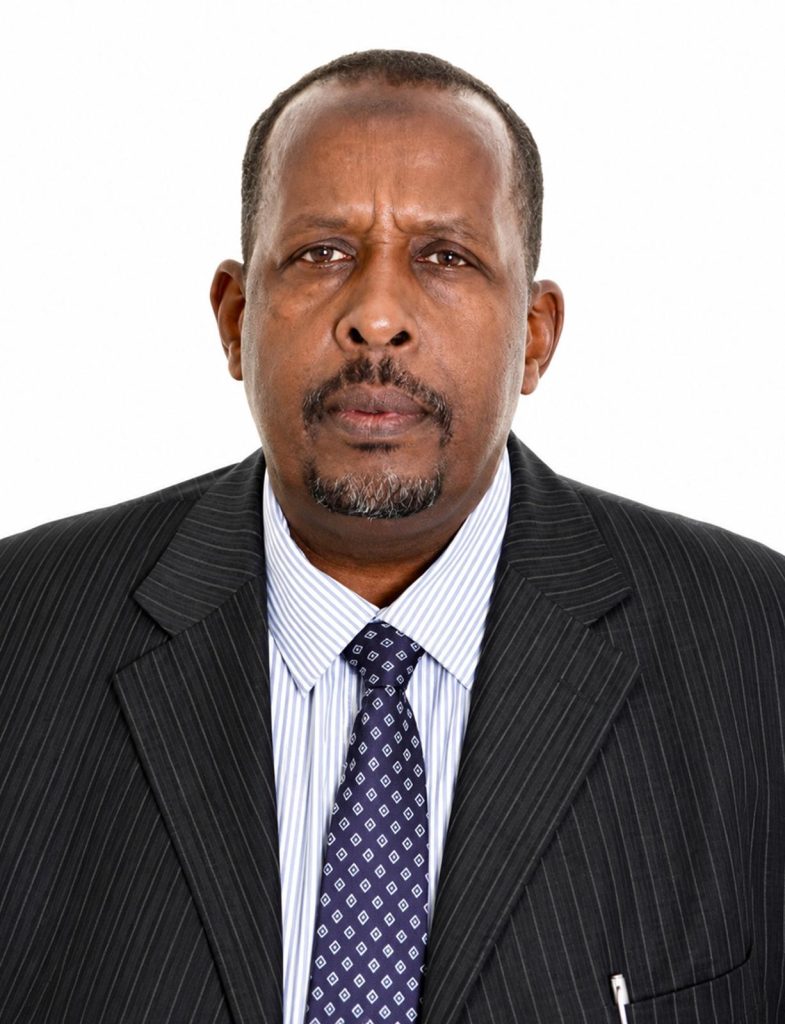
Sharraay spent much of his life serving people, particularly Somali communities across the Horn of Africa and in the diaspora, for development in different sectors: health, education, agriculture, fisheries, media, sports, job creation, and climate change. He is the chairman of the Somalia Opposition Parties Alliance (SOPA). Sharraay is now aspiring to be the president of Somalia in next year’s election
Who is Abdulkadir Sharraay?
I am simple and ordinary Somali man who has spent much of his life serving people, particularly Somali communities across the Horn of Africa and in the diaspora.
Throughout my career, I have tried to serve people not for money, profile, status or political position, but simply because I believe that human beings have a responsibility towards one another. For me, therefore, leadership has always been about service before position and responsibility before privilege.
I have watched our people struggle with conflict, displacement, poverty, political instability and insecurity for many years. At the same time, I have also witnessed the resilience, entrepreneurship, and determination of Somali people. I believe that Somalia does not lack capable people or resources. Rather, what we have lacked is a combination of responsible leadership, strong institutions, political stability, and a coherent national strategy.
You describe yourself as an ordinary man, yet you have now taken the extraordinary decision to seek the presidency of Somalia. Why are you running for president at this particular moment?
I am not seeking the presidency simply because I want wealth, power, status, or recognition. In fact, if those were my motivations, there would be much easier ways of pursuing them. I have taken what I consider to be a moral, ethical, legal, and, for me personally, religious responsibility to stand up and try to rescue our people from a situation that has continued for more than three decades.
Somalia has experienced civil war, famine, displacement, poverty, radicalism, terrorism, and state fragility for generations. Although the situation has improved in certain areas, we cannot simply say that Somalia has recovered because conditions are better than they were thirty years ago.
For example, as of 30 June 2026, Somalia was hosting approximately 3.3 million internally displaced people, in addition to 32,966 refugees and asylum-seekers. Somalia has difficulties controlling our borders and territory effectively. Our economy remains heavily dependent on imports and external assistance, our federal political system remains contested, and security continues to be a major concern. Therefore, my candidacy is not about pursuing a title. It is about taking responsibility at a moment when I believe Somalia requires a different direction.
You have mentioned the functioning of the Somali state. Let us therefore go directly to one of the most difficult issues facing Somalia: sovereignty and Somaliland. You have openly supported a two-state solution. Why?
To me, resolving the Somalia–Somaliland question is fundamental to achieving lasting peace and prosperity in the region. We must be honest with ourselves. For decades, Mogadishu has maintained that Somaliland is part of Somalia, while Somaliland has pursued international recognition as a separate state. At the same time, the people on both sides continue to share family, cultural, linguistic, religious, and economic ties.
So, the question is: how long can we continue with the same political argument without producing a solution? I believe neither side has sufficiently addressed the fundamental political reality. The people of Somalia and Somaliland have paid the price of this unresolved dispute, while politicians continue to repeat positions that have produced very little progress.
For example, Somaliland has continued its campaign for international recognition, while successive governments in Mogadishu have continued to insist internationally that Somaliland is part of Somalia. Yet the fundamental dispute remains unresolved. Therefore, I believe we need a serious political process. My position is that a two-state solution should be placed on the table as a genuine option, alongside the possibility of negotiated reunification.
If the people of Somalia and Somaliland can agree to reunite under a mutually acceptable political arrangement, that should be pursued. However, if after serious negotiations they conclude that peaceful separation is the only realistic solution, then that option should also be addressed.
If I become president, I would make this issue a national priority and seek to achieve a negotiated settlement within 24 months. Ultimately, my objective is not to defeat Somaliland. My objective is to end a political dispute that has continued for generations.
Some people may immediately say that a two-state solution contradicts Somalia’s territorial integrity and constitutional position. How would you respond to that criticism?
I would say that we must distinguish between the current constitutional position and the search for a political solution to a longstanding dispute. The present constitutional and international position is clear: Somalia considers Somaliland part of its territory. I am not denying that.
The African Union has reaffirmed this position in 2026, stating its respect for Somalia’s sovereignty, unity and territorial integrity and maintaining that it does not recognize Somaliland as an independent state. What I am saying is that constitutional declarations alone have not resolved the dispute. For instance, if repeating the same political position for decades were sufficient to solve the problem, we would still not be discussing it today.
Therefore, I believe the responsible approach is to create a serious dialogue involving the relevant parties and communities. That dialogue should examine political arrangements, security, borders, economic relations, citizenship, trade, resources and other outstanding issues. In other words, I am advocating negotiation rather than confrontation. And if the eventual outcome is unity, let it be genuine and mutually agreed. If the outcome is an amicable separation, let that also be peaceful, negotiated, and lawful.
You have also spoken about Somali identity beyond the borders of Somalia. Are you advocating the old idea of Greater Somalia or territorial expansion?
No, and I want to make that distinction very clearly. Shared Somali identity should not automatically mean shared political sovereignty. Somalis live in different political jurisdictions, including Somalia, Somaliland, Djibouti, Ethiopia’s Somali Region and Kenya’s Northeastern region. For example, families may have relatives on different sides of an international border, while livestock traders, merchants, and communities may have interacted across those borders for generations.
Therefore, our shared identity should become a foundation for cooperation rather than territorial expansion. This is also why I have emphasized the principle that responsibility begins at home, cooperation extends across borders, and interference should stop where another jurisdiction’s lawful authority begins.
We can cooperate on livestock, trade, education, healthcare, infrastructure, climate change, energy and security without attempting to politically control one another. In fact, I believe this is a much more practical Pan-Somali vision for the twenty-first century.
That brings us naturally to federalism. You have been critical of the relationship between the Federal Government and the Federal Member States. What exactly is wrong with the current federal system?
First of all, I want to make an important distinction: I am not opposed to federalism. I am opposed to the way federalism has been practiced. Federalism should bring government closer to citizens and allow communities to manage their own affairs within a national constitutional framework.
Unfortunately, the federal government has often behaved as though federal member states are political competitors rather than constitutional partners. For example, successive administrations have been accused of attempting to influence the formation or leadership of regional administrations for political purposes. That is not how a healthy federation should function.
My administration would therefore work to establish a system in which regional governments derive their legitimacy from their own people. The federal government should facilitate, support, and supervise the constitutional process, but it should not manufacture regional governments for political convenience.
Additionally, Federal Member States must have a clear constitutional relationship with the center, including defined responsibilities, financial arrangements, and mechanisms for resolving disputes. Therefore, my principle is simple: the federal government should be strong enough to protect the national interest but not so powerful that it destroys the federal system itself.
If the federal structure is one problem, the economy is another. You have described Somalia’s economic situation as extremely serious. What would your economic strategy look like?
The Somali economy requires comprehensive reform. We must first be honest about the problem. Somalia has a national currency, the Somali shilling, but the economy is highly dollarized, and the country’s productive capacity remains weak.
For example, Somalia’s economic growth was estimated at approximately 3% in 2025, down from about 4% in 2023–2024, with drought, declining foreign assistance, and rising living costs weighing on economic activity and livelihoods.
At the same time, nearly 500,000 people enter Somalia’s labour force every year, while only around 80,000 jobs are created. Therefore, I would pursue a comprehensive programme to restructure, reform, and regulate the economy.
My economic strategy would focus on several areas. We must strengthen domestic revenue collection, increase production, expand exports, regulate the financial system and improve transparency and create an environment in which Somali businesses can invest and grow.
Most importantly, we must stop thinking of economic development simply as receiving money from outside. Somalia must increasingly become a country that produces, processes, exports and earns.
You have said that Somalia has enough resources to change its economic situation. What resources are you referring to, and how would you turn them into economic growth?
Somalia has significant opportunities in marine resources, livestock, agriculture, renewable energy and minerals, among others. The problem is that having resources and developing resources are two different things.
For instance, Somalia has the longest coastline in mainland Africa, stretching over approximately 3,898 kilometers, and over one million-square-kilometer Exclusive Economic Zone. Yet its annual fish catch is estimated at only 25,000–30,000 metric tons, compared with an estimated potential of approximately 800,000 metric tons.
Similarly, livestock is one of Somalia’s traditional economic strengths, but much of the value chain remains underdeveloped. Agriculture also provides enormous opportunities. Therefore, rather than simply exporting raw commodities, we need to develop processing industries. For example, instead of exporting livestock with limited value addition, we should invest in modern meat-processing facilities, leather production, animal feed, veterinary services and cold-chain infrastructure.
Similarly, with fisheries, we should develop landing facilities, cold storage, processing plants and export markets. The African Development Bank’s Somalia Country Strategy Paper 2025–2030 identifies infrastructure, economic governance, agricultural value chains, enterprise development and regional connectivity as important areas for Somalia’s future economic development.
Additionally, renewable energy could reduce one of the major costs facing households and businesses. So, my approach is not simply to say, “Somalia has resources.” My approach is to ask: How do we turn those resources into jobs, exports, government revenue and better living standards?
That sounds ambitious. The obvious question is: where will the money come from?
I believe Somalia’s biggest problem is not necessarily that there is no money. It is that we have not developed the mechanisms to mobilize and manage the resources available to us. We have domestic resources, private capital, diaspora investment, natural resources and international partnerships.
For example, millions of Somalis in the diaspora send money home every year. Instead of allowing most remittances to support consumption alone, we should create mechanisms that encourage a portion of diaspora capital to enter productive investment.
Additionally, Somalia has enormous opportunities in agriculture, fisheries, livestock, ports, logistics, telecommunications, renewable energy and other sectors. The government must therefore become a facilitator of investment rather than an obstacle to it.
At the same time, international partners will remain important. But international assistance should increasingly help Somalia build capacity to finance itself. That is why I describe my proposed strategy as home-grown, radical where necessary, creative, cost-effective and action oriented.
Let us turn to ordinary Somali citizens. Economic statistics are important, but people want to know whether their daily lives will actually improve. What would your government do about healthcare, education and employment?
That is ultimately what government is supposed to be about. A government should not exist simply to issue political statements. It should improve people’s lives. We would work to improve access to quality education and healthcare, particularly for communities that have historically been underserved. For example, children should not be denied education simply because their families cannot afford school fees.
Similarly, basic healthcare should not become a privilege available only to people living in major cities. We would also invest in teacher training, healthcare workers, vocational education and technical skills. Additionally, we would focus heavily on young people because Somalia has a very young population. Young Somalis need opportunities to work, start businesses, acquire technical skills and participate meaningfully in the country’s development. If we educate young people but do not create economic opportunities for them, then we have only solved half the problem.
And that brings us security. How can you promise development when large parts of the country remain affected by insecurity and Al-Shabaab?
Security is indeed fundamental. Without security, you cannot build schools effectively. You cannot attract investment. You cannot develop agriculture. You cannot expand healthcare. You cannot build functioning institutions. Therefore, security would be one of my administration’s highest priorities.
However, I believe we must also recognize that military action alone cannot solve Somalia’s security problem permanently. For example, when young people have no education, no employment, no economic opportunity and no confidence in government institutions, extremist organizations can exploit that frustration.
That is why I support a comprehensive approach involving security operations, reconciliation, political inclusion, justice, education and employment. I also believe there should be an opportunity for peaceful negotiations with those willing to abandon violence. We would invite them to lay down their arms and come to the negotiation table without preconditions, while maintaining the rule of law and protecting citizens. Let me be very clear, however: negotiation does not mean surrendering the state to an armed organization. The objective is to end the cycle of Somali young people fighting and killing other Somali young people.
Some people may argue that negotiating with an organization such as Al-Shabaab is unrealistic. Why do you believe dialogue should be considered?
Because after more than a decade of military confrontation, we should be willing to examine every responsible avenue that can bring lasting peace. I am not saying that dialogue is easy. I am saying that if an opportunity emerges to persuade combatants to abandon violence, we should not automatically reject it.
For instance, Sierra Leone’s civil war (1991-2002) demonstrates how lasting peace often requires more than military victory alone. The conflict ultimately ended through a combination of military pressure, political negotiations, disarmament and demobilization, reconciliation, and the reintegration of former combatants into civilian society. This experience illustrates that sustainable peace requires both addressing the immediate security threat and creating political and social conditions that allow former adversaries to coexist peacefully.
However, there must be clear principles. There can be no negotiation that compromises the safety of civilians, the sovereignty of the state or the rule of law. Ultimately, our objective should not be to win an endless war. Our objective should be to build a Somalia in which the war is no longer necessary.
Somalia has experienced repeated delays, disagreements and political tensions around its electoral process. What would you do differently?
Credible elections require preparation, political agreement and public confidence. One of the failures of successive governments has been leaving important electoral preparations until political tensions are already at their peak.
For example, voter registration, electoral legislation, political-party development, dispute-resolution mechanisms and election security cannot be organized at the last minute. Therefore, my administration would prioritize electoral preparation from the beginning. We would work with political parties, civil society, Federal Member States and other relevant stakeholders to create a credible electoral framework.
Additionally, the electoral body must be sufficiently independent and trusted by competing political actors. The Somali people deserve an election in which they believe their vote matters. A rushed election may produce a government, but only a credible election can produce legitimacy.
You have criticized previous governments, but governing Somalia will also require international partnerships. What would your relationship with the international community look like?
First, we must recognize the enormous contribution international partners have made to Somalia. For decades, international partners have supported humanitarian assistance, security, institution-building, health, education and development. However, partnership should not become permanent dependency. Somalia should increasingly be able to finance its own institutions and development. Therefore, I would welcome international partners, but I would engage them from a position of partnership rather than perpetual dependence.
For example, we could seek international support for infrastructure, energy, education, healthcare, security-sector reform and institutional strengthening. At the same time, we would develop domestic revenue, private investment and productive sectors so that Somalia gradually assumes greater responsibility for financing its own future.
Your position also emphasizes cooperation with neighbouring countries. What would Somalia’s foreign policy look like under Abdulkadir Sharraay?
My foreign policy would be based on sovereignty, mutual respect and practical cooperation. Somalia cannot afford to live permanently in confrontation with its neighbours. We share borders, markets, families, livestock corridors and security concerns with Kenya, Ethiopia and Djibouti.
For instance, drought does not stop at the border. Livestock diseases do not stop at a border. Terrorist networks do not respect borders. And trade certainly does not respect political boundaries. Therefore, cooperation is not a weakness. It is a necessity.
At the same time, cooperation does not mean surrendering sovereignty. We can work with our neighbours on trade, livestock, security, climate resilience, infrastructure and education while respecting the political and legal authority of each country. That is the kind of Pan-Somali cooperation I advocate: shared opportunity without political interference.
After more than three decades of political promises, many Somalis are skeptical of politicians. Why should they believe you?
They should not believe me simply because I am a presidential candidate. They should judge me by my principles, my commitments and, ultimately, by my actions. I understand why Somali people are skeptical. They have heard promises for decades. Therefore, I would never tell them that I can solve every problem overnight. That would be dishonest.
What I can say is that I believe Somalia can change if we change the way we govern. We need institutions stronger than individuals; leaders who accept responsibility rather than blame everyone else; federalism that empowers communities rather than divides them; an economy that produces rather than simply consumes.; security based not only on military operations but also on reconciliation and opportunity and education and healthcare that reaches ordinary citizens.
And, importantly, we need to resolve the Somalia–Somaliland question rather than passing it from one generation of politicians to another. The central message is very simple: responsibility begins at home, cooperation extends across borders, and shared Somali identity should be a bridge for peace, trade and mutual respect—not a justification for interference.
If the Somali people entrust me with leadership, I will not promise them perfection. I promise them responsibility, a clear direction and a government that understands that political power belongs to the people and must ultimately be used in their service.
