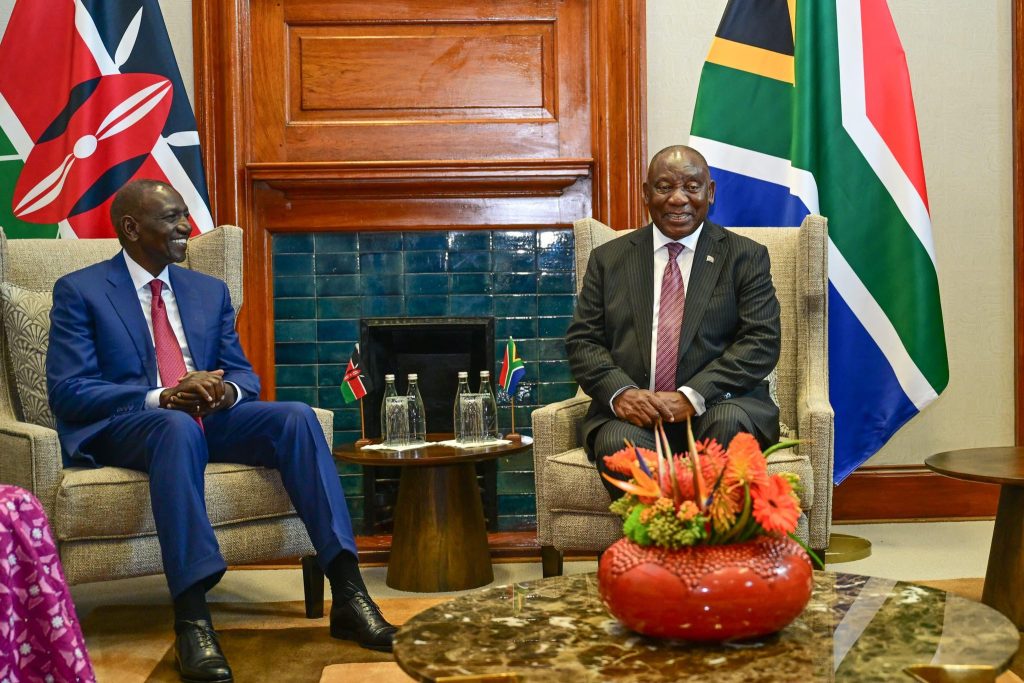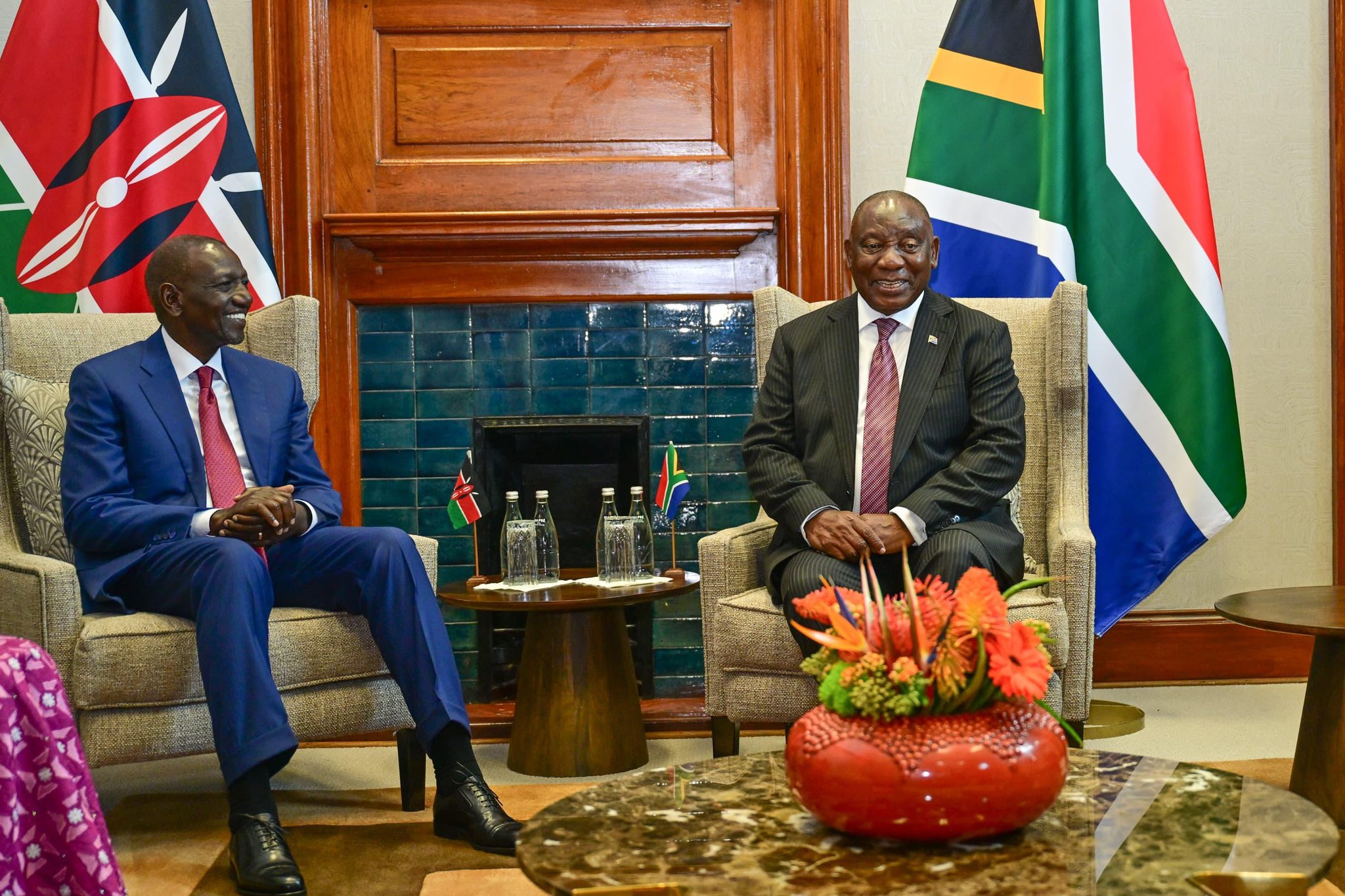
South Africa laying a red carpet for a sub-Saharan Africa president, at a time its citizens are hunting down black immigrants like prey, must surely pass for one of the greatest contradictions of modern times.
Kenya’s President William Ruto, aboard a chartered luxury Gulfstream jet, landed at the Waterkloof Air Force Base, Gauteng on June 3, to reportedly hold discussions with his host, Cyril Ramaphosa, on trade, investments and cooperation between the two countries.
Notably at that time, Mozambique and Malawi, which together with South Africa are members of the regional Southern Africa Development Community (SADC), were announcing plans to evacuate their nationals from the latter. Ghana, has already evacuated at least 400 of its nationals from South Africa, and was in the process of taking more home. Nigeria was likely to follow suit.
South African mobs, in a recurrent xenophobic rage, have been mounting protests in recent weeks, against black foreign nationals, causing loss of several lives and massive destruction of property. The South Africans accuse the black foreign nationals, they pejoratively refer to as Makwerekwere, of all manner of ills, including taking their jobs and women and peddling drugs. Under the clarion call ‘Operation Dudula, Abahambe’, the South Africans have issued a June 30 ultimatum for the black immigrants to move out.
Several African states and individuals have openly expressed their anger, insisting it was time the rest of Africa stood up to the South Africans. Many have recalled the great sacrifices the rest of Africa made for the liberation of South Africa against the apartheid rule, which ended in 1994. Nigeria, for instance, had the “Mandela Tax”, a compulsory 2 percent deduction from the salaries of the civil servants and public officers.
The tax was established in 1976 by the military administration to specifically finance relief, education, and liberation movements like the African National Congress (ANC). ANC would in 1994 usher South Africa into majority rule, under Nelson Mandela. Several African states offered refuge to exiled South African liberation champions and facilitated their international travel, while the immediate neighbours, the frontline states, often suffered military attacks by the apartheid regime.
Ghana has formally petitioned the African Union (AU) to intervene against the xenophobic violence, escalating pressure on Pretoria to uphold continental integration under the African Continental Free Trade Area (AfCFTA)
Ruto’s visit to South Africa is thus seen in many circles as standing in solidarity with the enemies of the African Ubuntu spirit. To many, it should have been put on hold, if not cancelled altogether. It should, however be noted that Ruto, in many of his external relations engagements has been motivated by what would pass for personal as opposed to Kenya’s national interests.
To a former United Nations official, Dr Mukhisa Kituyi, President Ruto’s reign has been characterised by numerous major diplomatic blunders, informed by his unwillingness to heed advice of professionals.
The Kenyan President has, for instance, openly embraced the Sudanese paramilitary Rapid Support Forces (RSF), which has, since April 2023, been locked in an egregious war with the Sudan Armed Forces (SAF). The war has claimed thousands of lives and has been described in many circles as causing the worst global humanitarian crisis in recent times. Both SAF and RSF are accused of gross human rights violations, with the latter bearing a greater blame and having its leaders sanctioned by the US.
Ruto’s open dalliance with RSF infuriated Khartoum, prompting the banning of Kenya’s tea imports. Kenya is a leading exporter of tea, with Sudan ranked among the top destinations. The severe disruption of the trade by diplomatic tensions and the ongoing civil conflict, have hit Nairobi’s economy hard., especially considering that the tea sector was under pressure; with the emerging markets growing, global supply chain disruptions and shifting regulations.
The Ruto administration defended itself, insisting the dalliance with RSF was intended to facilitate dialogue and peace, but not to endorse the paramilitary group.
Kenya’s former deputy president and now a fierce critic of the Ruto administration, Rigathi Gachagua, too waded into the controversy. In a live Citizen Television show, Gachagua claimed that in addition to facilitating the RSF officials’ travel, President Ruto had provided accommodation to the group’s chief, Ahmed Dagalo, aka Hemedti and his four wives with accommodation in an upmarket Nairobi area.
American Global Human Rights Foundation (HRF) had demanded that Kenya be held accountable for issuing passports to individuals linked to RSF.
Acting against a popular wish in mid-2024, President Ruto deployed Kenyan police officers to Haiti to lead the UN-backed Multinational Security Support (MSS) Mission aimed at combating rampant gang violence and stabilising the Caribbean nation.
As he was leaving for South Africa, a storm was brewing in Kenya over the deal to host an Ebola quarantine base for Americans. The decision followed a pronouncement by the US Secretary of State, Marco Rubio, that the US cannot and would not allow Ebola, currently ravaging the Democratic Republic of Congo, to enter America. Just how far the Kenyan president will go with his diplomatic adventures, only time will tell.